


The dining room is one of the most sociable rooms in any home, a space designed specifically for gathering, conversation, and the shared ritual of eating together. And yet it’s also, in the Japandi philosophy, a room that should feel genuinely calm and considered, a space where the people around the table can be fully present with each other, undistracted by a visually noisy or over-decorated environment.
Japandi dining room ideas resolve this apparent tension beautifully. The warmth and craftsmanship of Japanese material culture, solid wood, handmade ceramics, natural textiles, honest imperfection, combined with the Scandinavian commitment to functional, warm, hygge-adjacent living creates dining rooms that feel simultaneously calm and deeply inviting. Here are 10 ideas for creating one. 🌿
What a Japandi Dining Room Is Really About
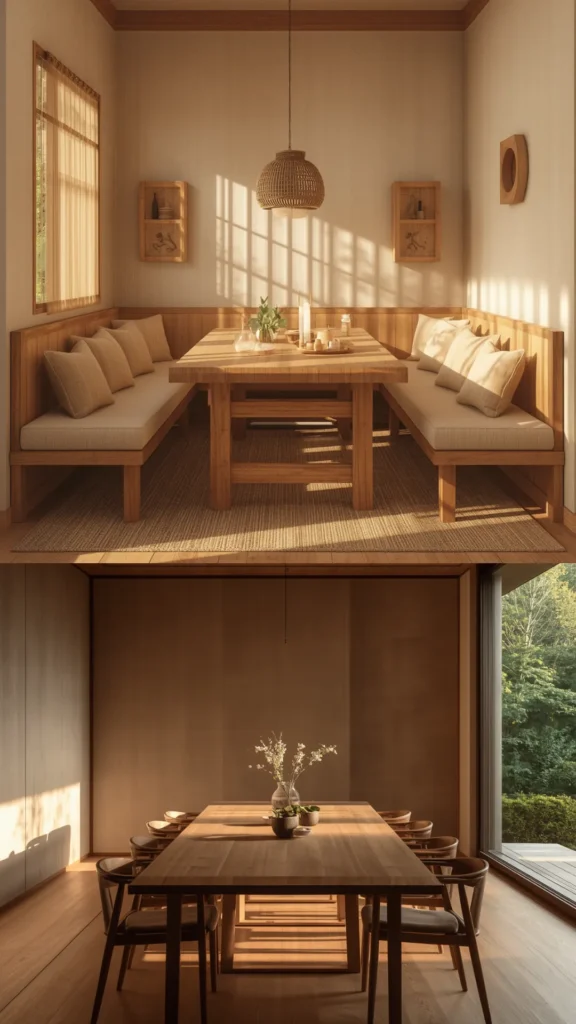
A Japandi dining room is ultimately about the experience of sitting at the table rather than the appearance of the room in a photograph. The quality of the wood surface under your hands, the warmth of the ceramic in your palm, the softness of a linen napkin, the amber warmth of a lamp that doesn’t glare or bleach, these sensory details are what Japandi dining room design prioritizes above everything else.
According to Dezeen, the Japandi dining room has become one of the most searched and aspired-to interior typologies of 2026, with homeowners increasingly designing their dining spaces around the quality of the experience they want to create at the table rather than the visual statement they want to make with the room.
1. A Solid Wood Table That Improves With Age

The dining table is the single most important piece of furniture in any Japandi dining room, and the principle that distinguishes a genuinely Japandi table from a merely attractive one is the relationship between the material and time. A solid wood table in oak, walnut, or ash doesn’t just look beautiful when new, it becomes more beautiful over the years, as the wood develops a patina of use and light that manufactured materials can never replicate.
This relationship with time is central to the wabi-sabi philosophy that runs through Japandi design. The small mark left by a warm mug, the slight variation in tone where different light has fallen differently over different parts of the surface, the honest record of a table that has been used and loved, these are not flaws but features, accumulating gradually into an object of genuine beauty and genuine history.
How to style it: Keep the table surface almost completely clear when not in use, the beauty of the wood itself should be the dining room’s primary decorative statement. A single ceramic centerpiece and a pair of candles is all the permanent styling the table needs.
Pinterest keywords: Japandi Dining Room Ideas · Solid Wood Dining Table · Japandi Table 2026
2. Wishbone or Curved Dining Chairs in Natural Wood
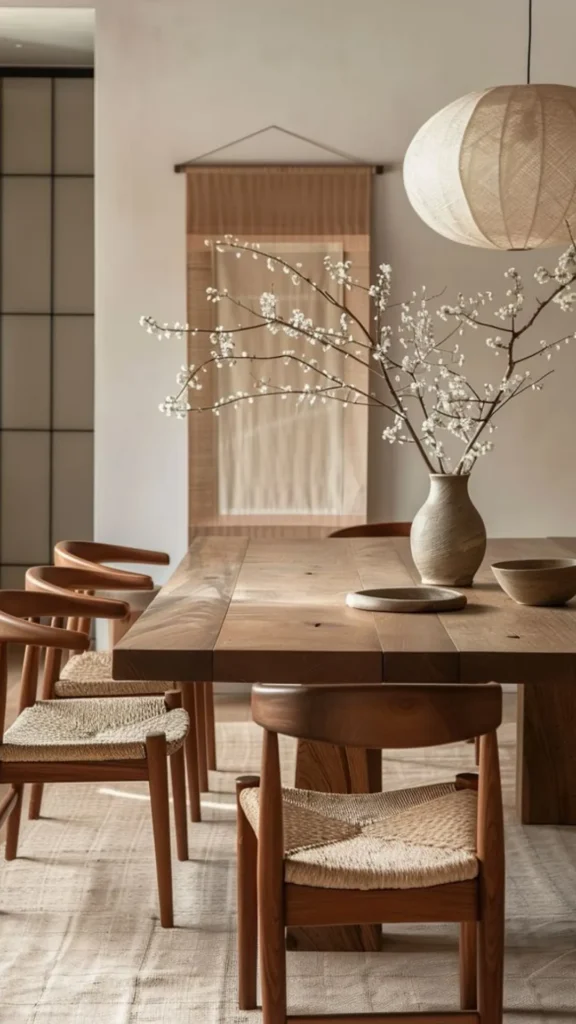
The wishbone chair, Hans Wegner’s 1949 design with its characteristic Y-shaped back, curved seat, and tapered legs, remains the single most naturally and most authentically Japandi dining chair available in 2026. Its clean organic lines, warm wood construction, and woven cord seat bring together the Japanese appreciation for honest craftsmanship and the Scandinavian commitment to beautiful, functional design in a single, resolved piece.
A set of wishbone chairs around a solid wood dining table creates the most harmonious and quietly beautiful Japandi dining room arrangement available, every element sharing the same warm material language, the same organic linearity, and the same respect for honest construction. The slight variation between individual chairs, because they are handmade and each slightly different, adds the wabi-sabi character that completes the aesthetic.
How to style it: Allow the chairs to pull cleanly under the table when not in use, the dining room should feel spacious and calm between meals, with the table surface and the clean lines of the chairs beneath it creating a composition that is as beautiful when empty as when occupied.
Pinterest keywords: Japandi Dining Room Ideas · Wishbone Chair Dining · Curved Dining Chair 2026
3. A Warm, Sculptural Pendant Light Above the Table

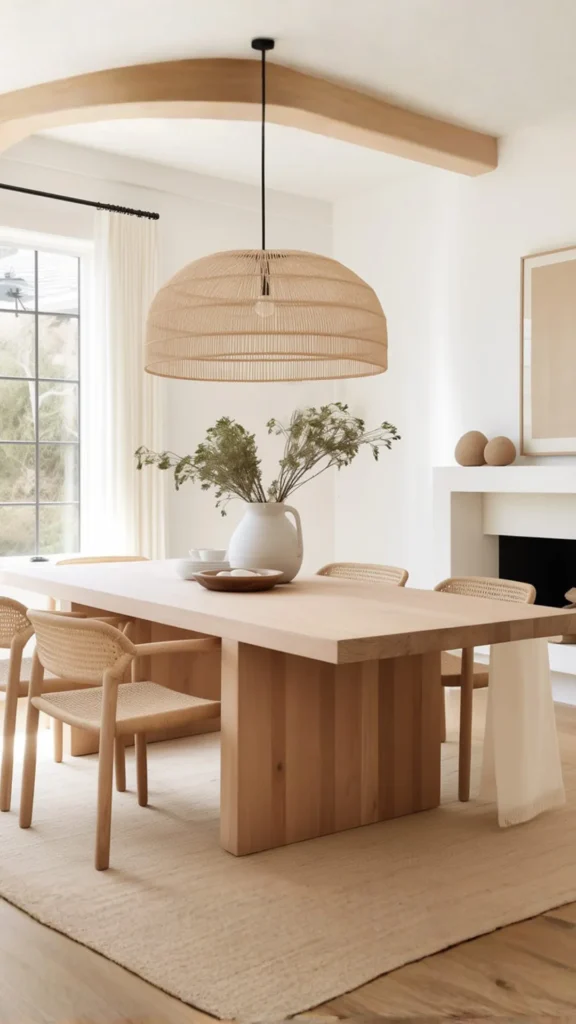
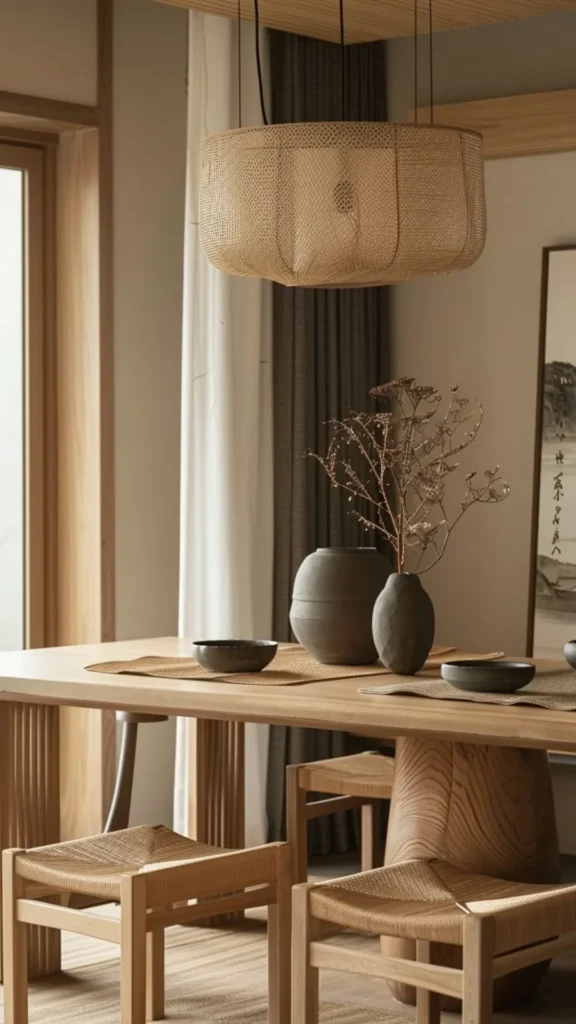
The pendant light above the dining table is the most architecturally significant decorative element in the Japandi dining room, the piece that defines the scale of the space, establishes the warmth of the atmosphere, and frames the table arrangement from above. In a Japandi context, the pendant should be warm in material, rattan, ceramic, natural fiber, or warm-toned metal, and positioned low enough over the table to create genuine intimacy rather than hovering uselessly at ceiling height.
A rattan pendant with a warm amber bulb creates the most universally beautiful and broadly applicable Japandi dining room overhead light, its organic material connecting to the wood of the table and chairs below, and its warm light creating an amber glow over the table surface that makes any meal and any conversation feel more intimate and more considered.
How to style it: Hang the pendant at 70–80cm above the table surface, lower than instinct usually suggests, but the position that creates genuine warmth and atmosphere rather than merely illuminating the room from above.
Pinterest keywords: Japandi Dining Room Ideas · Dining Room Pendant Light · Rattan Pendant Dining 2026
4. A Handmade Ceramic Centerpiece
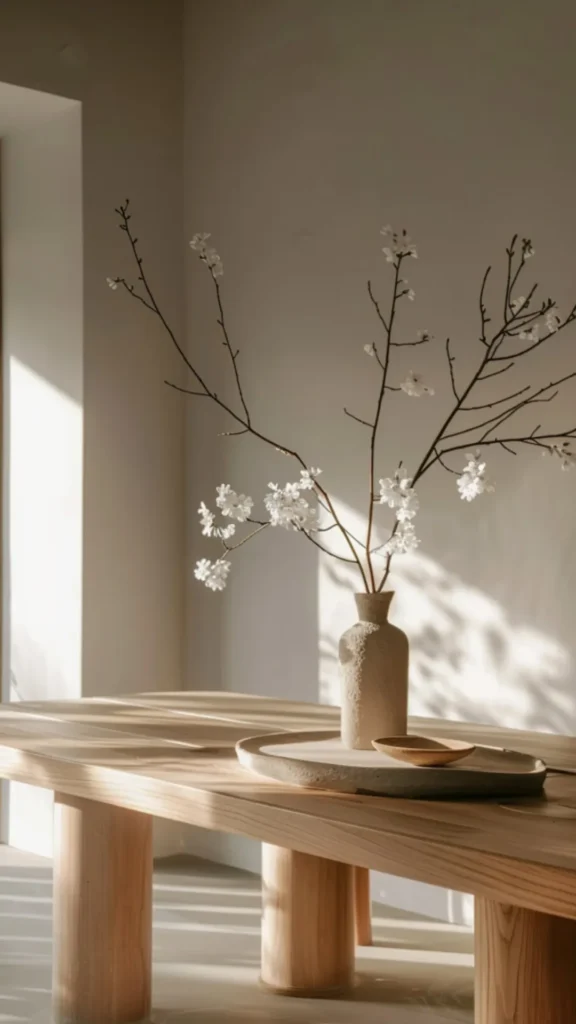
The centerpiece of a Japandi dining table should be a single handmade ceramic object, a vase in warm grey clay with dried grass or a single branch, a low bowl of seasonal fruit in earthy tones, or a cluster of small ceramic vessels in complementary but slightly varying forms. The imperfect handmade quality of each piece brings the wabi-sabi element that distinguishes a genuinely Japandi table setting from one that merely looks calm.
What a Japandi centrepiece is never is: a large, dramatic flower arrangement that dominates the table; a collection of identical manufactured objects that lack any handmade variation; or anything that competes with the people and conversation it’s meant to support. The centrepiece exists to add organic warmth to the table without commanding it.
How to style it: Position the centerpiece slightly off-center rather than exactly in the middle, the slight asymmetry is more natural and more interesting than perfect symmetry, and leaves more table surface visible on the side closest to the pendant light for the most beautiful play of warm light across the wood grain.
Pinterest keywords: Japandi Dining Room Ideas · Ceramic Table Centrepiece · Japandi Table Styling 2026
5. Warm Linen Table Runner and Napkins

Linen on the dining table, a simple runner in warm oat or natural grey linen, paired with matching or complementary linen napkins, introduces the natural textile warmth that connects the table to the broader Japandi material language of the room. Unlike formal white damask or printed synthetic alternatives, linen reads as honest, natural, and in the same earthy tonal family as the wood, ceramics, and warm lighting surrounding it.
The linen napkin in particular is one of those small, daily-use details that significantly elevates the dining experience in a Japandi dining room. Its texture against the hand while eating, its ability to absorb warmth from the table and from the people using it, and its slight irregularity compared to a paper alternative all contribute to a meal that feels genuinely cared for rather than casually assembled.
How to style it: Fold linen napkins simply, a single fold into a rectangle rather than an elaborate origami shape. Place directly on the plate or beside it. The simplicity of the fold echoes the Japandi philosophy of restraint in every detail.
Pinterest keywords: Japandi Dining Room Ideas · Linen Table Runner · Japandi Table Setting 2026
6. An Earthy, Muted Color on the Walls
The wall color of a Japandi dining room should feel like an extension of the natural world rather than a decorative choice, muted, earthy, and warm enough to create genuine atmosphere without demanding attention. Warm sage green, muted olive, soft warm greige, or the deeper end of a warm neutral, any of these creates a dining room environment that makes the wood of the table look richer, the light of the pendant warmer, and the people seated at the table more relaxed and more present.
The specific quality to look for is muted saturation. a color with the brightness turned down, so that it feels as though it has been mixed with a little grey or brown rather than taken directly from a color wheel. This muting is what prevents the wall color from competing with the warm, honest materials in the rest of the room and allows everything to exist in quiet, considered harmony.
How to style it: Paint all four walls in the same muted tone. including the ceiling in a slightly lighter version of the same color for the most enveloping and atmospheric result. The consistency of the earthy envelope around the warm wood dining table and warm pendant light creates a dining experience that feels genuinely sheltered and intimate.
Pinterest keywords: Japandi Dining Room Ideas · Dining Room Wall Colour · Muted Green Dining Room 2026
7. Open Wood Shelving Styled with Considered Objects

A section of open wood shelving in the Japandi dining room. carrying a small, carefully edited collection of ceramics, glassware, and natural objects, creates the most warm and personal wall feature available without introducing any visual noise. The shelves display objects that are beautiful and useful simultaneously, reflecting the Japandi principle that functional items should be beautiful enough to be displayed rather than hidden.
The editing is as important as the styling. A genuinely Japandi shelf shows only what genuinely belongs, a set of handmade bowls, two or three ceramic pieces in complementary tones, a small plant in an earthy pot, and perhaps a single book whose spine complements the palette. Everything else is stored behind closed doors, leaving the visible shelf arrangement as a considered composition rather than a storage overflow.
How to style it: Apply the same rule of thirds used for bookcases, one third functional objects (the ceramics and glassware that get used), one third organic elements (a plant, a natural vessel, dried botanicals), one third breathing space (empty shelf that allows the eye to rest). The negative space is as important as the objects.
Pinterest keywords: Japandi Dining Room Ideas · Open Wood Shelving Dining · Japandi Shelf Styling 2026
8. Natural Light as the Primary Daytime Atmosphere
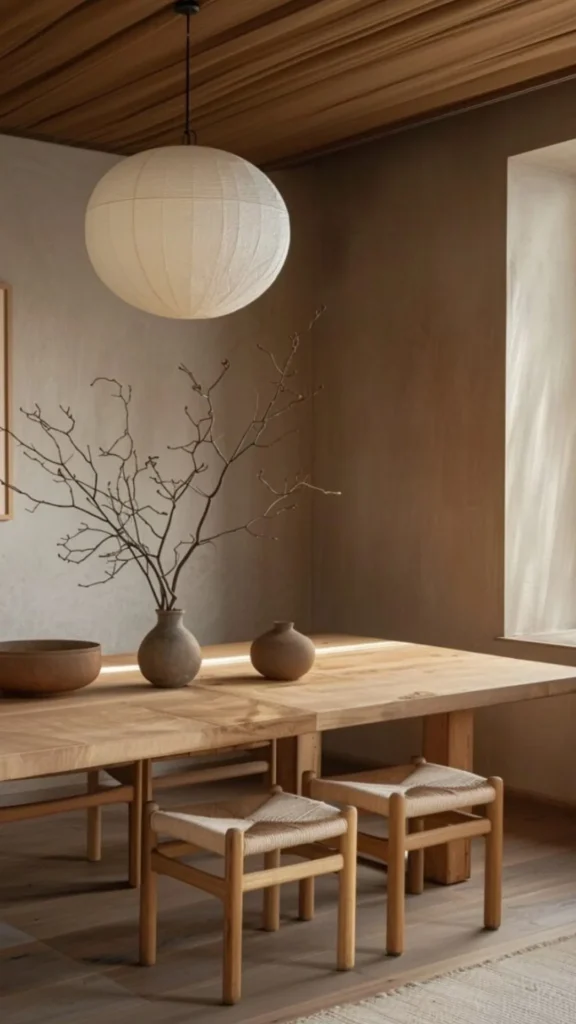
In a Japandi dining room, natural light is treated not as a background condition but as an active design element, something to be maximized, directed, and celebrated as the primary source of daytime atmosphere. A dining room that receives good natural light and is arranged to take full advantage of it feels completely different from one that relies on artificial sources throughout the day.
Practically, this means keeping windows in the dining room completely unobstructed, no heavy curtains, no furniture positioned to block the light path, no decorative objects on the windowsill that reduce the available aperture. Sheer linen panels that can be drawn in the evening for privacy but remain open throughout the day allow the full quality of natural light to reach the table and make the wood grain, the ceramic surfaces, and the linen textiles all glow in the most natural and beautiful way possible.
How to style it: Position the dining table to take the fullest possible advantage of the room’s best natural light source, for most northern hemisphere homes, a position near the south or west-facing window creates the warmest and most consistent daylight for the table throughout the afternoon and early evening, the times when the dining room is most used.
Pinterest keywords: Japandi Dining Room Ideas · Natural Light Dining Room · Japandi Dining 2026
9. The Wabi-Sabi Table Setting, Imperfect and Genuine
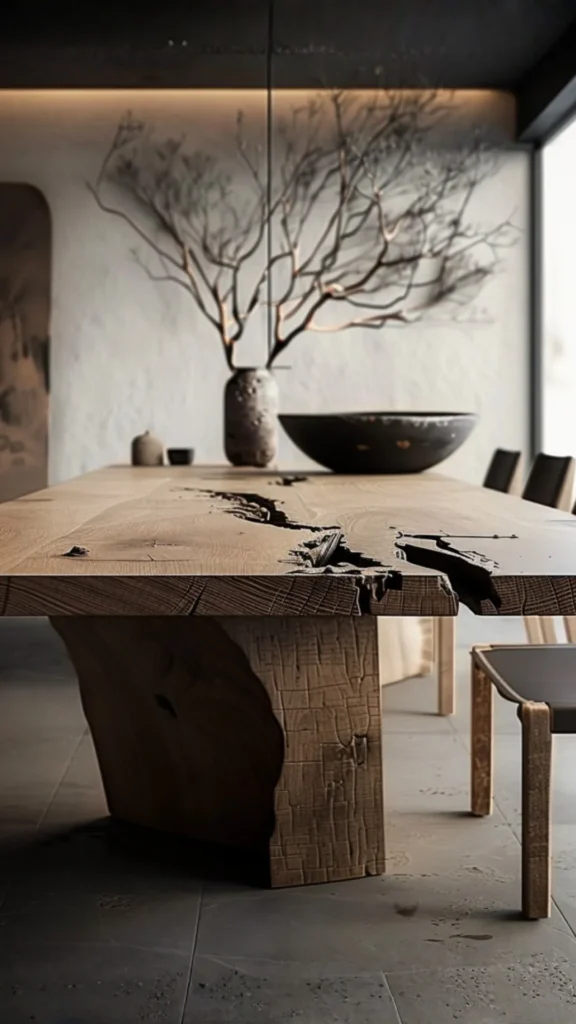
The table setting in a Japandi dining room is the moment where wabi-sabi philosophy becomes most practically visible, the collection of plates, bowls, glasses, and textiles that each person at the table interacts with directly and intimately throughout the meal. In a Japandi context, perfection in a table setting is not the goal. Genuine beauty is, and genuine beauty in a handmade ceramic bowl or a slightly irregular linen napkin is more present and more interesting than the flawless uniformity of a manufactured table service.
Handmade or artisan ceramics in warm earthy clay tones, slightly varying in shape and surface from piece to piece — create a table setting that feels like it has been collected and cared for rather than purchased as a set. Mismatched glasses in complementary tones, a wooden serving board for bread, and a simple carafe for water all contribute to a meal that feels genuinely considered from the first moment guests sit down.
How to style it: The most beautiful table settings in the Japandi tradition are also the simplest, one handmade plate, one ceramic bowl, one glass, one set of simple wooden or matte metal cutlery, one linen napkin. No unnecessary pieces, no elaborate arrangement. Just the things that are needed, chosen beautifully.
Pinterest keywords: Wabi-Sabi Table Setting · Japandi Dining Room Ideas · Japandi Table 2026
10. Keeping the Dining Room Surface Deliberately Clear

The Japandi dining table between meals should be nearly bare, the beautiful wood surface visible, the warmth of the grain accessible to the eye, and the room as a whole feeling spacious and calm rather than layered with objects that were set down and never moved. This deliberate clearing of the table surface between uses is one of the most consistently impactful Japandi dining room habits available, and it costs nothing except the discipline of removing what doesn’t belong.
The single permanent centerpiece, a handmade ceramic vessel with a simple branch or dried grass, provides the only decorative anchor the table needs between meals. Everything else is removed after the table is cleared, and the wood surface is given back its simplicity and its beauty. The next meal begins with a clean surface, and the ritual of setting the table, bringing out the handmade ceramics, laying the linen napkins, lighting the candles, becomes a genuinely pleasurable act rather than an afterthought.
11. A Japandi Dining Bench Instead of Chairs on One Side
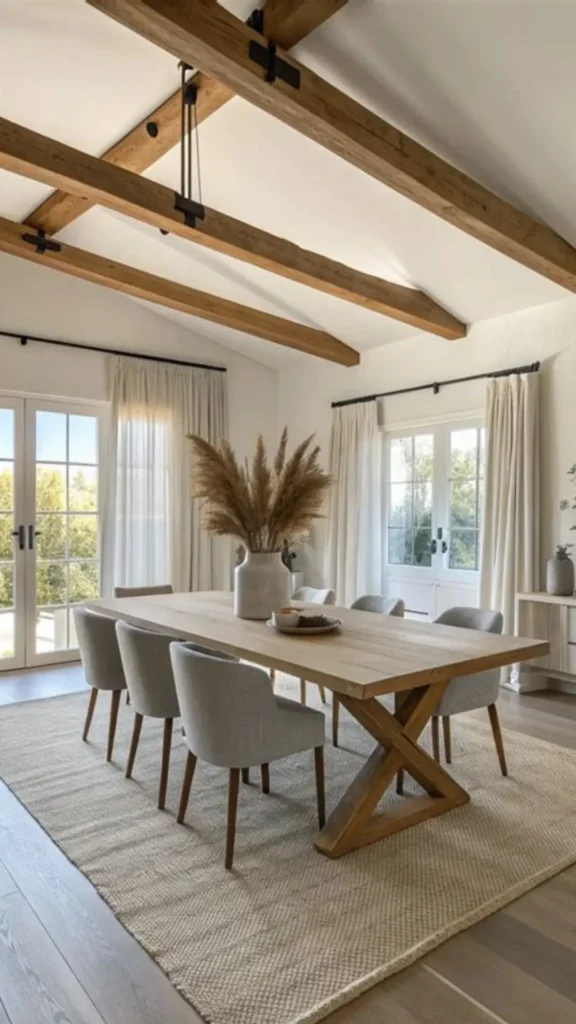
Replacing chairs on one side of the table with a simple, low wood bench introduces a genuine variation in seating height and form while staying entirely within the room’s warm, honest material language, the bench also flexing more easily to accommodate an extra guest than a fixed number of chairs allows.
This approach suits smaller dining rooms particularly well, the bench able to tuck fully beneath the table when not in use, keeping the room feeling spacious and uncluttered between meals.
Pinterest keywords: Japandi Dining Room Ideas · Curved Dining Chair 2026 · Japandi Table 2026
12. A Low Sideboard for Considered Serving and Storage
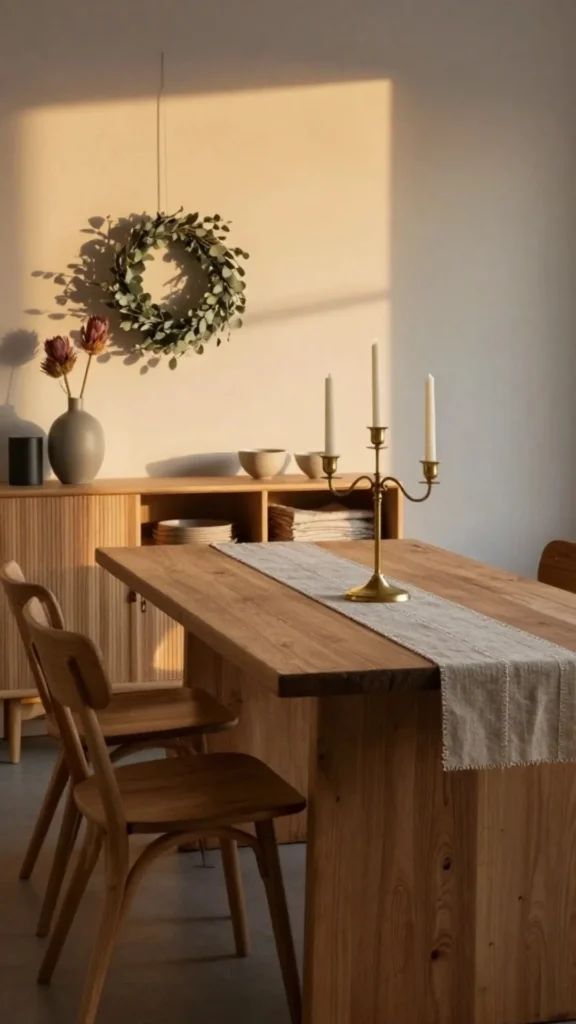
A low, horizontal wood sideboard, kept beneath standard height in keeping with the room’s grounded visual language, provides genuine serving surface and storage for table linens, candles, and ceramics without ever competing with the table itself for visual attention.
Styled with the same restraint as every other surface in the room, one ceramic vessel, a folded stack of linen napkins, and generous empty space, the sideboard becomes another quiet expression of the room’s overall discipline.
Pinterest keywords: Japandi Dining Room Ideas · Open Wood Shelving Dining · Japandi Shelf Styling 2026
13. A Japandi Dining Room Rug Beneath the Table
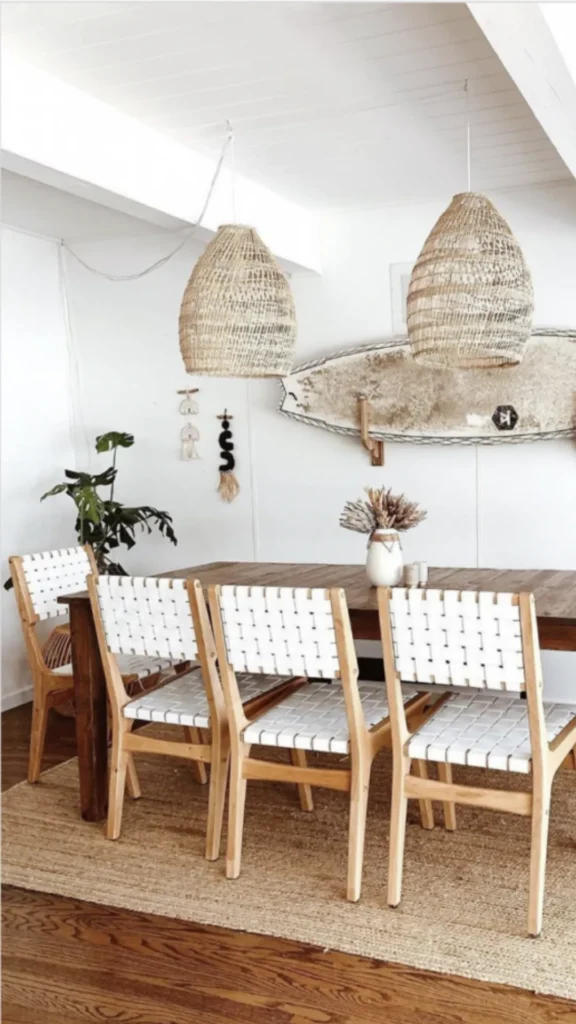
A simple flatweave rug in undyed jute or wool, sized generously enough that all chair legs remain on it even when pulled out, grounds the dining arrangement and adds warmth underfoot without introducing any pattern that would disrupt the room’s calm.
Choosing texture over pattern here matters as much as it does throughout the rest of the home, the rug’s honest, natural material speaking the same quiet language as the wood table above it.
Pinterest keywords: Japandi Dining Room Ideas · Natural Light Dining Room · Japandi Table Styling 2026
14. A Sliding Shoji-Inspired Door to the Kitchen
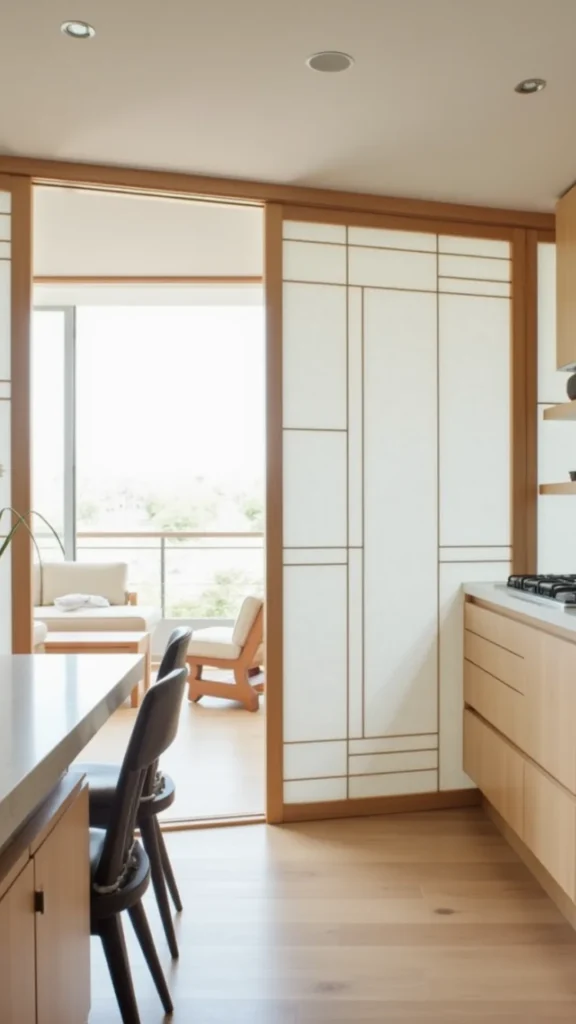
A modern interpretation of a shoji screen, frosted glass or woven panel within a slim wood frame, sliding between the dining room and kitchen allows the two spaces to be visually separated during a meal and reopened for easy movement afterward.
This detail filters light softly between the two rooms even when closed, preserving the sense of openness and natural light central to Japandi design while still offering genuine acoustic and visual privacy when needed.
Pinterest keywords: Japandi Dining Room Ideas · Natural Light Dining Room · Japandi Dining 2026
15. A Considered Glassware and Tableware Collection
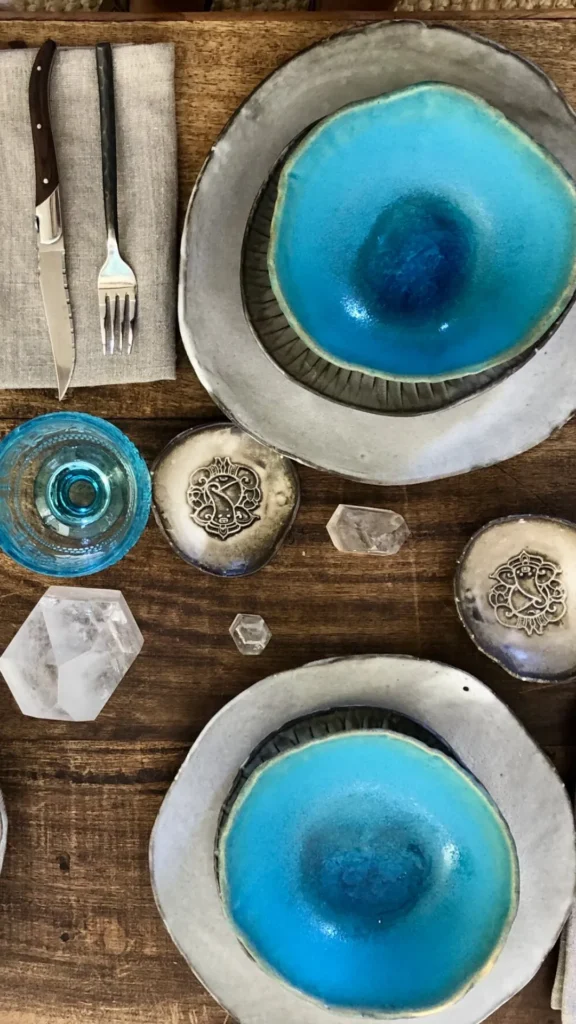
A small, genuinely edited collection of handmade glassware and ceramic plates, displayed on open shelving rather than hidden entirely behind closed doors, turns the everyday tools of dining into part of the room’s visual story.
Choosing pieces that vary slightly in glaze or form rather than a uniform manufactured set reinforces the wabi-sabi appreciation for handmade irregularity found throughout the rest of the room’s styling.
Pinterest keywords: Japandi Dining Room Ideas · Wabi-Sabi Table Setting · Japandi Table 2026
16. A Built-In Banquette for a Cozy Corner
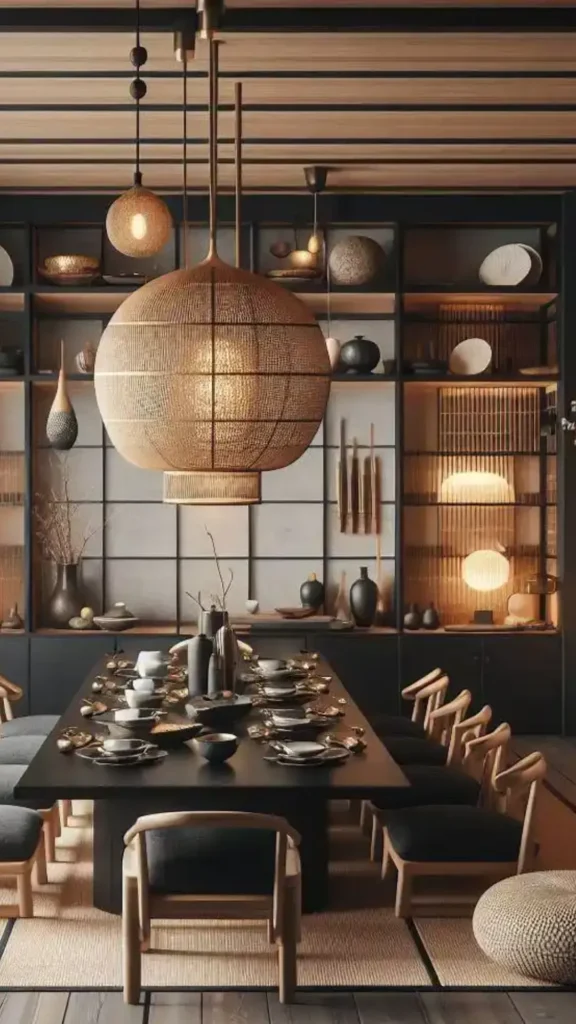
A built-in banquette, upholstered simply in warm linen and fitted into an existing corner, creates an efficient and genuinely cozy dining arrangement, particularly effective in smaller rooms where a full set of freestanding chairs would consume too much floor space.
The banquette’s low, grounded profile also reinforces the same close-to-the-floor quality found throughout Japandi furniture more broadly, keeping the room’s overall visual weight settled and calm.
Pinterest keywords: Japandi Dining Room Ideas · Curved Dining Chair 2026 · Japandi Dining 2026
17. A Japandi Dining Nook for Small Spaces
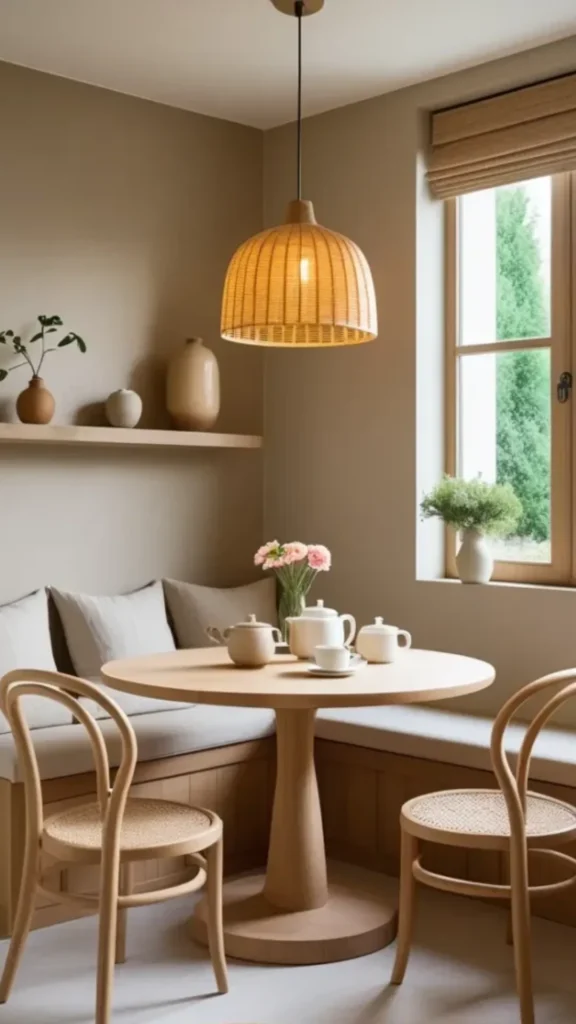
In a smaller home, a compact dining nook, a round table for two paired with a bench and a single chair, proves that the Japandi dining philosophy scales beautifully regardless of available square footage, the same principles of warm material and disciplined restraint applying just as effectively at a smaller size.
Keeping the nook to genuinely essential pieces only, resisting the temptation to add extra storage or decoration simply because the room is small, preserves the same calm the aesthetic promises in any larger space.
Pinterest keywords: Japandi Dining Room Ideas · Solid Wood Dining Table · Japandi Table 2026
18. Seasonal Styling Without Full Redecoration
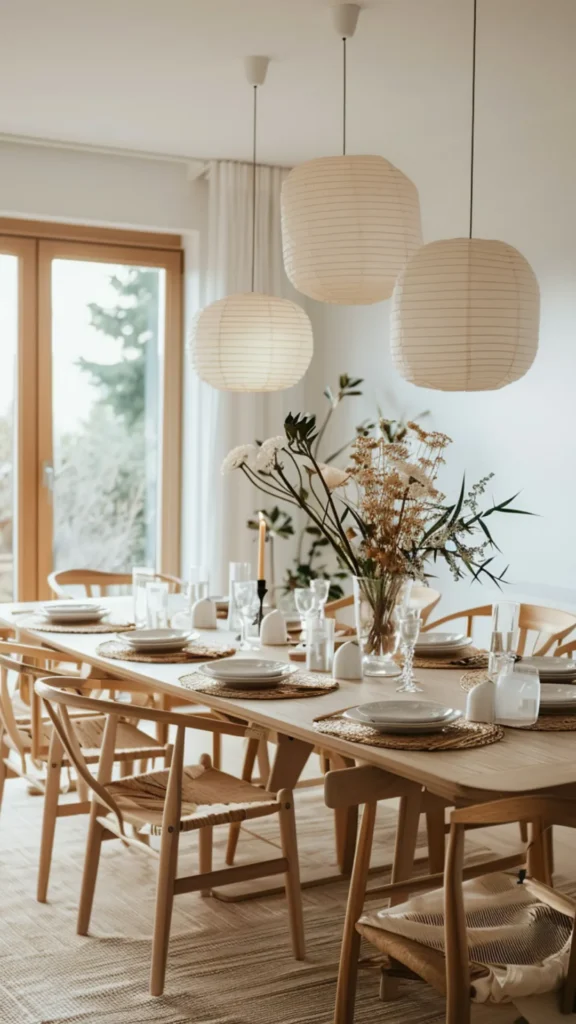
Rather than a full seasonal refresh, a genuinely Japandi dining room shifts subtly, a different dried branch or single seasonal bloom in the centrepiece vessel, while every other element of the room stays exactly the same throughout the year.
This restrained approach to seasonal change mirrors the broader philosophy that meaningful change comes from small, considered gestures rather than wholesale redecoration of an already resolved room.
Pinterest keywords: Japandi Dining Room Ideas · Ceramic Table Centrepiece · Japandi Table Styling 2026
19. A Japandi Dining Room for Family Life
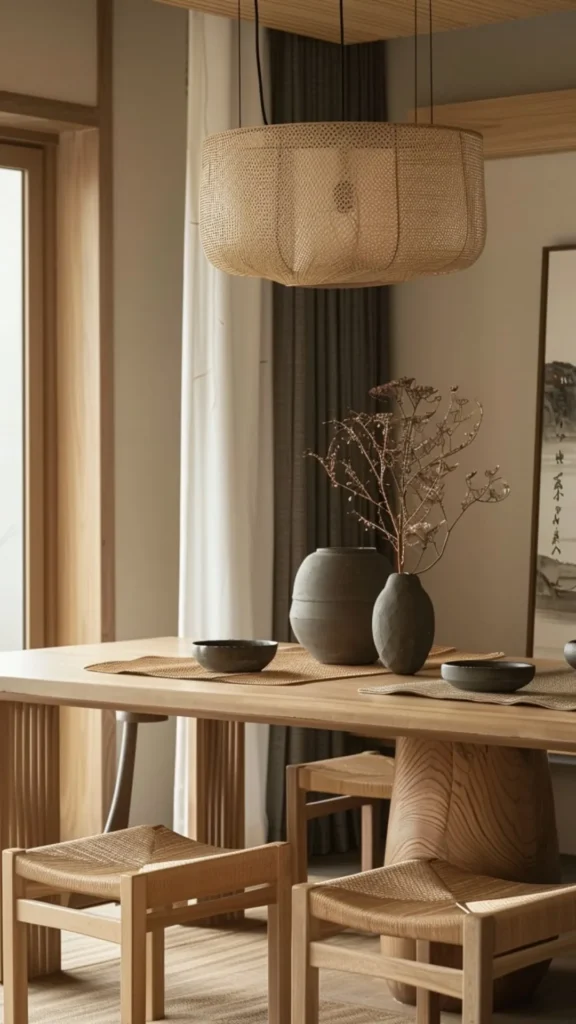
Choosing a durable, easily wiped wood finish for the table and performance linen for cushions allows the Japandi dining aesthetic to coexist genuinely with young children rather than being reserved for adult-only entertaining.
The philosophy’s core emphasis on fewer, better-chosen objects actually suits family mealtimes particularly well, less to spill on, less to knock over, and a calmer visual environment for everyone gathered around the table.
Pinterest keywords: Japandi Dining Room Ideas · Solid Wood Dining Table · Wishbone Chair Dining 2026
20. A Stone or Concrete Dining Table Alternative
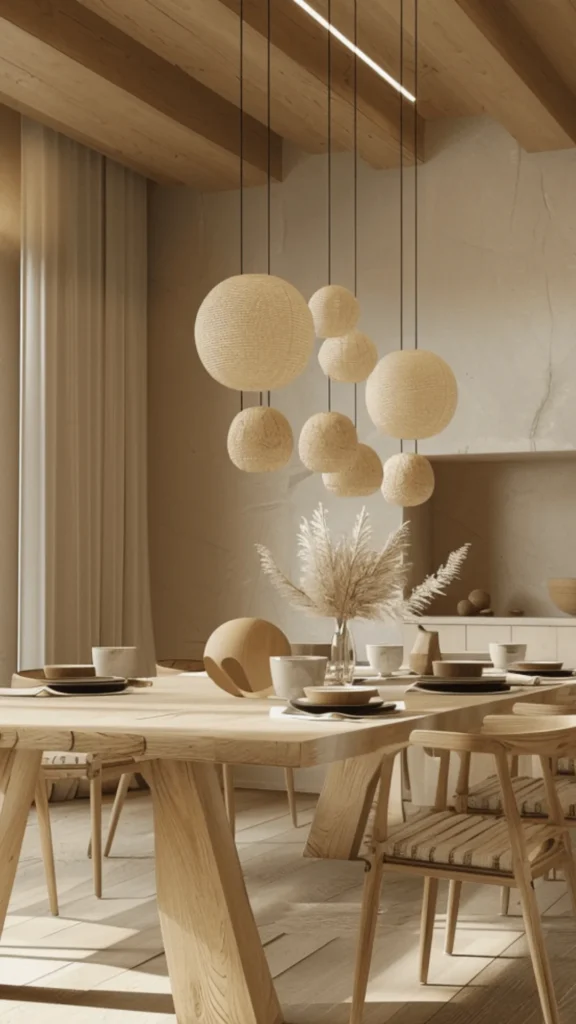
For a genuinely different material statement, a warm stone or poured concrete table top, paired with simple wood or matte metal legs, brings a cooler, more architectural quality into the dining room while still honoring the honest, natural material philosophy at the heart of Japandi design.
This choice pairs beautifully with warm wood chairs and a rattan pendant above, the material contrast between stone and wood echoing the same warm-cool balance found throughout the best Japandi kitchens.
Pinterest keywords: Japandi Dining Room Ideas · Japandi Table 2026 · Dining Room Wall Colour
21. A Tea Ritual Corner Near the Dining Table
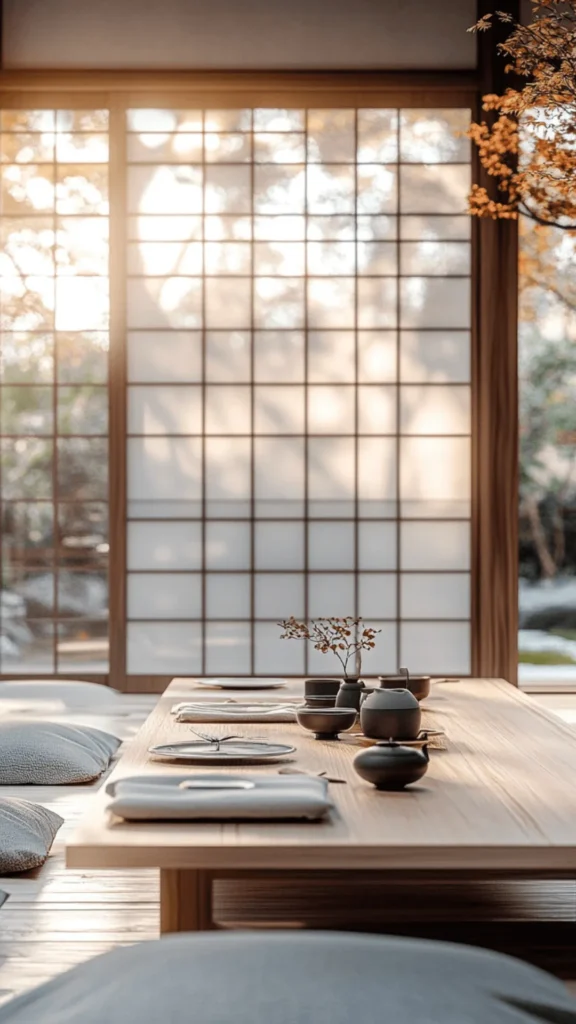
A small tray holding a handmade ceramic teapot and two cups, kept permanently set on a nearby sideboard or shelf, turns a daily tea ritual into part of the dining room’s considered styling rather than an occasional, hastily assembled event.
This detail extends the room’s sensory experience beyond mealtimes themselves, reinforcing the Japandi principle that a home’s most meaningful rituals deserve their own small, dedicated space.
Pinterest keywords: Japandi Dining Room Ideas · Open Wood Shelving Dining · Wabi-Sabi Table Setting
22. A Single Considered Piece of Art
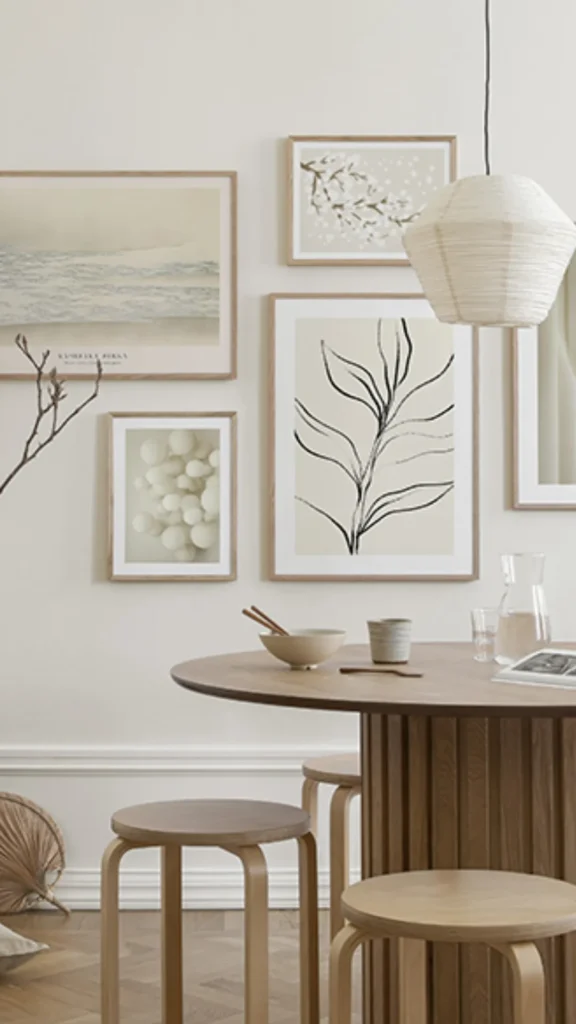
One genuinely considered piece of art, an abstract ink wash, a simple landscape, or a textured natural fiber piece, positioned on the wall facing the table carries far more visual weight in a Japandi dining room than a gallery wall of smaller works ever could.
Choosing art with visible texture or handmade quality over flat, glossy prints keeps this single statement consistent with the room’s broader appreciation for material honesty and imperfection.
Pinterest keywords: Japandi Dining Room Ideas · Dining Room Wall Colour · Muted Green Dining Room 2026
23. Outdoor-Adjacent Japandi Dining
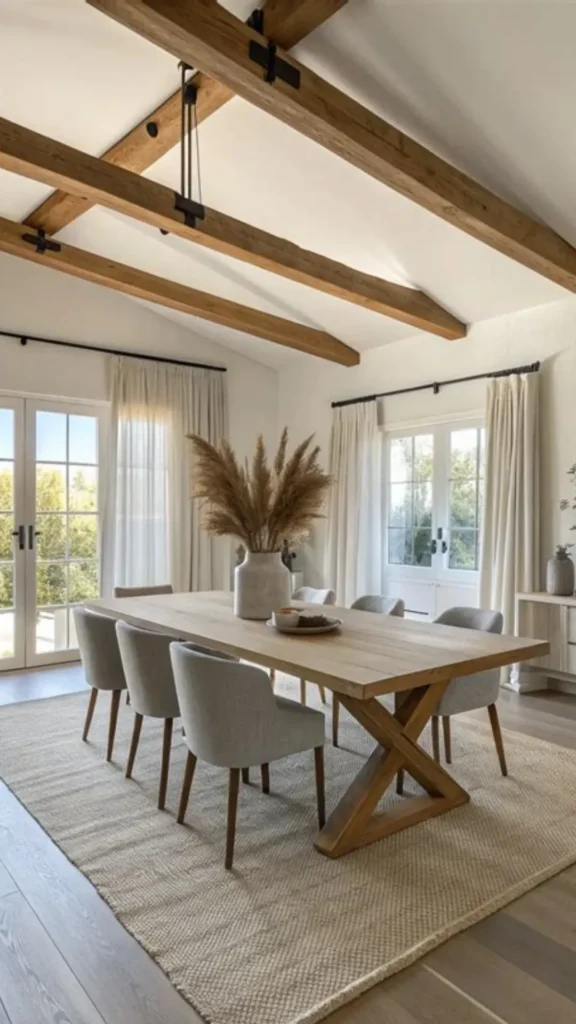
Positioning the dining table near large sliding or bifold doors that open fully onto a garden or terrace extends the room’s connection to natural light and the outdoors even further, blurring the boundary between the considered interior and the natural world beyond it.
This layout works particularly beautifully in warmer months, when the table can genuinely move outdoors, or the doors can simply remain open to let air and light move freely through the space during a meal.
Pinterest keywords: Japandi Dining Room Ideas · Natural Light Dining Room · Japandi Dining 2026
24. Caring for a Solid Wood Dining Table Over Time
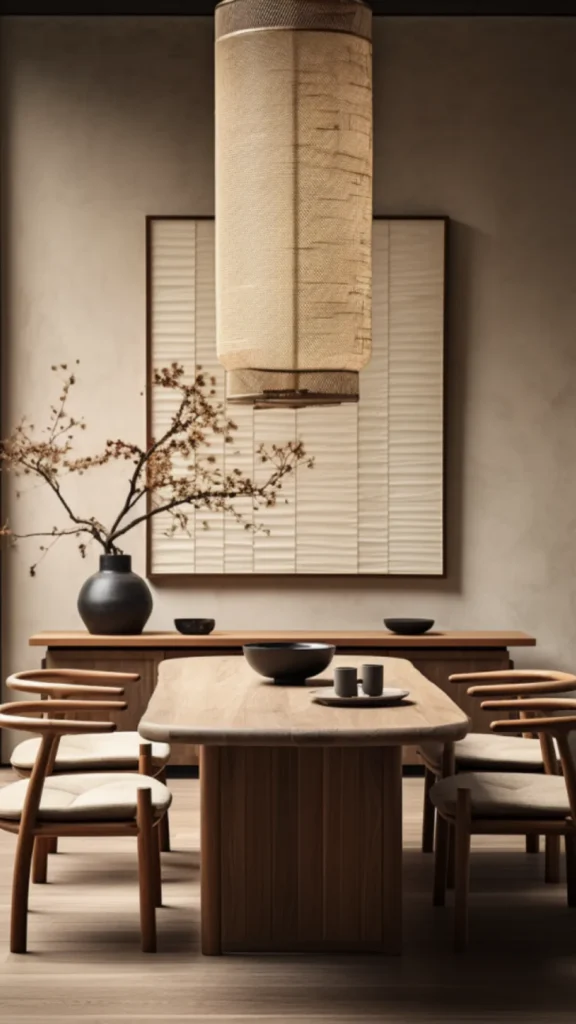
A solid wood table benefits from an occasional application of natural wood oil, applied every six to twelve months depending on use, keeping the grain nourished and allowing the table to develop the same beautiful patina of daily life that defines the wabi-sabi philosophy.
Using coasters for hot dishes and wiping spills promptly, rather than avoiding all contact with the table’s surface, allows the wood to age honestly, its marks and slight variations becoming part of its story rather than something to be hidden.
Pinterest keywords: Japandi Dining Room Ideas · Solid Wood Dining Table · Japandi Table 2026
25. Why the Japandi Dining Room Rewards Genuine Daily Use
Of every room explored across this site, the dining room is perhaps the one most explicitly designed for shared experience rather than solitary rest, and a genuinely Japandi dining room rewards that purpose by making every meal, not just special occasions, feel considered and worth lingering over.
That consistency, a table that looks and feels just as beautiful on an ordinary Tuesday evening as it does when set for guests, is ultimately the deepest expression of the Japandi philosophy applied to this particular room. For more on how these same principles apply throughout the rest of the home, visit our complete Japandi Style Guide.
Pinterest keywords: Japandi Dining Room Ideas · Japandi Style Guide 2026 · Japandi Interior Design
For more on Japandi styling principles applied throughout your home, visit our complete Japandi Style Guide
Final Thoughts
A Japandi dining room is ultimately a room designed for presence, for the quality of attention and connection that becomes possible when the visual environment is calm, the materials are honest and warm, and the table itself is beautiful enough to make sitting at it feel like a choice rather than a routine.
The best meals happen in beautiful rooms. Design yours to be one. 🌿


