


There’s a particular quality that the best Japandi living rooms share, a quality that’s difficult to articulate precisely but immediately, physically felt when you enter one. Something settles in you. Your breathing slows slightly. The visual noise that accompanies most modern interiors simply isn’t there, and in its absence something genuine and restorative takes its place.
This is what Japandi living room ideas are ultimately about, not a specific collection of furniture or a particular palette, but a design philosophy that creates spaces where the human nervous system can genuinely rest. The blend of Japanese wabi-sabi and Scandinavian hygge that defines Japandi produces living rooms that are warm without being cluttered, minimal without being cold, and beautiful without demanding your attention in ways that exhausting, over-decorated rooms do. Here are 10 ideas for creating one. 🌿
What Makes a Living Room Genuinely Japandi
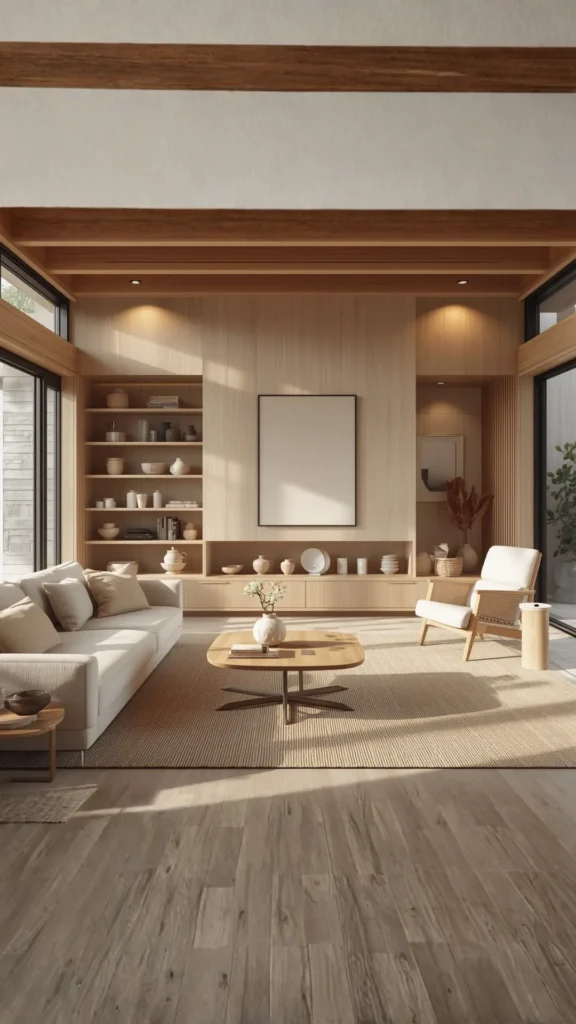
The Japandi living room sits at the intersection of two distinct but philosophically compatible design traditions, Japanese interiors with their deep respect for natural materials, imperfection, and the beauty of restraint, and Scandinavian interiors with their commitment to warmth, functionality, and the idea that design should serve and improve daily life. The result, when done genuinely rather than superficially, is a living room that feels as though every element belongs and nothing is present by accident.
According to Dezeen, Japandi has maintained its position as one of the most consistently searched and saved interior design styles globally throughout 2026, driven by a broad cultural desire for homes that feel genuinely calm rather than simply aesthetically neutral. The distinction is important, Japandi calm is active rather than passive. It’s created by specific, deliberate choices that work together to produce an environment where the mind can settle.
1. A Linen or Bouclé Sofa in Warm Neutral Tones
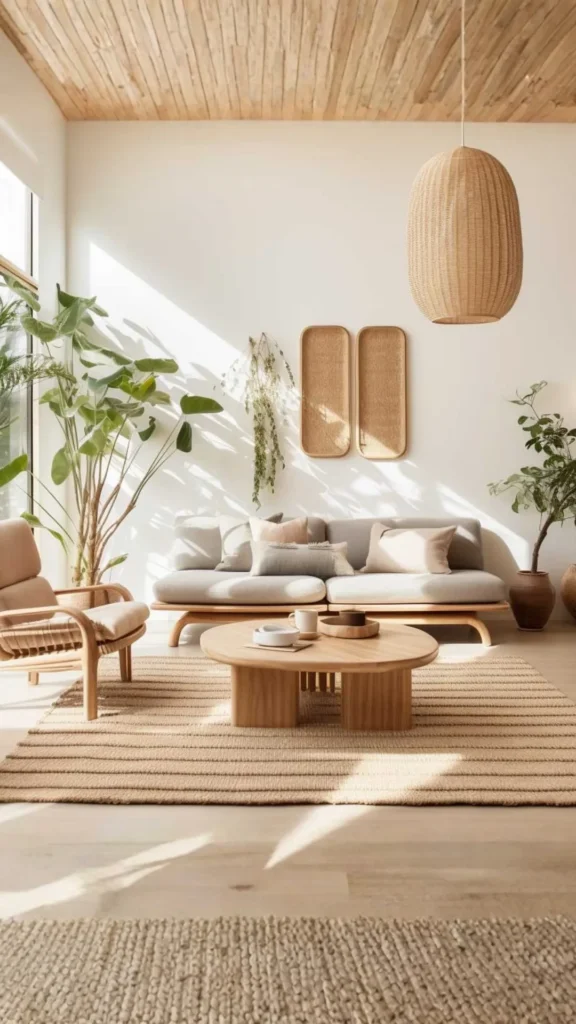
The sofa is the largest surface in any living room and the piece that most powerfully establishes the room’s emotional register. In a Japandi living room, the sofa needs to feel warm, honest, and undemanding, a piece that invites you to sit without making a statement about itself. Linen and bouclé in warm oat, soft cream, or warm sand are the natural choices, both for their material authenticity and their tactile warmth.
The silhouette matters as much as the material. A sofa with a clean, considered profile, a slight low-profile, visible legs in warm wood, arms that don’t overwhelm the form, reads as Japandi. A sofa that’s oversized, heavily tufted, or aggressively styled in any direction reads as something else entirely. The Japandi sofa is present without insisting on itself, comfortable without being casual, and beautiful without being decorative.
How to style it: Two or three cushions maximum, in complementary linen or cotton textures, never in competing patterns. A single folded throw in natural wool over one arm. The sofa surface should feel generous and inviting rather than accessory-laden.
Pinterest keywords: Japandi Living Room Ideas · Linen Sofa Living Room · Japandi Sofa 2026
2. Low-Profile Furniture That Grounds the Space
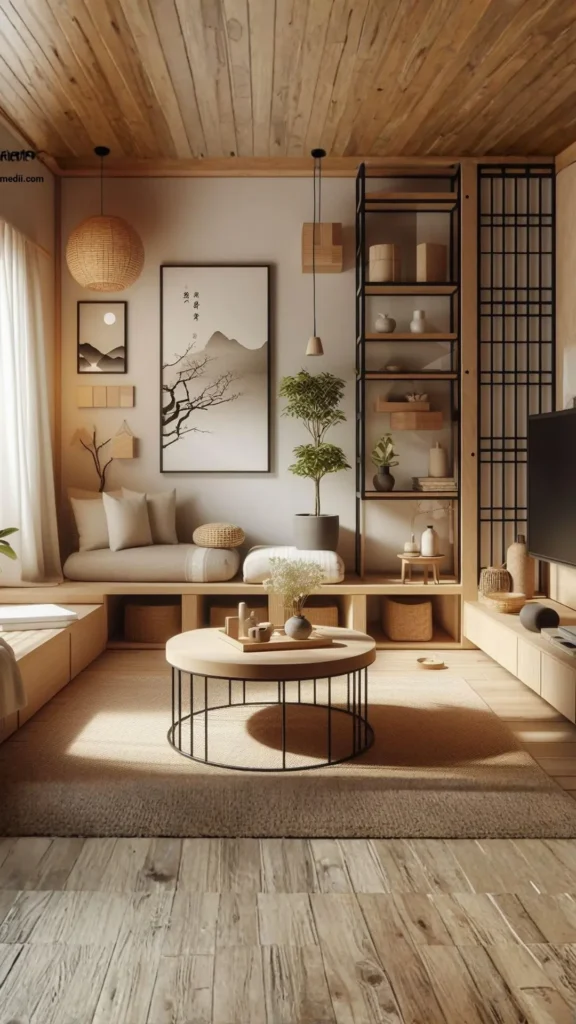
One of the most distinctive and most powerful qualities of genuinely Japandi living room furniture is its relationship with the floor. Low-profile pieces, a sofa that sits closer to the ground than conventional height, a coffee table that barely clears 35cm, shelving that runs horizontally rather than reaching for the ceiling, ground the visual weight of the room in a way that creates an immediate sense of calm and spaciousness.
This closeness to the floor has deep roots in Japanese interior philosophy, where proximity to the ground is associated with stability, humility, and genuine comfort rather than the performative comfort of elevated furniture. In a Western living room context, incorporating even one or two deliberately low pieces shifts the room’s centre of gravity downward and creates a settled, intentional quality that higher-profile furniture arrangements lack.
How to style it: Keep the ceiling plane clear, no overhead clutter, no busy pendant lights in a room where the visual language is already deliberately grounded. A single warm pendant or a low-set floor lamp provides all the additional vertical element the room needs.
Pinterest keywords: Japandi Living Room Ideas · Low Profile Sofa · Japandi Furniture 2026
3. Warm Wood Throughout, Oak, Walnut and Ash
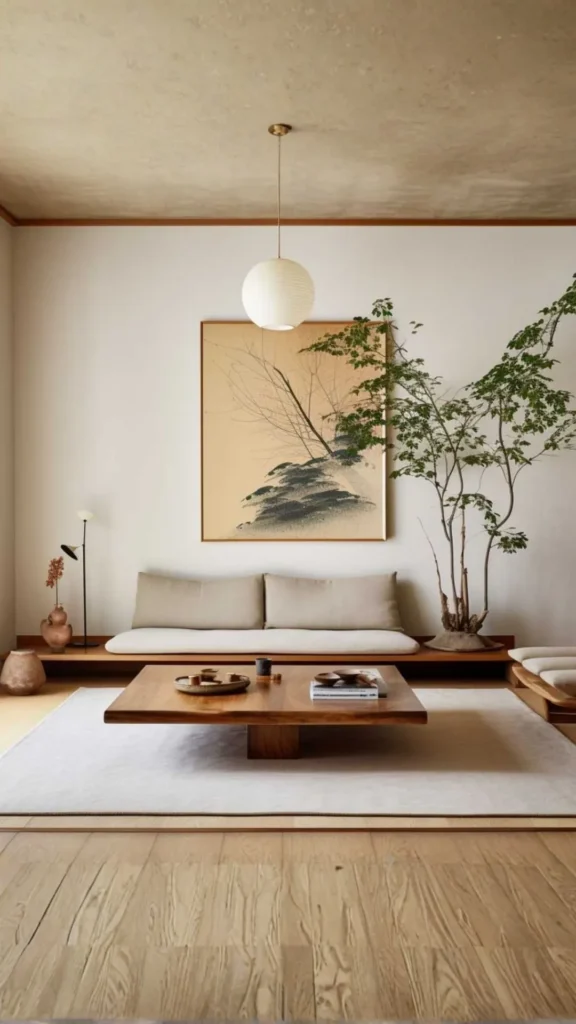
Wood is the material that more than any other defines the warmth within Japandi style, it’s what prevents the aesthetic from sliding toward the cool, clinical minimalism that it superficially resembles. In a Japandi living room, warm wood appears throughout: in the flooring, the coffee table, the shelving, the side tables, and the visible legs and frames of the upholstered pieces. This consistency of material creates a warmth and cohesion that cooler materials simply cannot.
The specific wood matters. Oak and ash in their natural, warm-toned states bring the honey and amber warmth that Japandi requires. Walnut introduces depth and richness. What to avoid is bleached or cool-toned wood, the very pale, almost white Scandinavian woods that lean cool rather than warm. The wood in a Japandi living room should feel like something found in a forest rather than something that has been processed to within an inch of its nature.
How to style it: Allow the grain and natural variation of the wood to be visible and celebrated rather than hidden under paint or stain. The imperfections and irregularities of real wood are part of its wabi-sabi beauty, they’re what make the material feel honest and alive.
Pinterest keywords: Japandi Living Room Ideas · Warm Wood Living Room · Oak Furniture Living Room 2026
4. A Restrained Neutral Palette with One Earthy Accent
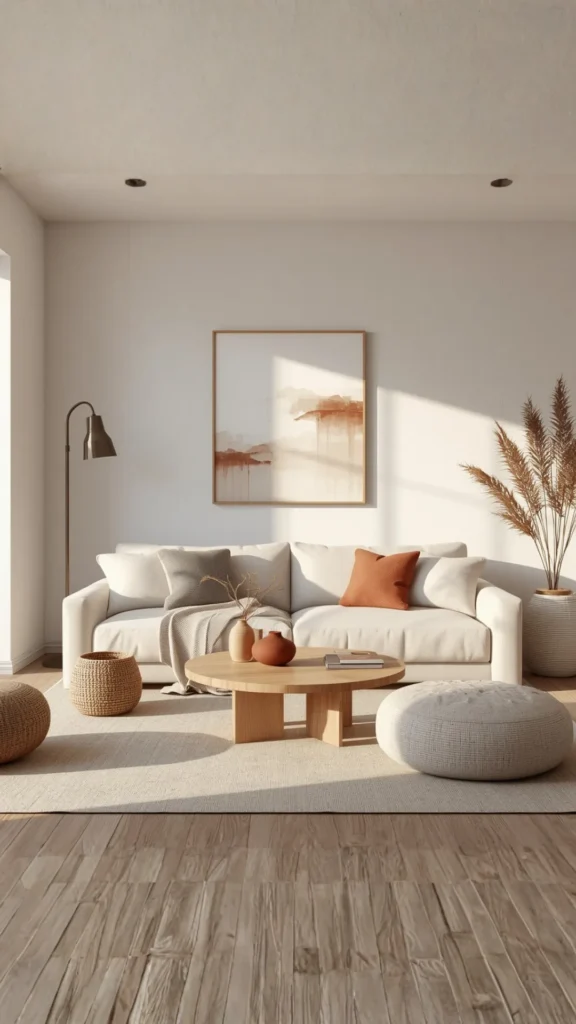
The color palette of a Japandi living room is built on restraint and warmth, a narrow range of warm neutrals used consistently throughout the room, with one carefully chosen earthy accent that provides just enough contrast to prevent the palette from feeling flat. Warm white or oat walls, sandy and warm grey neutrals in the upholstery, natural wood tones throughout, and one accent, a soft terracotta cushion, a warm olive plant pot, a deep sage green ceramic, that adds personality without disrupting the calm.
The discipline required to maintain this restraint is considerable and entirely intentional. Every time you’re tempted to add another accent color, another pattern, or another tone that falls outside the established palette, the correct Japandi response is to resist that temptation. The value of a Japandi palette comes precisely from its consistency, the way every element in the room speaks the same quiet, warm language.
How to style it: Choose your accent colour before you choose any accessories, and then hold to it consistently. One accent colour used in three or four places is a design choice. Three different accent colours used once each is a collection of things.
Pinterest keywords: Japandi Living Room Ideas · Japandi Colour Palette · Neutral Living Room 2026
5. Wabi-Sabi Objects, The Beauty of Imperfection
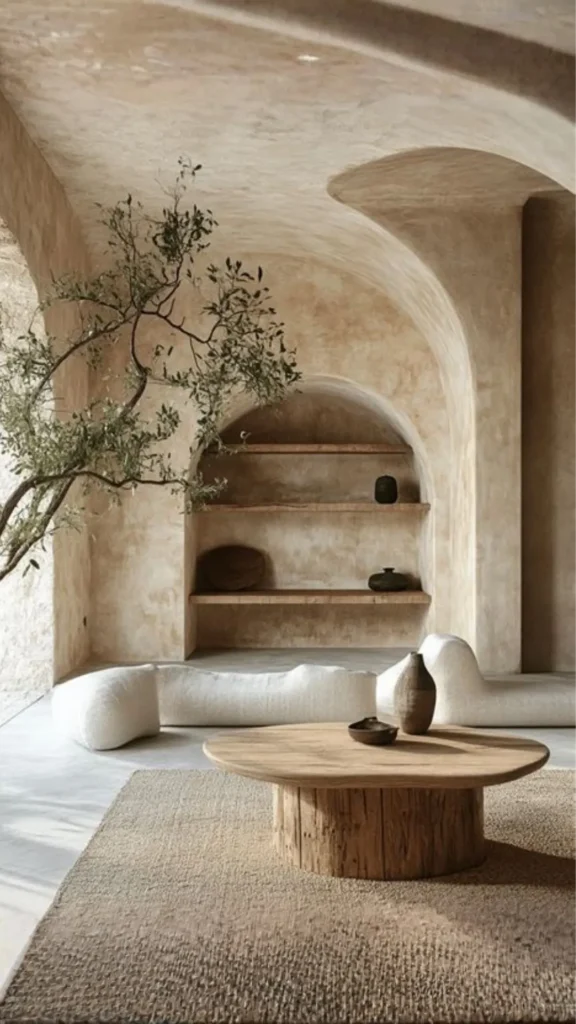
Wabi-sabi, the Japanese aesthetic philosophy of finding beauty in imperfection, incompleteness, and the marks of time, is what gives a Japandi living room its soul. A perfectly smooth, uniformly manufactured living room can be technically flawless and yet feel emotionally empty. A living room where the decorative objects carry evidence of being handmade, of being worn, of being genuinely natural rather than perfectly manufactured, feels alive in a way that precision alone cannot produce.
In practice, wabi-sabi in a Japandi living room means choosing a handmade ceramic vase whose surface is slightly irregular. A piece of driftwood as a natural sculptural object. A candle that has been burned and shows its use. A linen cushion whose slight imperfections in the weave are visible and celebrated rather than hidden. These objects don’t diminish the room’s beauty, they are precisely what make it beautiful in the deepest and most genuine sense.
How to style it: When buying decorative objects for a Japandi living room, always choose handmade over machine-made where the choice is available. The slight irregularity of a hand-thrown ceramic over a mould-cast one makes all the difference to how the object reads in the room.
Pinterest keywords: Wabi-Sabi Interior Design · Japandi Living Room Ideas · Japandi Decor 2026
6. Natural Light Maximized and Framed
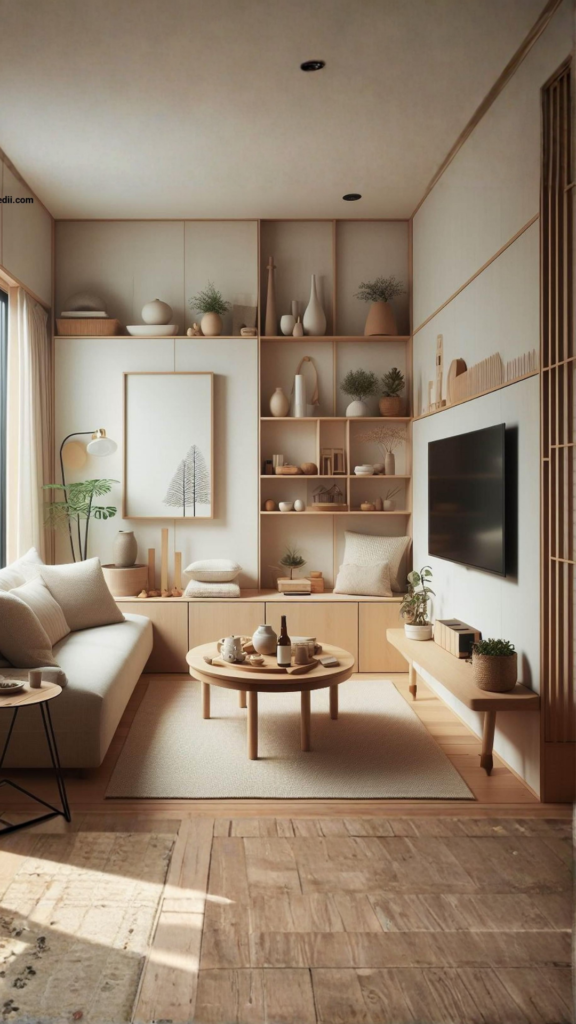
Natural light is not just preferable in a Japandi living room, it’s philosophically central. Both Japanese and Scandinavian design traditions have developed distinctive and sophisticated relationships with natural light, shaped by the specific qualities of light in their respective geographies. The quality of Japanese interiors in the filtered light described by Jun’ichiro Tanizaki, soft, indirect, gently shadowed, and the Scandinavian maximization of scarce northern daylight both inform how a genuinely Japandi space relates to its light source.
In practical terms, this means keeping windows completely unobstructed by heavy drapes or furniture, using sheer linen curtains that allow light to diffuse softly into the room rather than blocking it, and positioning mirrors deliberately to reflect available natural light into darker corners. The quality of natural light shifts throughout the day in ways that warm artificial lighting never quite replicates, a Japandi living room is designed to be beautiful in daylight first and atmospheric in lamplight second.
How to style it: Keep windowsills completely clear. Position one large mirror on the wall most likely to reflect natural light from the window. In the evenings, transition entirely to warm lamp and candlelight, overhead artificial lighting in a Japandi space consistently undermines the calm that the room’s other elements work to create.
Pinterest keywords: Japandi Living Room Ideas · Natural Light Living Room · Japandi Design 2026
7. Minimal but Meaningful Decoration
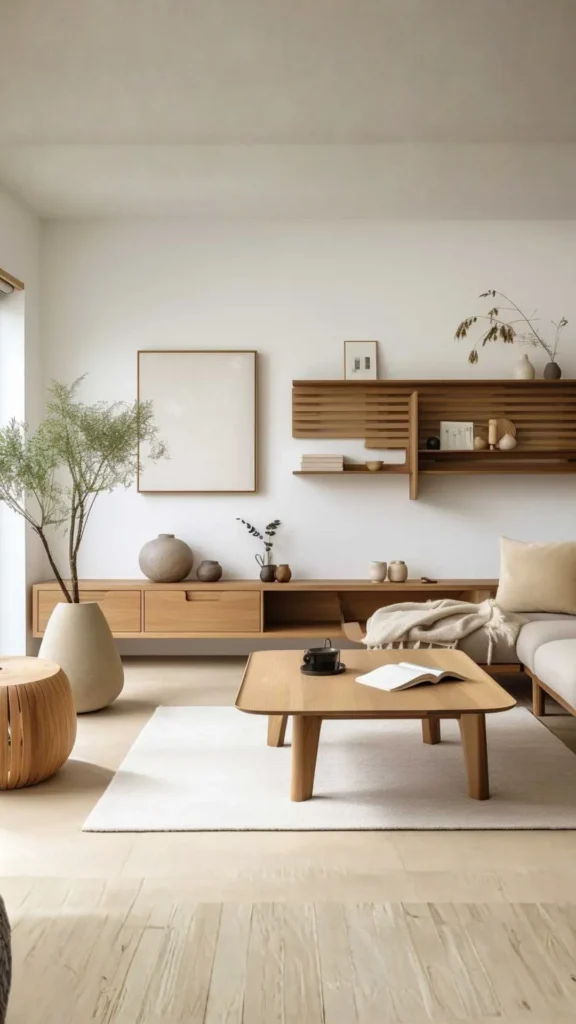
In a Japandi living room, the decorative objects present are few, and precisely because they are few, each one carries a weight and presence that objects in a more abundantly decorated room never achieve. A single large piece of artwork above the sofa. Three ceramics on the coffee table. One plant. These choices are deliberate, limited, and genuinely considered, and the restraint around them is what gives each individual element its significance.
The principle here is one that minimalism often gets wrong, it isn’t about removing everything beautiful or personal. It’s about removing everything that isn’t genuinely beautiful or genuinely meaningful, and then allowing what remains to be fully seen and appreciated. A room with three objects you truly love will always feel more personal and more considered than a room with thirty objects chosen with less care.
How to style it: Before adding anything new to a Japandi living room, remove one existing item. This practice — of editing before adding, keeps the room honest and prevents the gradual accumulation of objects that erodes the calm over time.
Pinterest keywords: Japandi Living Room Ideas · Minimal Living Room Decor · Japandi Style 2026
8. Handmade Ceramics and Natural Vessels
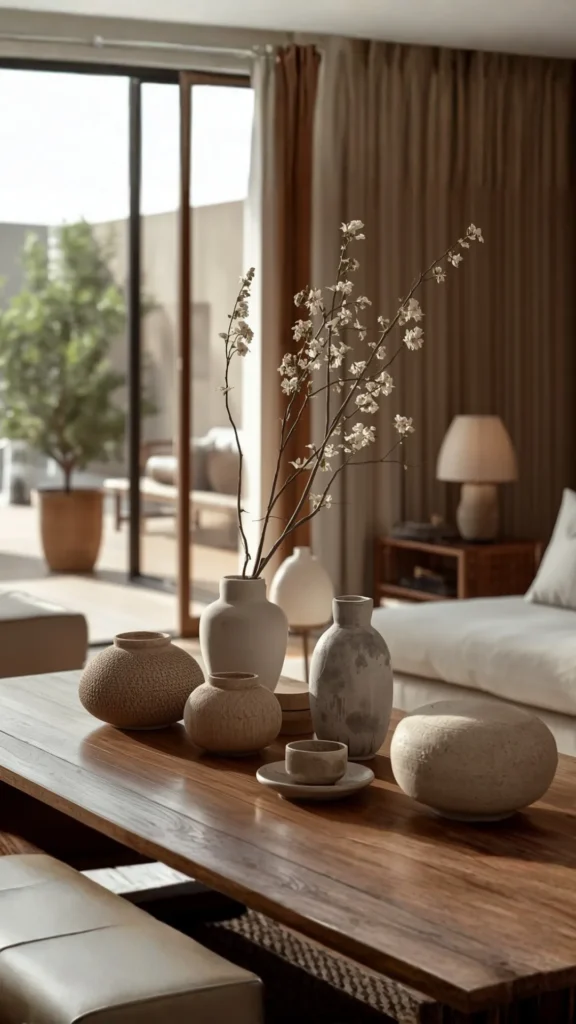
Ceramics are the accessories that most naturally and most beautifully express the Japandi aesthetic, their handmade quality, natural earth-based materials, and slight irregularities align perfectly with the wabi-sabi values at the heart of the style. A simple hand-thrown vase in warm grey or sandy clay, a ceramic bowl on the coffee table, a set of vessels in varying heights on the shelf, these objects bring warmth and organic texture to the room without introducing any visual noise.
The key distinction in choosing ceramics for a Japandi living room is between pieces that feel genuinely handmade and those that are machine-produced to mimic the handmade aesthetic. The former carries genuine warmth and presence; the latter reads as decorative rather than meaningful, which is precisely what Japandi is trying to move away from. Natural vessels, a simple dried grass arrangement, a branch in a tall vase, a few dried flowers, extend this organic quality with living or once-living natural material.
How to style it: Group ceramics in odd numbers, three or five pieces of varying heights read more naturally than even groupings. Allow negative space between each piece so each can be seen individually rather than reading as a single dense cluster.
Pinterest keywords: Japandi Ceramics · Japandi Living Room Ideas · Handmade Ceramics Home 2026
9. Layered Natural Textures, Linen, Wool and Rattan
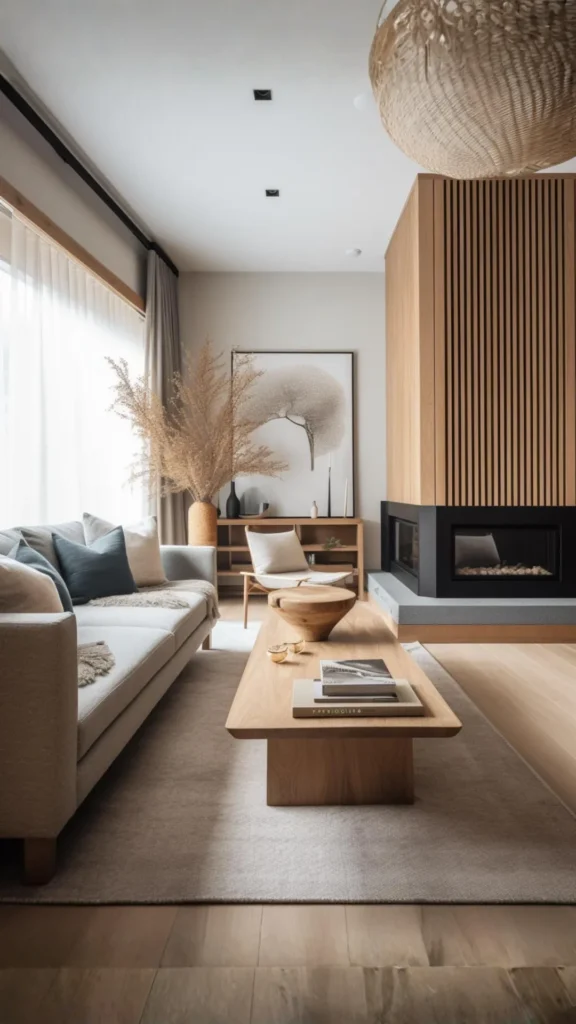
Texture is what prevents a Japandi living room from feeling flat or cold despite its disciplined color palette and restrained decoration. Linen upholstery with a visible weave, a chunky wool throw folded over the sofa arm, a rattan tray on the coffee table, a jute rug underfoot, each of these introduces a different tactile quality that the eye moves across with pleasure rather than stopping on any single element.
The layering of natural textures also reinforces the material authenticity that is central to the Japandi philosophy. Every material in the room can be identified as coming from a specific natural source, plant fiber, animal fiber, natural clay, natural wood. This material honesty creates a room that feels genuinely connected to the natural world in a way that no synthetic material can replicate, regardless of how convincing its visual imitation.
How to style it: Vary the texture scale as much as the material, a finely woven linen beside a chunky knit beside a smooth ceramic beside a rough jute creates a richer textural conversation than three materials with similar surface qualities.
Pinterest keywords: Japandi Living Room Ideas · Natural Textures Living Room · Linen Living Room 2026
10. The Art of the Empty Surface
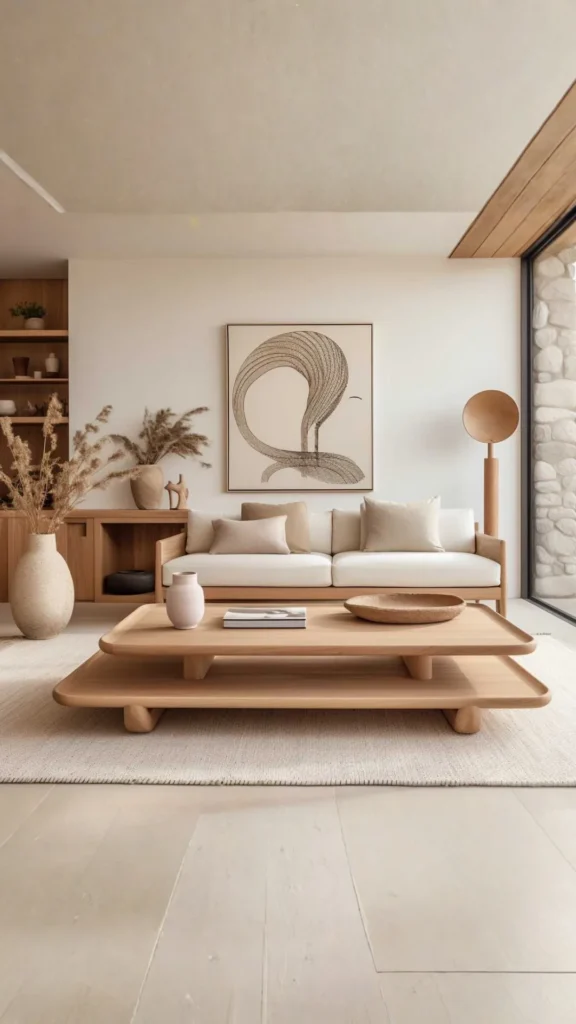
The most counterintuitive and most powerful Japandi living room principle is the deliberate, intentional use of empty surface space as a design element in its own right. In most homes, every horizontal surface, the coffee table, the sideboard, the shelf, accumulates objects until there is no space left. In a Japandi living room, empty surface is protected and preserved with the same care given to the objects placed on it.
This isn’t minimalism for minimalism’s sake, it’s a genuine design choice based on the understanding that negative space gives the objects present their visual weight and presence. A single ceramic vase on a completely clear coffee table is more visible, more beautiful, and more considered than the same vase on a coffee table covered with books, candles, remote controls, and accumulated objects. The empty space around it is what allows it to be seen.
11. A Japandi Living Room Reading Nook
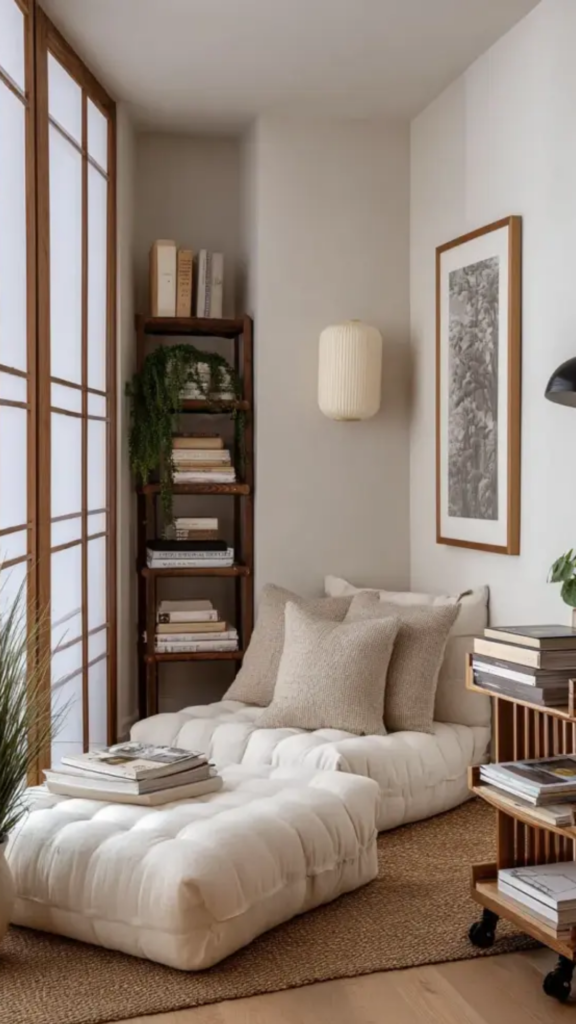
A single low-profile chair, positioned near a window with a simple floor lamp beside it, creates a genuine retreat within the living room, a corner set apart from the main seating arrangement but still speaking the same restrained, warm material language.
Keeping this nook to just the chair, the lamp, and one small side table preserves the same disciplined restraint found throughout the rest of the room, resisting the temptation to over-furnish a corner simply because space allows it.
Pinterest keywords: Japandi Living Room Ideas · Low Profile Sofa · Japandi Furniture 2026
12. A Sliding Shoji-Inspired Room Divider
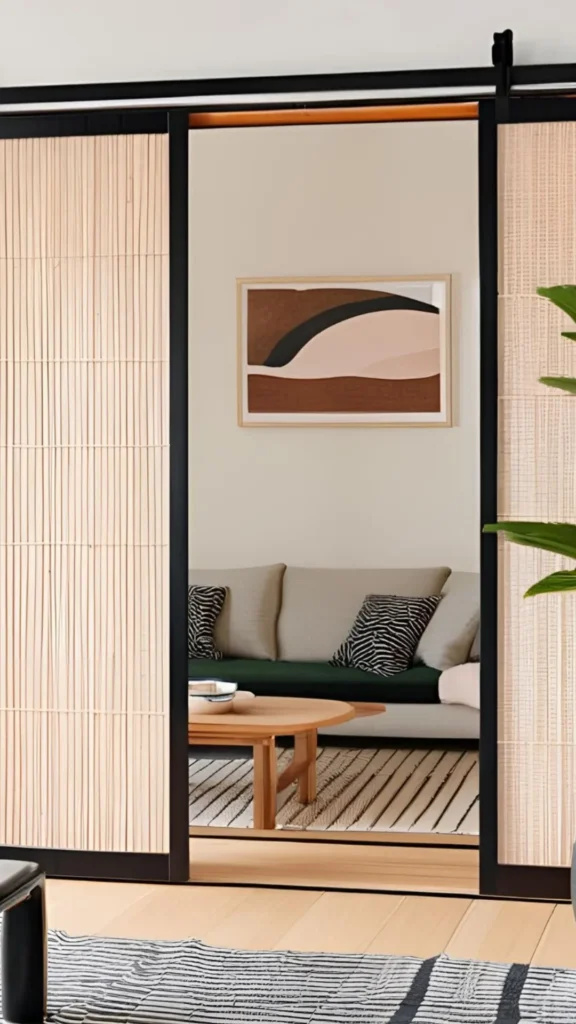
A modern interpretation of a shoji screen, frosted glass or woven paper within a slim wood frame, filters light softly between the living room and an adjoining space while preserving the sense of openness central to Japandi’s relationship with natural light.
This kind of divider suits open-plan homes particularly well, offering flexible separation from a home office or dining area without the visual weight of a solid wall.
Pinterest keywords: Japandi Living Room Ideas · Japandi Design 2026 · Natural Light Living Room
13. A Considered Japandi Media Wall
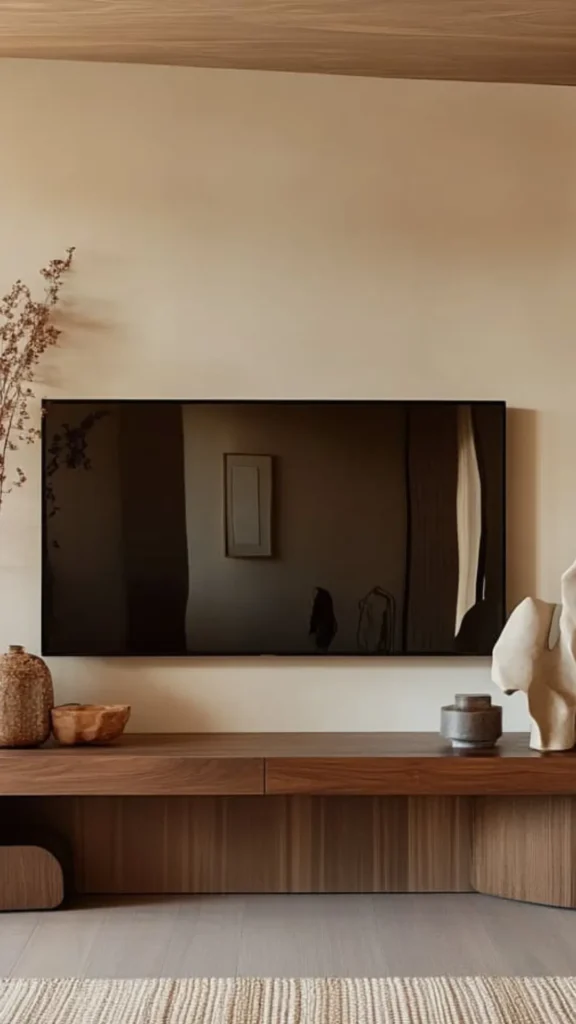
Rather than treating the television as an unavoidable focal point, integrating it into a low, warm wood shelving unit surrounded by a few carefully chosen ceramics and books allows the screen to recede into the room’s overall composition when switched off.
This approach keeps the television from dominating the room’s visual language, the same wabi-sabi discipline applied to decoration extended to the era’s most common piece of technology.
Pinterest keywords: Japandi Living Room Ideas · Japandi Furniture 2026 · Minimal Living Room Decor
14. A Japandi Living Room Fireplace Surround
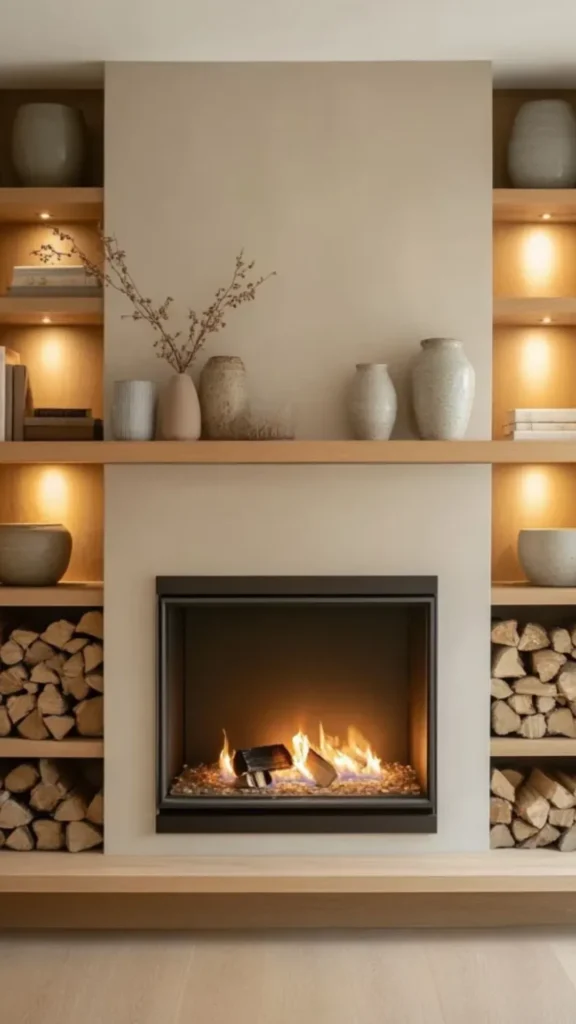
A fireplace finished in warm plaster or honed limestone, without an ornate mantel or excessive detailing, keeps the room’s focal point entirely consistent with its restrained material language, styled with nothing more than a single candle or small ceramic object on the hearth.
This quiet treatment of what’s traditionally a room’s most decorated feature reinforces the Japandi principle that even the most prominent elements should earn their place through material honesty rather than ornamentation.
Pinterest keywords: Japandi Living Room Ideas · Japandi Decor 2026 · Warm Wood Living Room
15. Layering Two Complementary Wood Tones
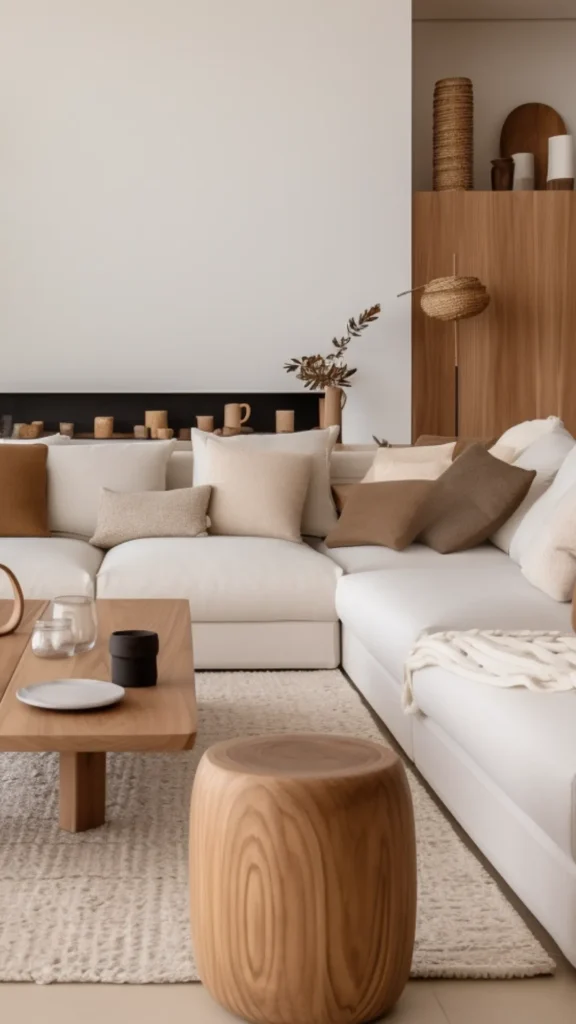
Rather than matching every piece of wood furniture exactly, layering two complementary warm tones, a lighter ash coffee table against a deeper walnut sideboard, adds subtle depth and visual interest while staying entirely within the room’s warm, natural material language.
This approach avoids the flatness that can occur when every wood surface in a room shares the exact same tone, introducing gentle contrast without ever disrupting the room’s overall sense of calm.
Pinterest keywords: Japandi Living Room Ideas · Oak Furniture Living Room 2026 · Warm Wood Living Room
16. A Japandi Living Room Window Seat
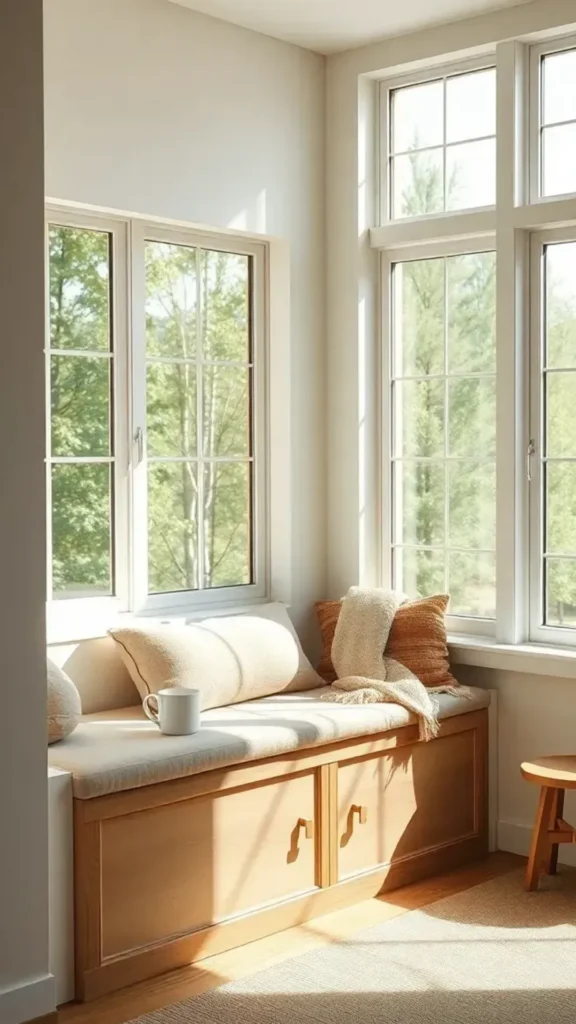
A built-in window seat, cushioned simply in warm linen, adds a second, more intimate seating option without requiring an additional armchair to compete visually with the main sofa, styled with just one cushion to preserve the room’s overall restraint.
This addition also maximizes the connection to natural light already central to Japandi design, giving the window itself a genuine functional purpose beyond simply admitting daylight.
Pinterest keywords: Japandi Living Room Ideas · Natural Light Living Room · Japandi Sofa 2026
17. A Single Sculptural Branch as Living Art
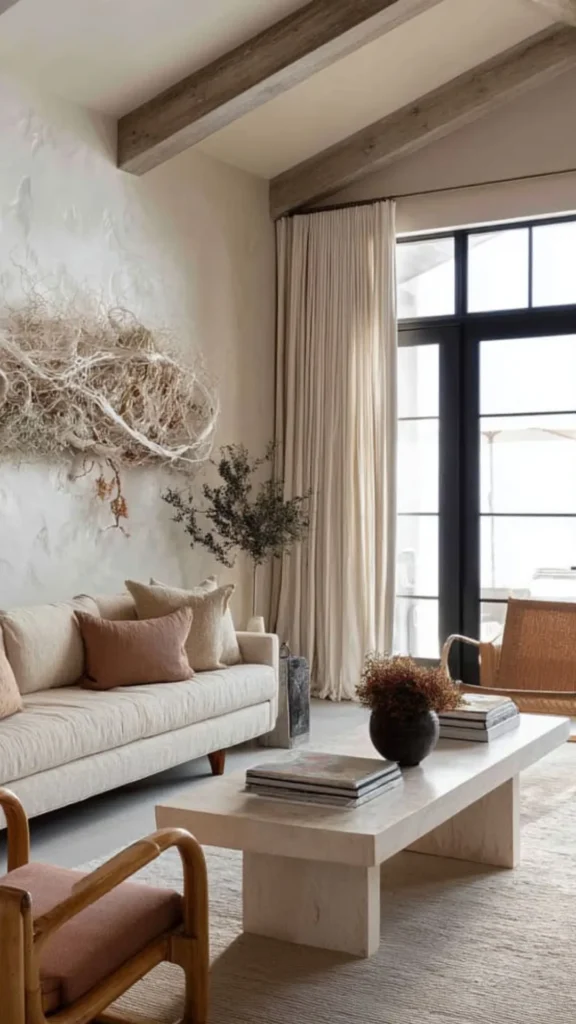
One dramatic, sculptural dried branch, positioned in a tall simple ceramic vessel in a corner, brings height and organic form into the room without requiring a single additional decorative object, the branch’s natural irregularity embodying wabi-sabi more completely than any manufactured art piece could.
This single gesture often does more visual work than an entire gallery wall, precisely because its solitary presence allows it to be fully seen and appreciated.
Pinterest keywords: Japandi Living Room Ideas · Wabi-Sabi Interior Design · Japandi Decor 2026
18. A Japandi Living Room Built for Small Spaces
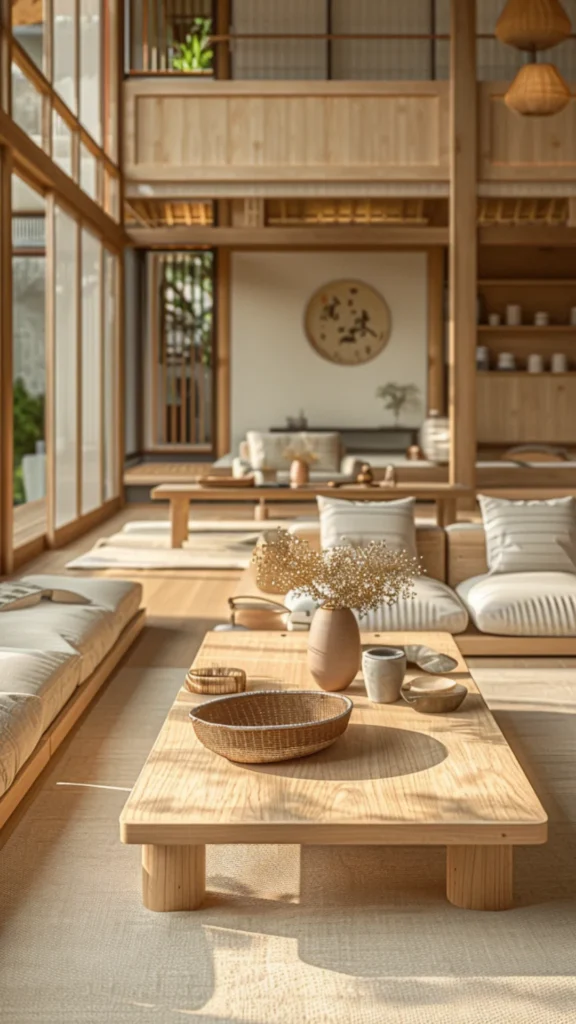
In a smaller living room, the Japandi principles of restraint and low-profile furniture actually become more powerful rather than less, a single low sofa, one considered coffee table, and disciplined negative space achieving genuine spaciousness regardless of the room’s actual square footage.
This proves that Japandi calm has little to do with scale and everything to do with editing, a small room following these principles consistently feels larger and more settled than a much bigger room crowded with furniture.
Pinterest keywords: Japandi Living Room Ideas · Japandi Style 2026 · Minimal Living Room Decor
19. A Japandi Living Room Scent Ritual
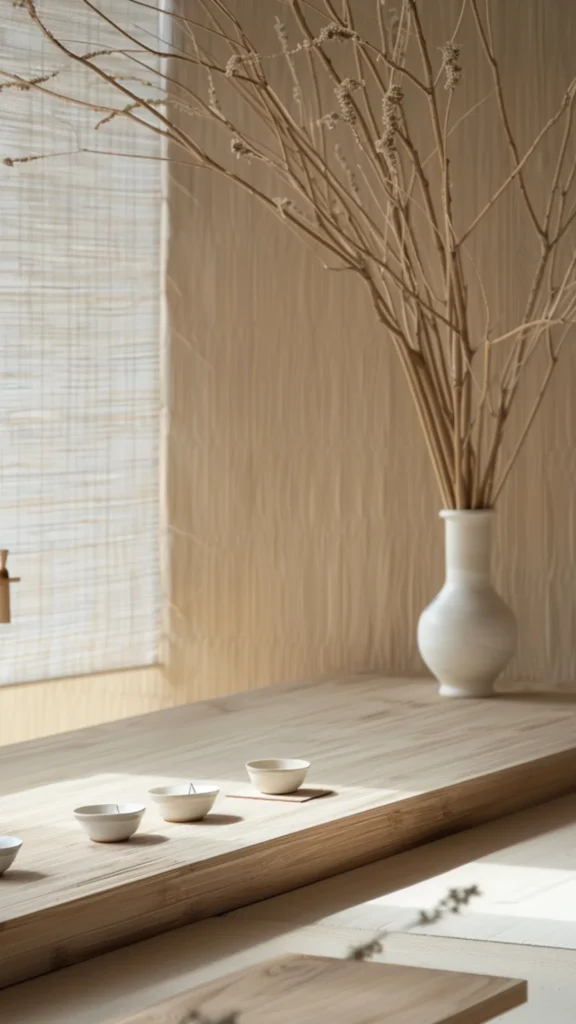
A single considered scent, cedarwood, hinoki, or sandalwood, introduced through one quality candle or a simple ceramic incense holder, extends the Japandi sensory experience beyond sight and touch into smell, a detail rarely discussed but genuinely central to how the best Japandi spaces feel to actually inhabit.
Lighting this at the same time each evening turns the ritual into a genuine cue for winding down, reinforcing the room’s deeper purpose as a space for rest rather than stimulation.
Pinterest keywords: Japandi Living Room Ideas · Japandi Decor 2026 · Handmade Ceramics Home 2026
20. A Japandi Living Room Rug Choice
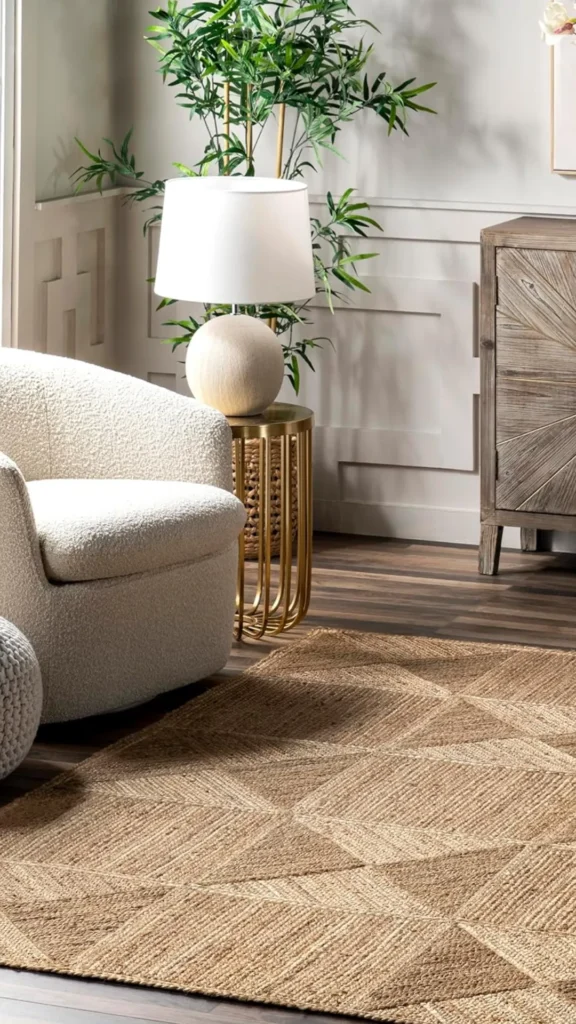
A simple flatweave rug in jute or undyed wool, in a warm oat or natural tone without pattern, grounds the low-profile furniture arrangement while staying entirely consistent with the room’s restrained, honest material palette.
Choosing texture over pattern here matters considerably, a patterned rug introduces exactly the kind of visual noise that Japandi living rooms are designed to avoid, however subtle that pattern might seem.
Pinterest keywords: Japandi Living Room Ideas · Natural Textures Living Room · Japandi Colour Palette
21. A Japandi Living Room Bookshelf
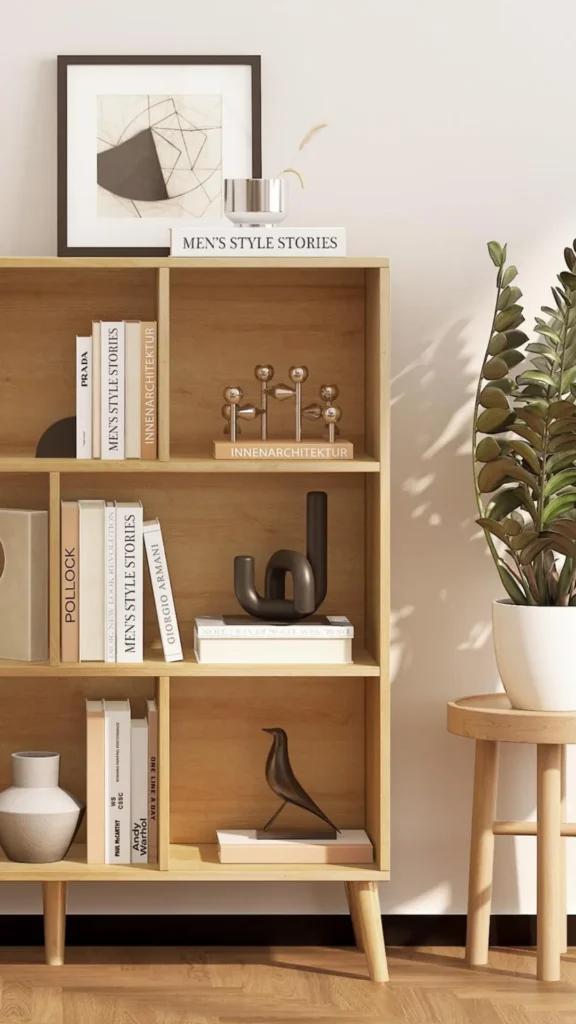
A low, horizontal wood shelving unit, styled with an edited selection of books, one ceramic, and generous negative space rather than filled to capacity, brings genuine function into the room without disrupting its considered, restrained visual language.
Editing the book collection to only genuinely loved titles, rather than displaying every book owned, applies the same principle of intentional selection found throughout every other element of Japandi styling.
Pinterest keywords: Japandi Living Room Ideas · Minimal Living Room Decor · Warm Wood Living Room
22. A Japandi Living Room Approach to Seasonal Change
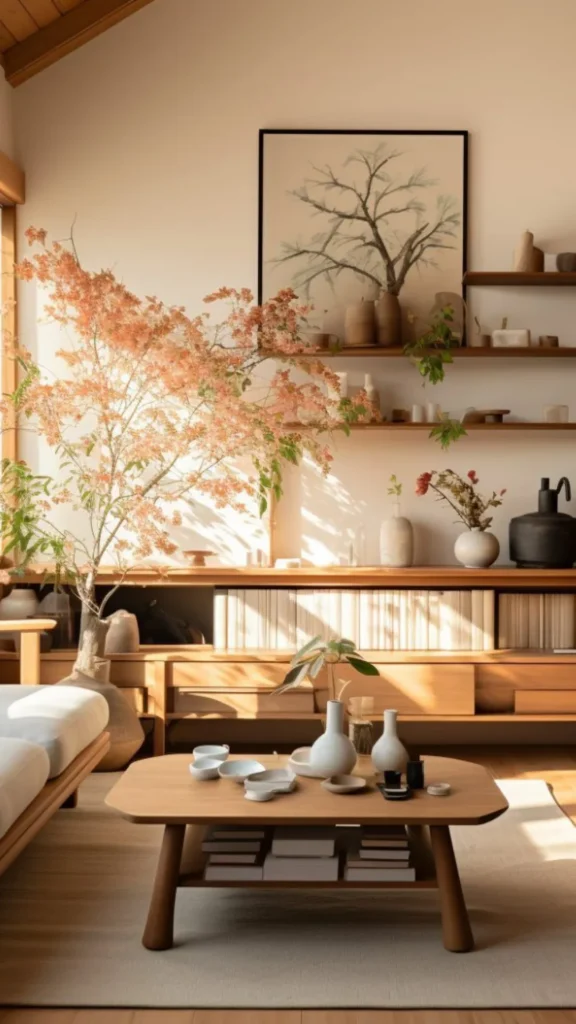
Rather than a full seasonal decorating refresh, a genuinely Japandi living room shifts subtly, a different dried branch or single bloom in the vase, a heavier wool throw in winter swapped for lighter linen in summer, while every other element of the room stays exactly the same.
This restrained approach to seasonal change mirrors the broader Japandi philosophy that meaningful change comes from small, considered gestures rather than wholesale redecoration.
Pinterest keywords: Japandi Living Room Ideas · Japandi Decor 2026 · Natural Textures Living Room
23. A Japandi Living Room for Family Life
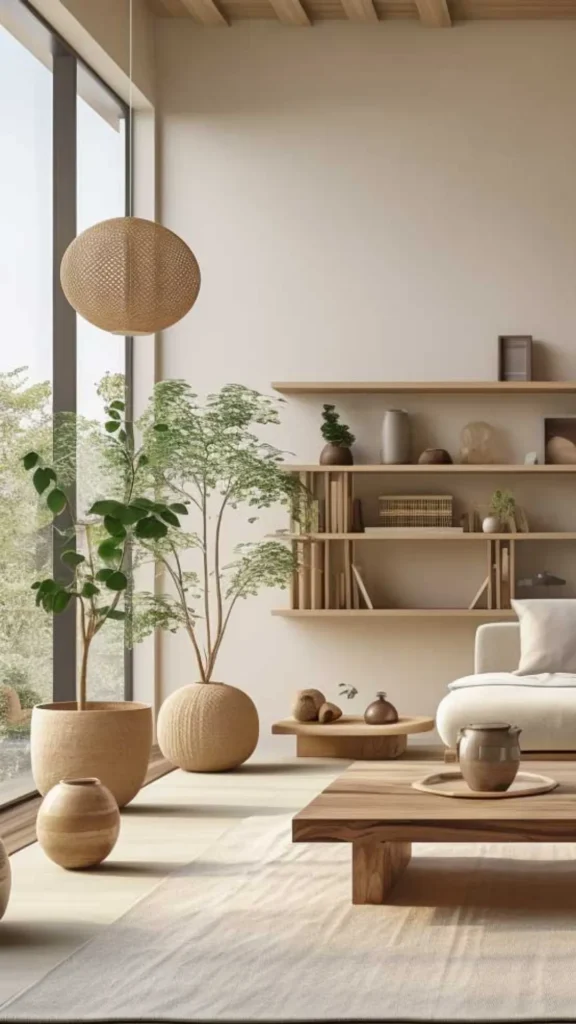
Choosing performance linen or bouclé fabrics that resist stains, and keeping fragile ceramics on higher shelves, allows the Japandi aesthetic to coexist genuinely with young children rather than being reserved for adult-only spaces.
The philosophy’s core emphasis on fewer, better-chosen things actually suits family life particularly well, fewer objects to trip over, fewer things to tidy, and a calmer visual environment for every member of the household.
Pinterest keywords: Japandi Living Room Ideas · Japandi Sofa 2026 · Neutral Living Room 2026
24. A Japandi Living Room Approach to Art
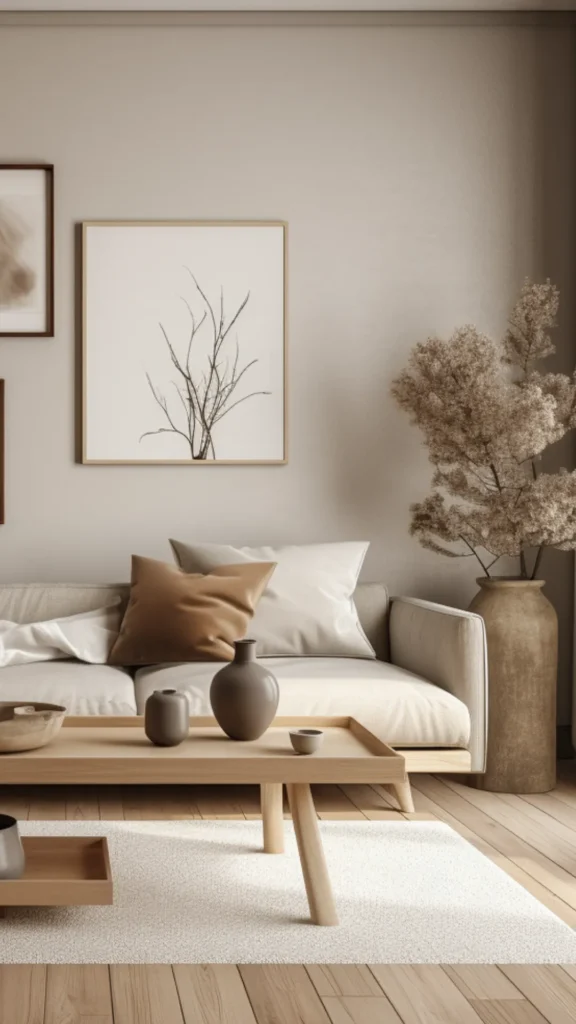
One genuinely considered piece of art, an abstract ink wash, a simple landscape, a textured natural fiber piece, positioned above the sofa carries far more visual weight in a Japandi living room than a gallery wall of smaller works ever could.
Choosing art with visible texture or handmade quality over flat, glossy prints keeps this single statement consistent with the room’s broader wabi-sabi appreciation for material honesty and imperfection.
Pinterest keywords: Japandi Living Room Ideas · Wabi-Sabi Interior Design · Japandi Decor 2026
25. Why the Japandi Living Room Rewards Ongoing Discipline
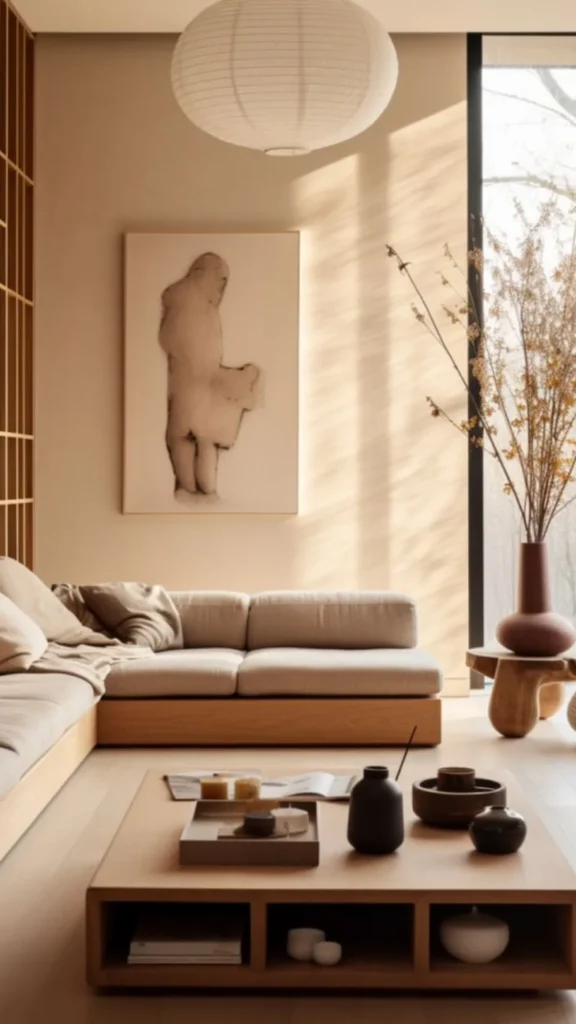
Of every living room aesthetic explored across this site, Japandi is perhaps the one most dependent on continued discipline rather than a single decorating decision, the calm it produces requires genuinely resisting the accumulative instinct on an ongoing basis, not just at the point of initial furnishing.
That ongoing practice of editing, choosing quality over quantity, and protecting negative space is ultimately what separates a living room that merely looks Japandi in photographs from one that actually delivers the calm the style promises every single day. For more on how these same principles apply throughout the rest of the home, visit our complete Japandi Style Guide.
Pinterest keywords: Japandi Living Room Ideas · Japandi Style Guide 2026 · Japandi Design 2026
For more on how Japandi principles apply throughout the home, visit our complete Japandi Style Guide.
Final Thoughts
A Japandi living room is ultimately the result of subtraction as much as addition, a process of removing what doesn’t genuinely belong until what remains feels completely right. That process takes patience and a willingness to resist the accumulative instinct that most of us bring to our homes. But the result, a room that genuinely settles you every time you walk into it, is worth every considered decision that creates it. 🌿


