

Sustainable interior design has moved decisively beyond its earnest, compromise-heavy early iterations. In 2026, designing a home sustainably is not about choosing between beauty and responsibility, it’s about recognizing that the most beautiful interiors have always been built on natural materials, quality craftsmanship, and pieces chosen with genuine intention. The sustainable home and the beautiful home have become, largely, the same home.
This convergence isn’t accidental. The organic modern aesthetic that defines the best interiors of 2026, natural wood, stone, linen, vintage furniture, indoor plants, and earthy colors, is inherently more sustainable than the synthetic, fast-furniture alternatives it has replaced. Sustainable interior design is no longer a subcategory of interior design. It is, increasingly, just interior design done well. 🌿
What Is Sustainable Interior Design?
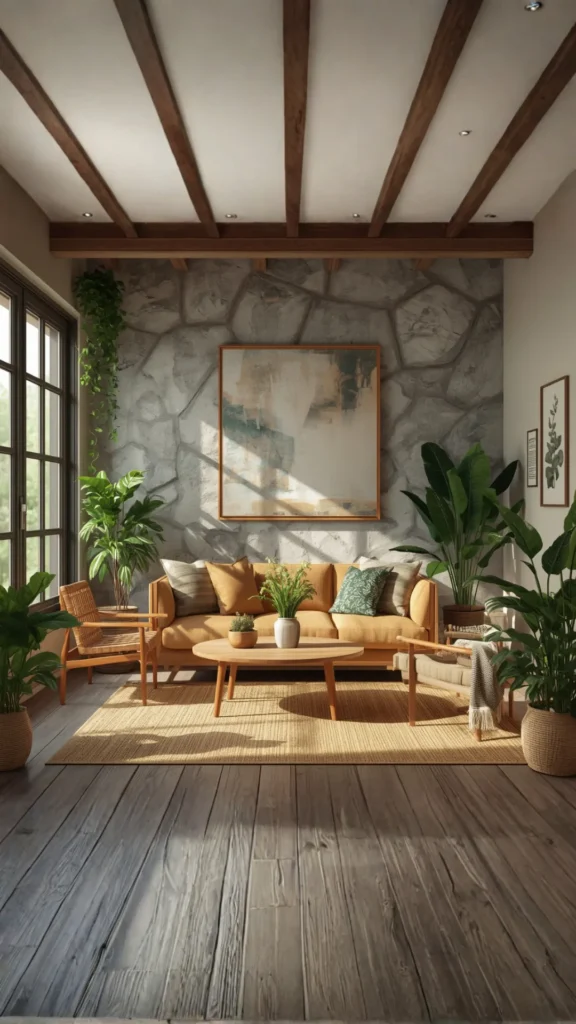
Sustainable interior design encompasses the choices, materials, and philosophies that reduce the environmental impact of creating and maintaining a beautiful home. It operates across several interconnected dimensions, the materials chosen for furniture and surfaces, the provenance of those materials, the longevity of the pieces selected, the quality of air and light within the home, and the broader impact of purchasing decisions on manufacturing processes and supply chains.
In practice, sustainable interior design in 2026 means prioritising natural materials over synthetic ones, vintage and second-hand over new manufacture where possible, quality pieces that will last decades over cheap ones that will be replaced in years, and brands whose manufacturing processes are transparent and genuinely considered.
According to House Beautiful, sustainable interior design has become one of the most searched and discussed topics in home decor throughout 2026, with consumers increasingly making purchasing decisions based on both aesthetic appeal and environmental impact.
1. Natural and Organic Materials First
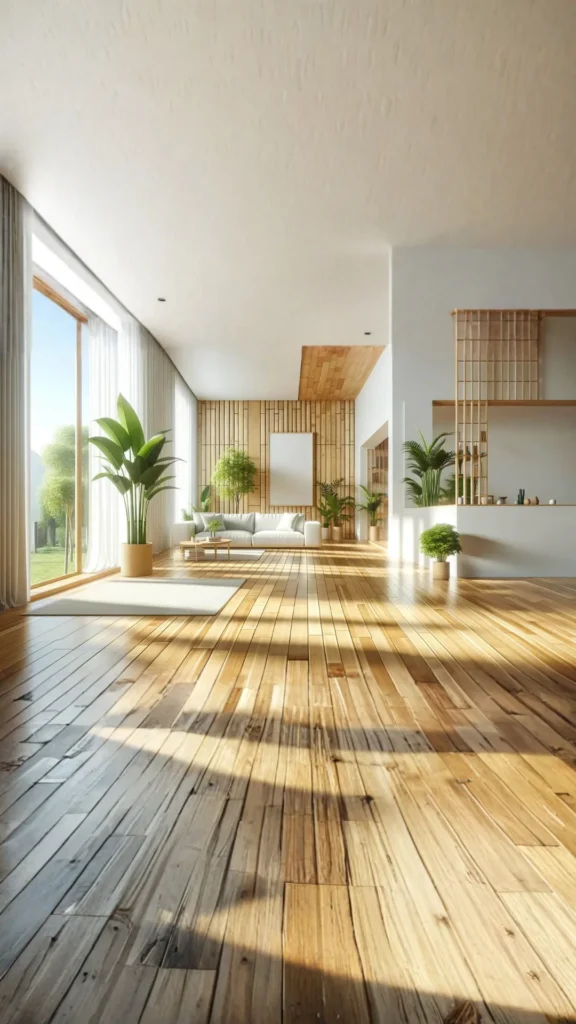
The single most impactful sustainable interior design choice you can make is consistently choosing natural materials over synthetic alternatives. Solid wood, natural stone, linen, cotton, wool, ceramic, bamboo, cork, and rattan are all materials that come from the earth, age beautifully, and return to the earth at the end of their life without leaving a lasting environmental legacy.
Contrast this with particleboard furniture, synthetic upholstery fabrics, plastic accessories, and manufactured stone, all of which require significant energy to produce, off-gas chemicals into your home environment, and end their life in landfill. The natural material choice is almost always simultaneously the more beautiful and the more sustainable one, and in a world where organic modern design has made natural materials the dominant aesthetic, there has never been a better time to make this alignment work in your favor.
Pinterest keywords: Natural Materials Interior Design · Sustainable Interior Design · Organic Home Materials
2. Second-Hand and Vintage Furniture
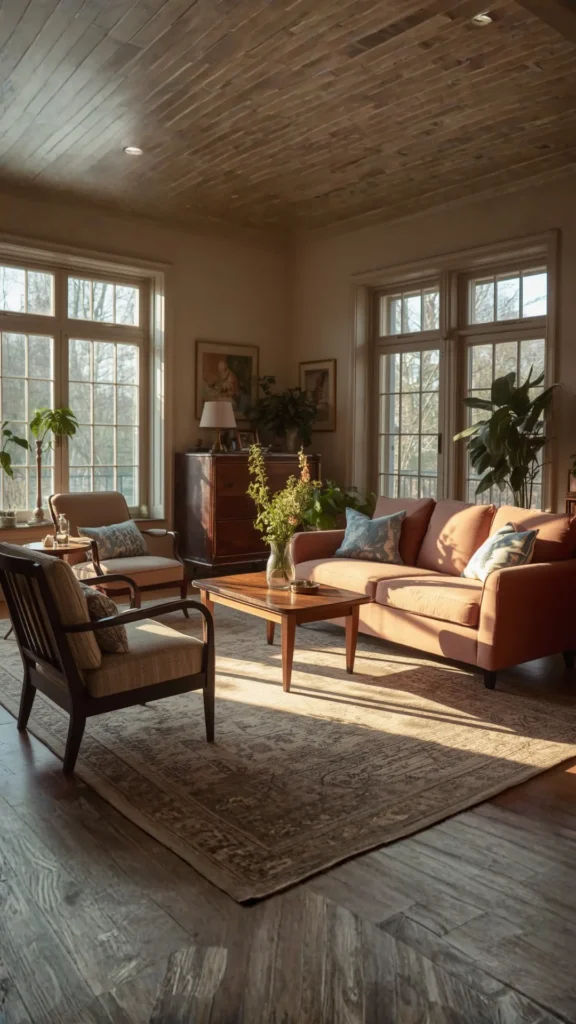
The most genuinely sustainable piece of furniture you can acquire is one that already exists. Second-hand and vintage furniture buying eliminates the manufacturing impact of new production entirely, and in most cases delivers pieces with more character, better craftsmanship, and greater longevity than anything manufactured at the same price point today.
The patina of a well-used solid oak dresser, the grain of a 1960s teak sideboard, or the worn leather of a mid-century armchair carry a warmth and history that no new piece can replicate. In a sustainable interior design context, these pieces are ideal, they were built to last, they have already lasted, and with proper care they will continue to do so for generations. Platforms like eBay, Vinted, local auction houses, and charity shops all offer access to extraordinary pieces at a fraction of new retail prices.
Pinterest keywords: Sustainable Interior Design · Vintage Furniture Home · Second Hand Furniture Decor
3. Sustainable and Low-VOC Paint
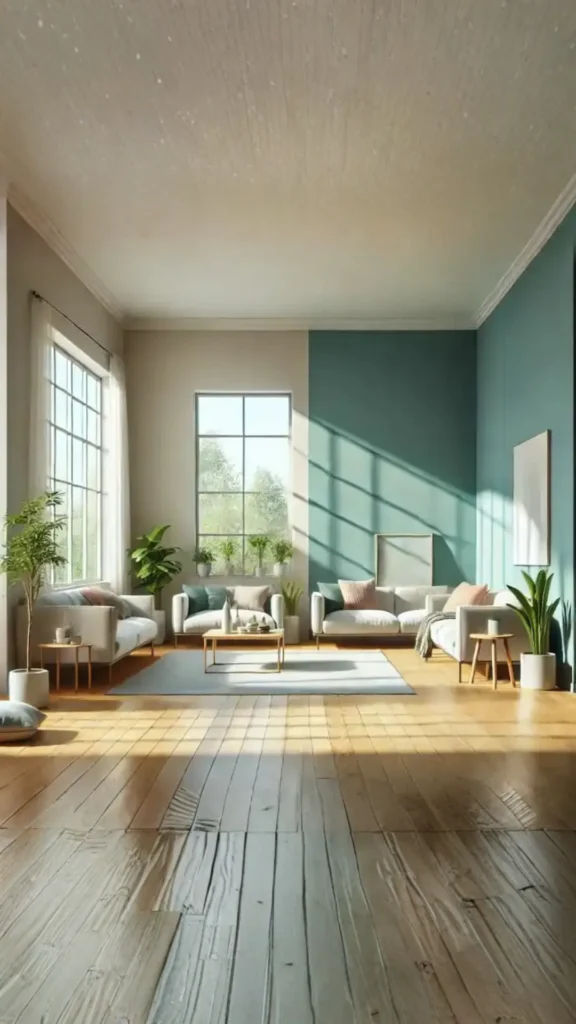
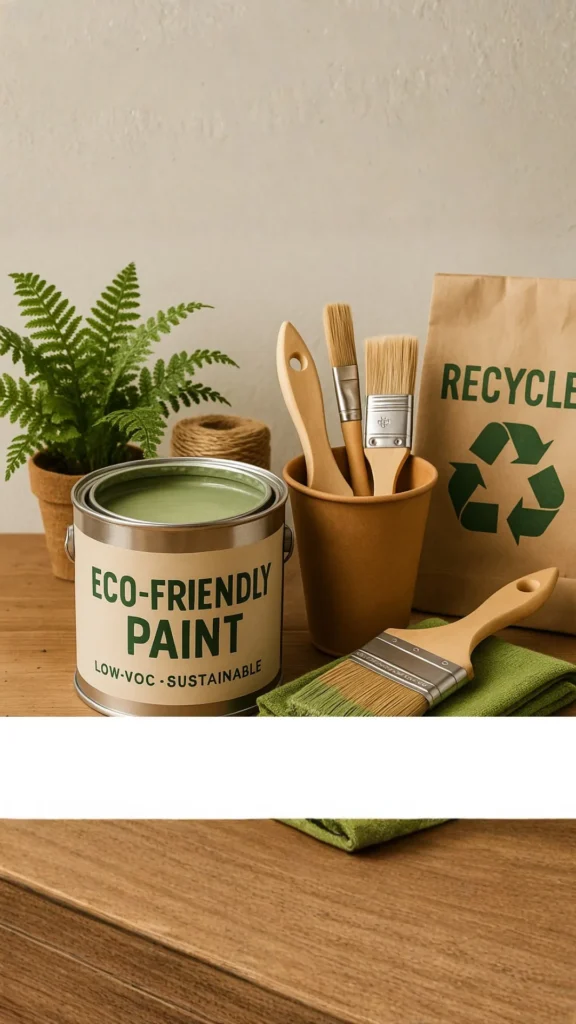
Conventional paint contains volatile organic compounds, VOCs, that off-gas into your home environment for months or years after application, contributing to indoor air pollution and affecting the health of the people living there. Sustainable interior design prioritizes low-VOC or zero-VOC paint alternatives that deliver beautiful results without the chemical legacy.
The good news is that low-VOC paints from brands like Farrow & Ball, Little Greene, and Edward Bulmer Natural Paint are not only better for your health and the environment, they consistently produce richer, more beautiful color results than cheaper conventional alternatives. The pigment quality and depth of color available in natural paint ranges has made sustainable paint an aesthetic upgrade as much as an environmental one.
Pinterest keywords: Sustainable Interior Design · Natural Paint Home · Eco Friendly Home Decor
4. Energy-Efficient Lighting
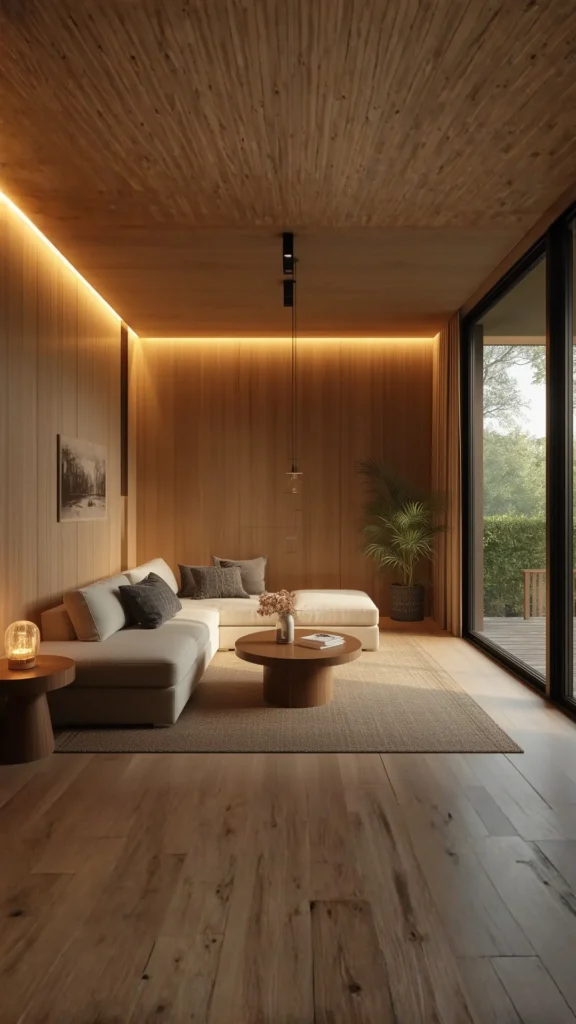
Lighting accounts for a significant proportion of domestic energy consumption, and the shift to energy-efficient LED alternatives is one of the most impactful and accessible sustainable interior design choices available. Modern warm LED bulbs, particularly those in the 2700K range that create the most beautiful, atmospheric bedroom and living room lighting, use up to 90% less energy than equivalent incandescent bulbs and last up to 25 times longer.
The environmental case and the aesthetic case for warm LED lighting align perfectly. Warm, layered, atmospheric LED lighting creates more beautiful interiors than harsh overhead fluorescent or halogen lighting, and it does so while consuming dramatically less energy. Smart lighting systems that dim automatically and respond to natural light levels extend these savings further while making the home more comfortable and easier to manage.
Pinterest keywords: Sustainable Interior Design · Energy Efficient Home Lighting · Eco Friendly Home
5. Organic and Natural Textiles
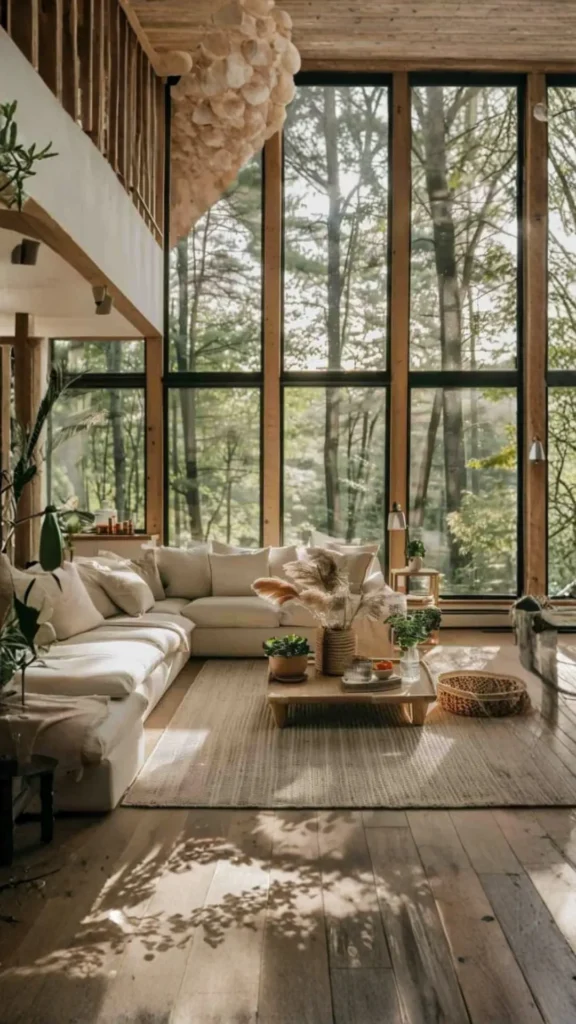
Synthetic textiles, polyester, acrylic, nylon, are among the most environmentally problematic materials in the home, shedding microplastics with every wash and requiring significant petrochemical processing to manufacture. Sustainable interior design prioritizes organic cotton, linen, wool, hemp, and other natural fiber alternatives that are biodegradable, durable, and considerably better for indoor air quality.
The aesthetic case is equally compelling. Linen bedding and curtains have a natural drape and texture that synthetic alternatives never replicate. Wool rugs feel extraordinary underfoot and last decades rather than years. Organic cotton upholstery breathes naturally and improves with washing. Natural textiles age in ways that synthetic ones don’t, they become softer and more beautiful with use rather than pilling, fading, and degrading. In a sustainable interior design context, natural textiles are always the right choice.
Pinterest keywords: Sustainable Interior Design · Natural Textiles Home · Organic Cotton Linen Home
6. Indoor Plants as Design and Air Quality Elements
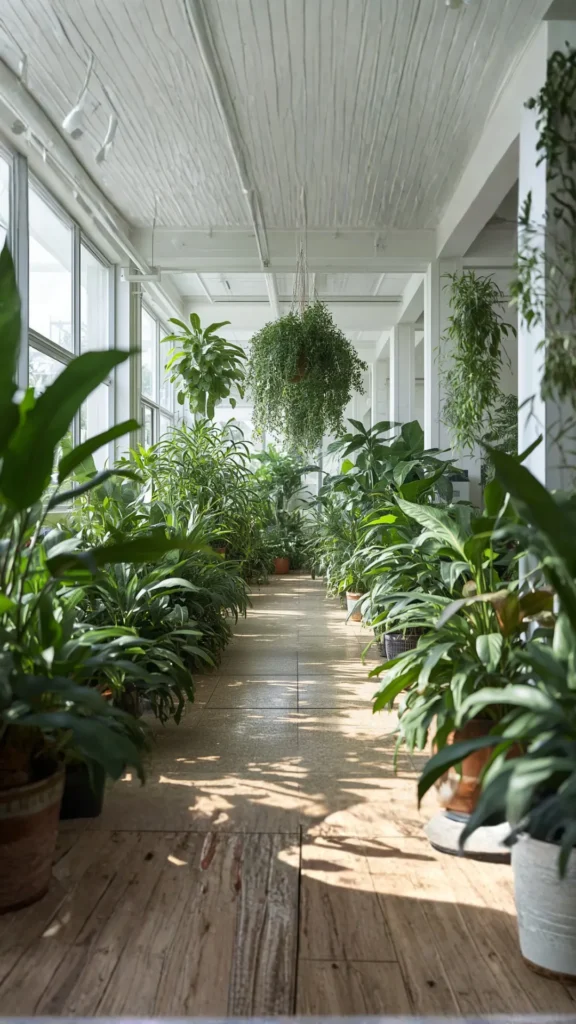
Indoor plants sit at the intersection of sustainable interior design and biophilic design in the most practically useful way, they improve indoor air quality by absorbing carbon dioxide and certain VOCs, they increase humidity in dry environments, and they provide the living, organic visual element that makes a home feel genuinely connected to the natural world.
Beyond their environmental benefits, indoor plants are arguably the single most cost-effective design element available, a ten-pound pothos or peace lily transforms the energy and warmth of a room in a way that no purchased accessory of the same cost could approach. In a sustainable interior design context, building a curated collection of indoor plants is simultaneously an environmental investment, a health improvement, and a design choice of the highest order.
Pinterest keywords: Sustainable Interior Design · Indoor Plants Design · Biophilic Home
7. Upcycling and Repurposing Existing Pieces
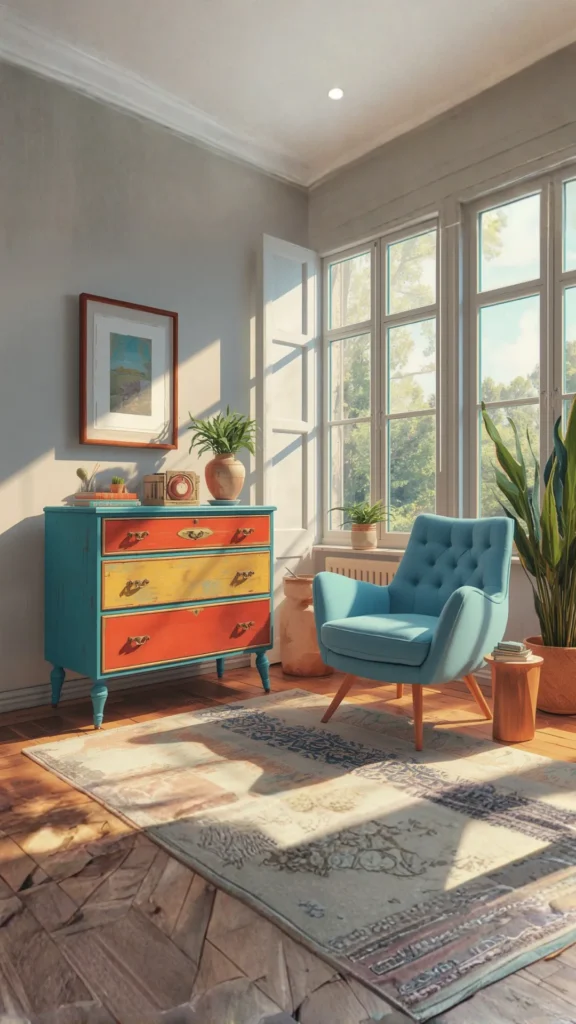
One of the most creative and genuinely satisfying aspects of sustainable interior design is finding ways to transform existing pieces rather than replacing them. Repainting a solid wood dresser in a beautiful earthy tone, reupholstering a well-built armchair in quality linen, replacing dated cabinet hardware with brass alternatives, or refinishing a worn wooden floor rather than replacing it, all of these extend the life of existing pieces while often producing results that are more beautiful and more personal than anything bought new.
Upcycling also develops a relationship with your furniture that fast-consumption purchasing cannot. When you’ve invested time and effort into transforming a piece, you notice it differently and value it differently, and that relationship is itself a form of sustainability, because pieces you value are pieces you keep.
Pinterest keywords: Upcycled Furniture Ideas · Sustainable Interior Design · Repurposed Home Decor
8. Sustainable Flooring Choices
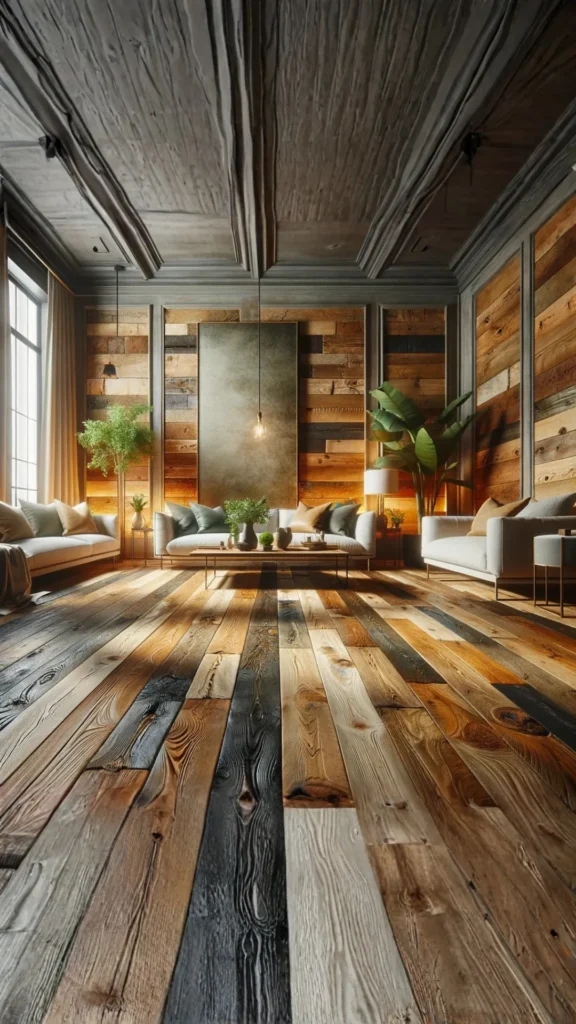
Flooring covers more surface area than almost any other single element in a home, making it one of the most impactful sustainable interior design decisions available. Reclaimed solid wood flooring, sourced from demolished buildings, old barns, or sustainably managed forests, is the gold standard: deeply characterful, infinitely repairable, and carrying a history that new flooring can never possess.
Bamboo flooring is an excellent sustainable alternative, bamboo grows to full maturity in three to five years compared to decades for hardwood trees, making it one of the most renewable flooring materials available. Cork is another underrated option, harvested from the bark of cork oak trees without felling them, warm underfoot, naturally antimicrobial, and beautiful in warm interior contexts. All three alternatives deliver beautiful results while the environmental credentials of each are significantly stronger than conventional hardwood or synthetic alternatives.
Pinterest keywords: Sustainable Interior Design · Reclaimed Wood Flooring · Eco Friendly Flooring
9. Conscious Shopping, Buy Less, Buy Better
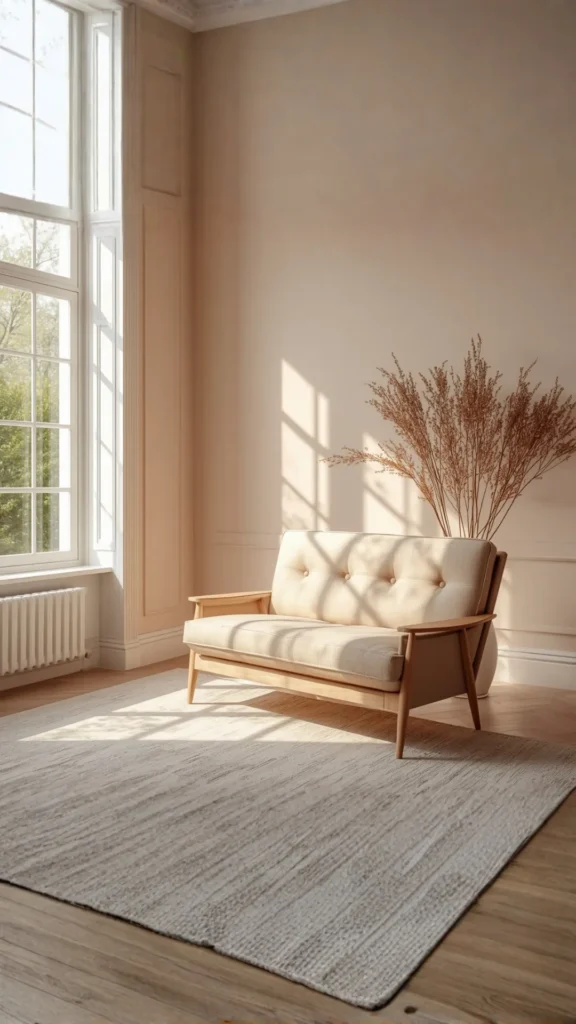
Perhaps the most powerful sustainable interior design principle of all is the simplest, buying less, but buying better. The fast furniture industry, cheap, disposable, flatpack furniture built from particleboard and synthetic materials, is among the most environmentally damaging retail sectors in existence. Its products are designed to be replaced, and they are.
A single piece of genuinely well-made solid wood furniture, bought once and maintained properly, has a smaller environmental impact over thirty years than four cheap replacements of the same function over the same period. The conscious shopping approach asks a simple question before every purchase, will this piece still be here in ten years, and will I still want it to be? If the answer is yes, it’s worth buying. If the answer is uncertain, it’s worth waiting.
Pinterest keywords: Sustainable Interior Design · Conscious Home Decor · Slow Living Interior
10. How to Start Your Sustainable Home Journey
The most important thing about starting a sustainable interior design journey is that it doesn’t require wholesale change or significant expense, it requires a shift in the questions you ask before making design decisions.
Start immediately and for free: Identify three things in your home that could be repaired or repurposed rather than replaced. Fix them, repaint them, or give them away to someone who will use them properly.
Next purchase: Before buying anything new, spend fifteen minutes searching for a second-hand or vintage equivalent. You’ll often find something better for less money.
This season: Swap one synthetic textile for a natural alternative, a linen throw, a cotton cushion cover, a wool rug. Notice the difference in how it feels and how the room looks.
When renovating: Specify low-VOC paint, natural flooring, and solid wood cabinetry wherever the budget allows. These choices compound over time into a home that is genuinely healthier, more beautiful, and more sustainable.
11. Choosing Furniture with Repairability in Mind
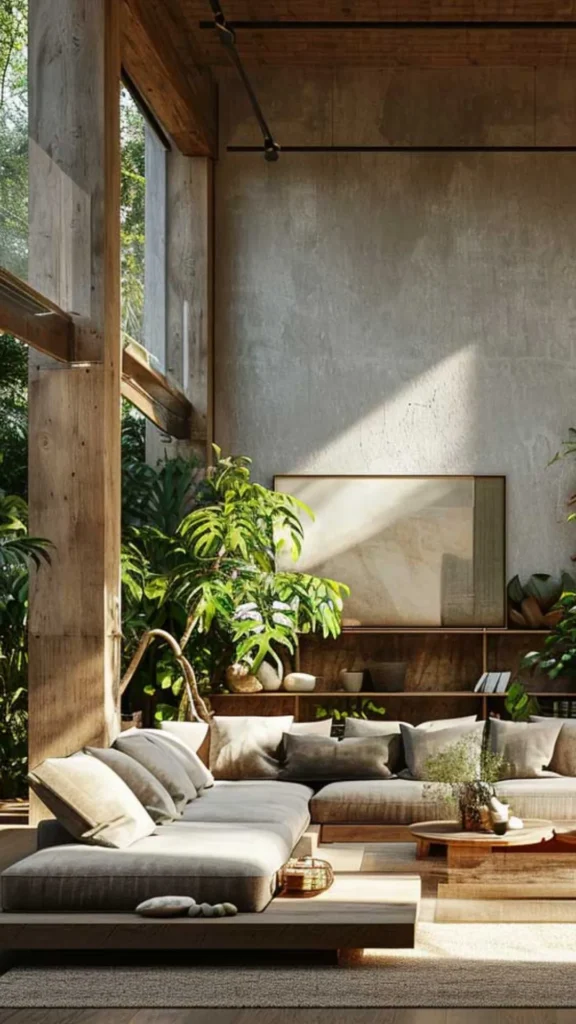
Prioritizing furniture built with replaceable parts, solid wood joinery rather than glued particleboard, upholstery that can be re-covered rather than fused permanently to the frame, extends a piece’s useful life by decades rather than years.
Before purchasing anything significant, asking whether a local upholsterer or carpenter could realistically repair it in ten years is a genuinely useful filter, one that fast furniture almost always fails and well-made furniture almost always passes.
Pinterest keywords: Sustainable Interior Design · Slow Living Interior · Conscious Home Decor
12. Renewable Insulation and Building Materials
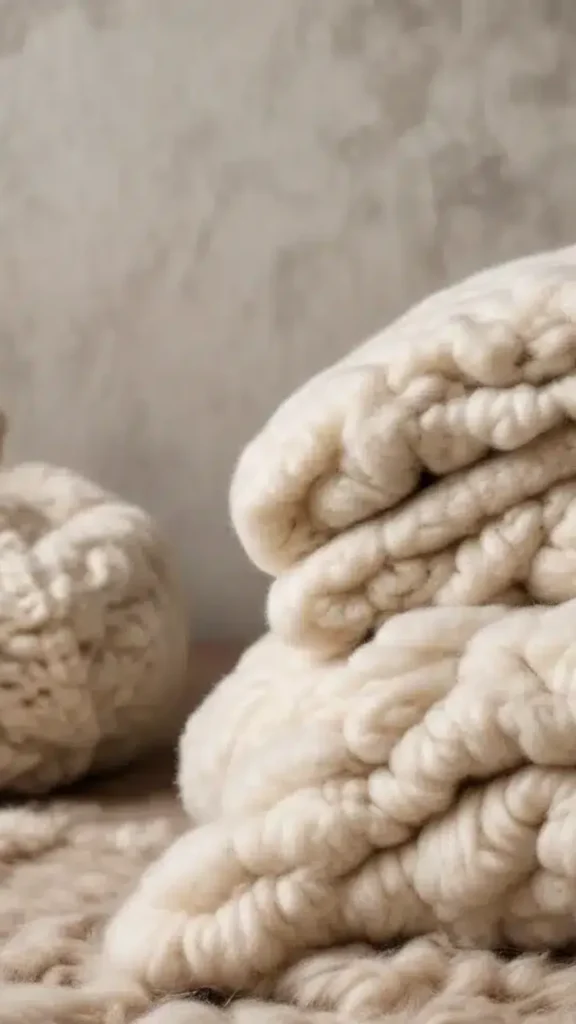
For anyone renovating rather than simply decorating, choosing renewable insulation materials, sheep’s wool, hemp fiber, or recycled denim, over synthetic fiberglass alternatives reduces both the embodied carbon of the renovation and the chemical off-gassing inside the finished home.
These materials also perform genuinely well thermally and acoustically, meaning the sustainability choice doesn’t come at the expense of comfort or effectiveness within the finished space.
Pinterest keywords: Sustainable Interior Design · Eco Friendly Home Decor · Natural Materials Interior Design
13. Rainwater and Greywater Considerations for Bathrooms and Gardens
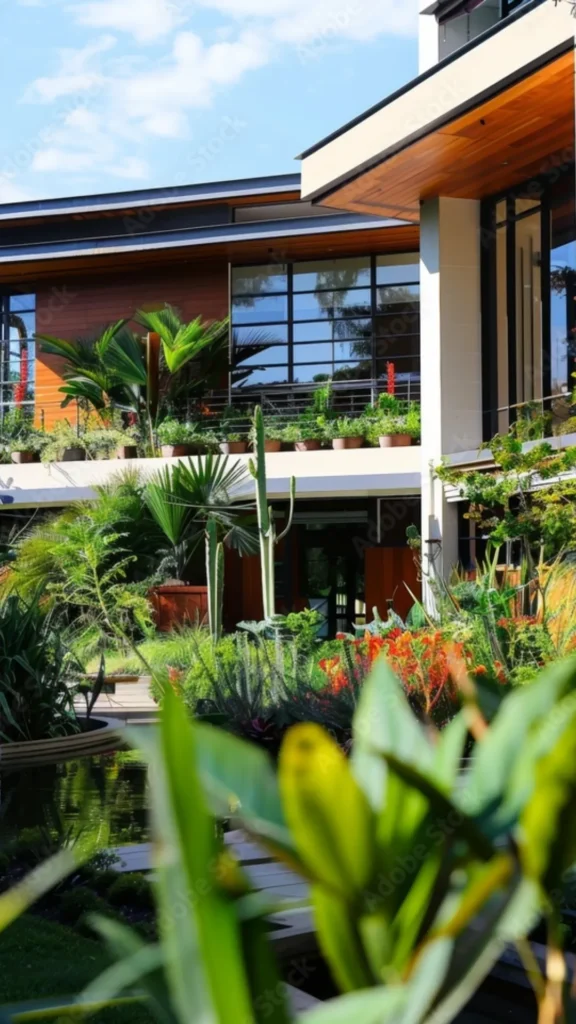
Installing simple rainwater collection for garden use, or a greywater system that redirects bath and sink water toward irrigation, extends sustainable thinking beyond the interior itself and into the home’s broader relationship with water use.
While more involved than most ideas on this list, even a simple water butt connected to a downpipe represents a meaningful, low-cost entry point into this dimension of sustainable home design.
Pinterest keywords: Sustainable Interior Design · Eco Friendly Home · Slow Living Interior
14. Choosing Local and Regional Materials
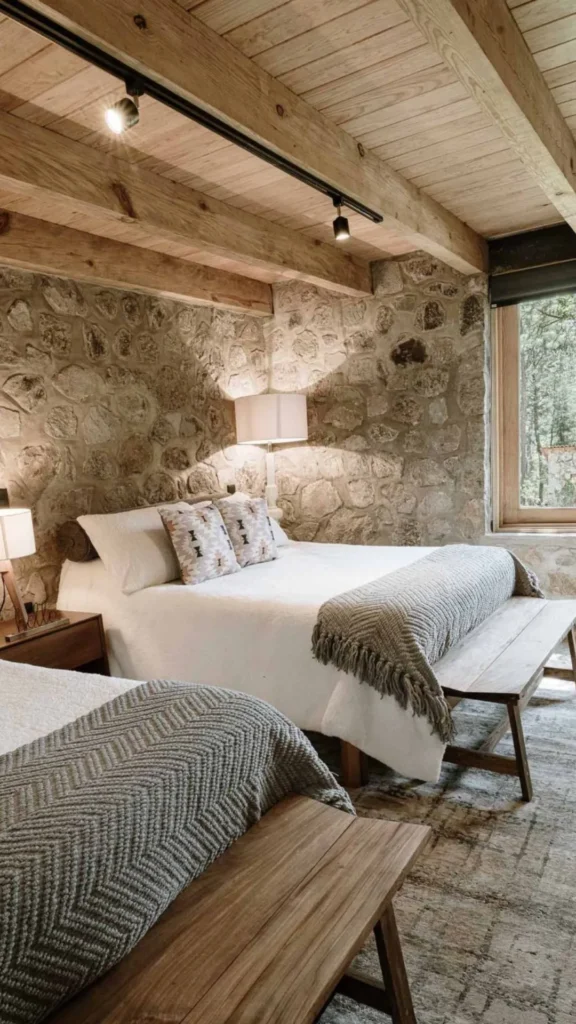
Sourcing stone, wood, and other building materials regionally rather than importing them from distant countries significantly reduces the transportation emissions embedded in a renovation or furnishing project, while often producing a home that feels more genuinely connected to its actual location.
Local materials also tend to weather and age in ways specifically suited to the local climate, a practical advantage alongside the environmental one that imported alternatives don’t always offer.
Pinterest keywords: Sustainable Interior Design · Natural Materials Interior Design · Reclaimed Wood Flooring
15. A Capsule Approach to Home Textiles
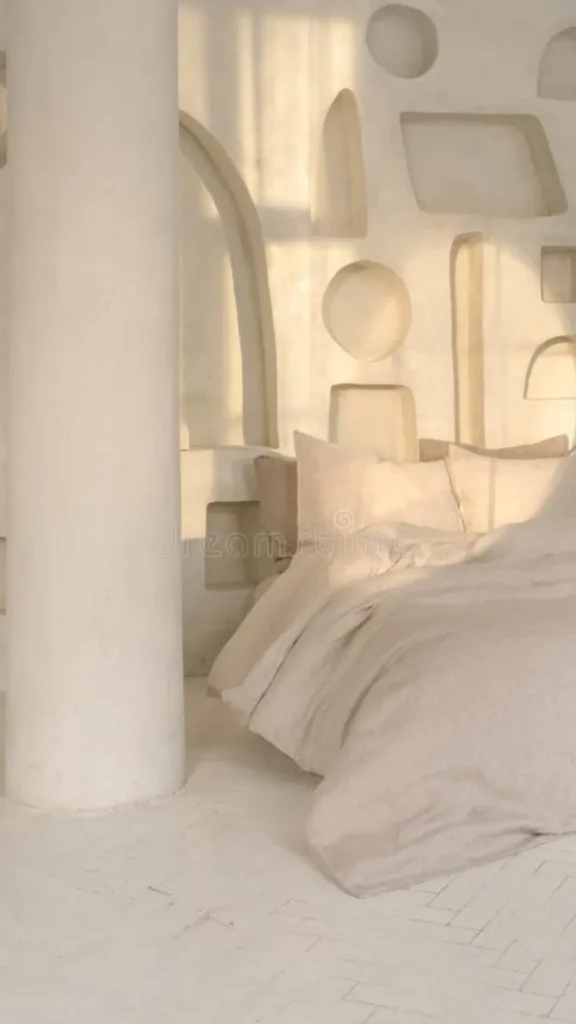
Applying the capsule wardrobe principle to home textiles, a small, genuinely versatile collection of quality linen and wool pieces that mix and match across seasons, reduces the constant cycle of seasonal decorative purchases that many households fall into.
This approach rewards buying fewer, better pieces in a considered neutral palette that can be layered differently throughout the year rather than replaced entirely each season.
Pinterest keywords: Sustainable Interior Design · Natural Textiles Home · Slow Living Interior
16. Choosing Certified Sustainable Wood
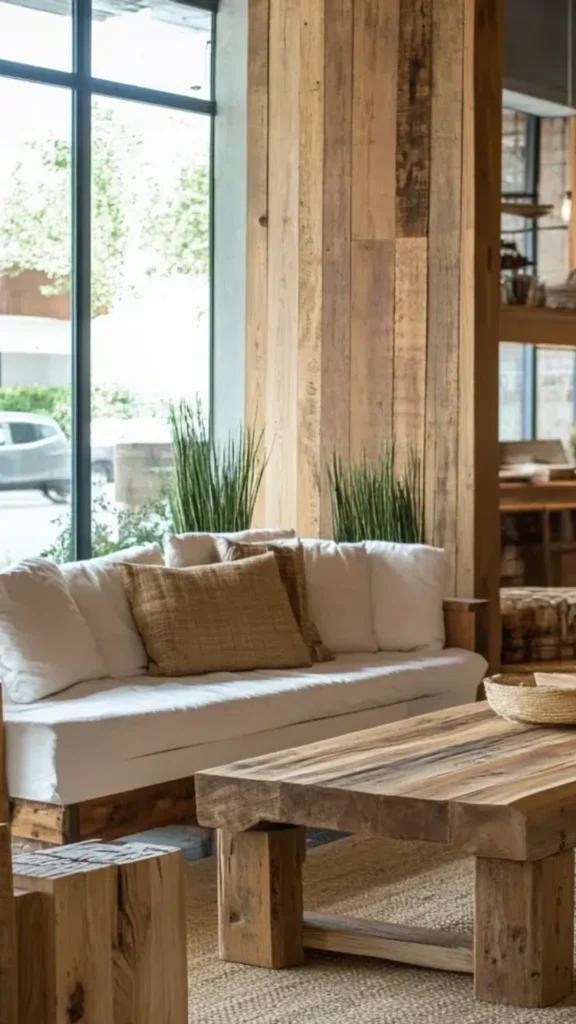
Looking specifically for FSC certification or equivalent regional sustainable forestry certifications when purchasing new wood furniture ensures the timber was harvested from responsibly managed forests rather than contributing to deforestation.
This small verification step, checking a label or asking a retailer directly, requires very little effort but provides genuine assurance that a beautiful new wood piece isn’t undermining the very natural world its aesthetic celebrates.
Pinterest keywords: Sustainable Interior Design · Natural Materials Interior Design · Eco Friendly Home Decor
17. Repairing Rather Than Replacing Small Appliances and Fixtures
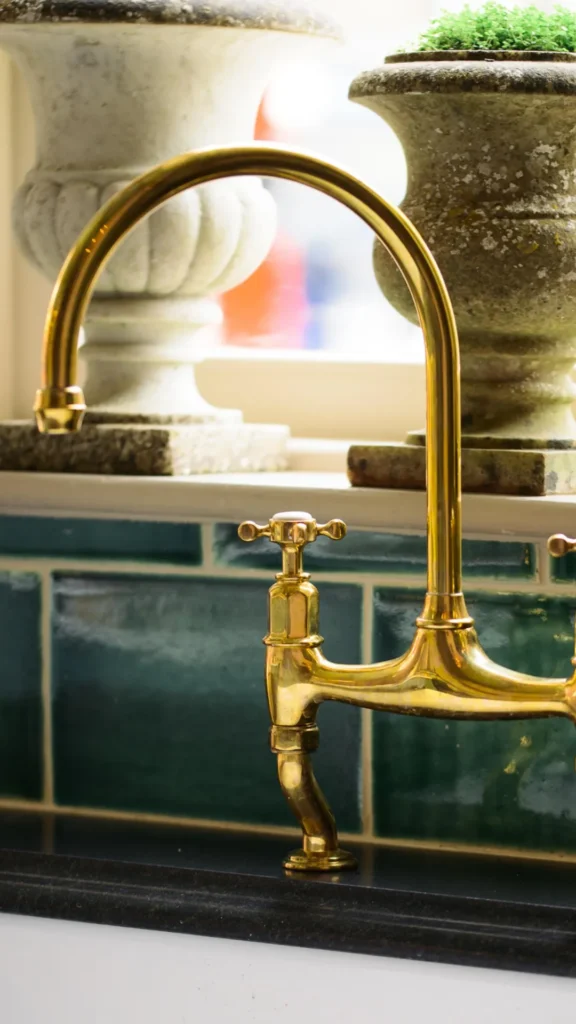
Before replacing a dripping tap, a sticking drawer, or a slightly worn light fixture, checking whether a simple repair or part replacement could restore it fully often costs a fraction of buying new, while avoiding the embodied environmental cost of manufacturing a replacement.
This habit of default repair rather than default replacement is one of the most genuinely impactful and least discussed aspects of sustainable interior design, quietly reducing consumption without requiring any single dramatic decision.
Pinterest keywords: Sustainable Interior Design · Conscious Home Decor · Repurposed Home Decor
18. Growing a Home Herb or Vegetable Corner
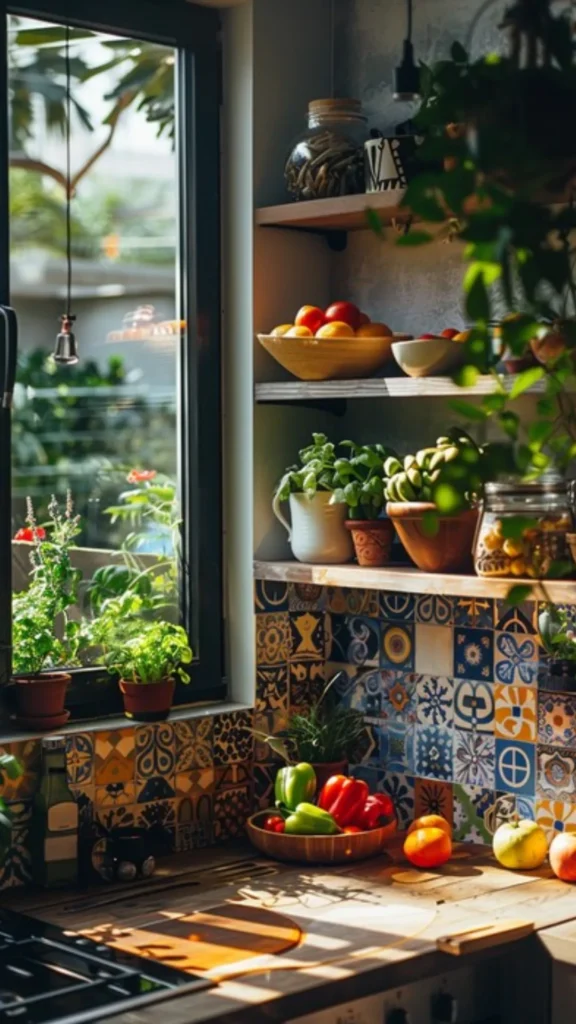
A sunny kitchen windowsill or balcony corner dedicated to growing herbs and small vegetables reduces reliance on plastic-packaged produce while bringing the same biophilic, air-improving benefits as purely decorative houseplants.
This is sustainable design at its most literally productive, the plants serving decoration, air quality, and genuine kitchen use simultaneously, a triple benefit that few other design choices can match.
Pinterest keywords: Sustainable Interior Design · Indoor Herb Wall Kitchen · Biophilic Home
19. Choosing Durable, Repairable Textiles for High-Wear Areas
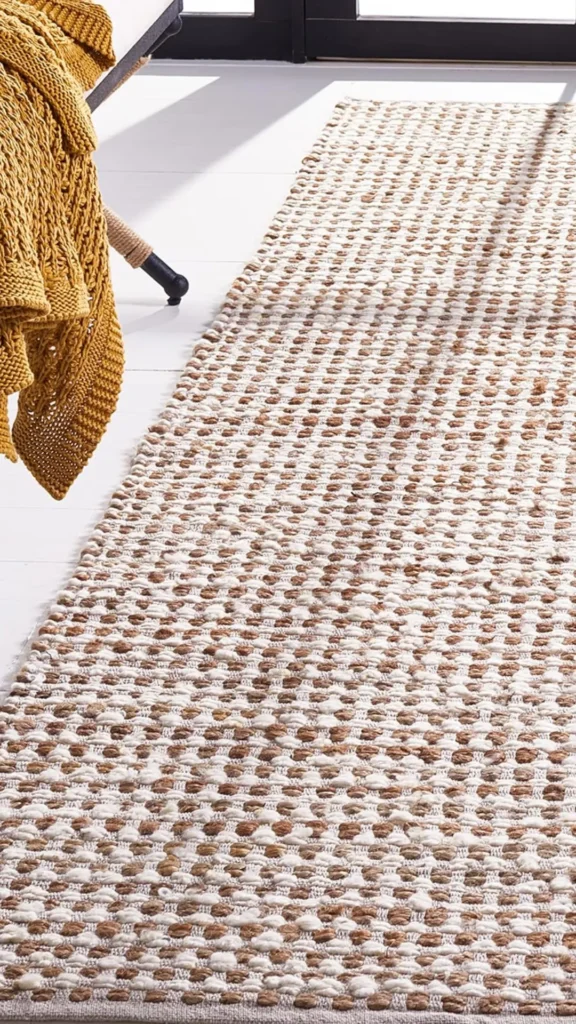
In high-wear zones like hallways and living room rugs, choosing genuinely durable natural materials, wool over synthetic blends, tightly woven jute over loosely constructed alternatives, means fewer replacements over the life of the home even in the areas that see the heaviest daily use.
Investing slightly more upfront in a rug or runner specifically rated for high traffic almost always proves more sustainable and more cost-effective than replacing a cheaper alternative every few years.
Pinterest keywords: Sustainable Interior Design · Natural Textiles Home · Conscious Home Decor
20. Buying Furniture with Take-Back or Recycling Programs
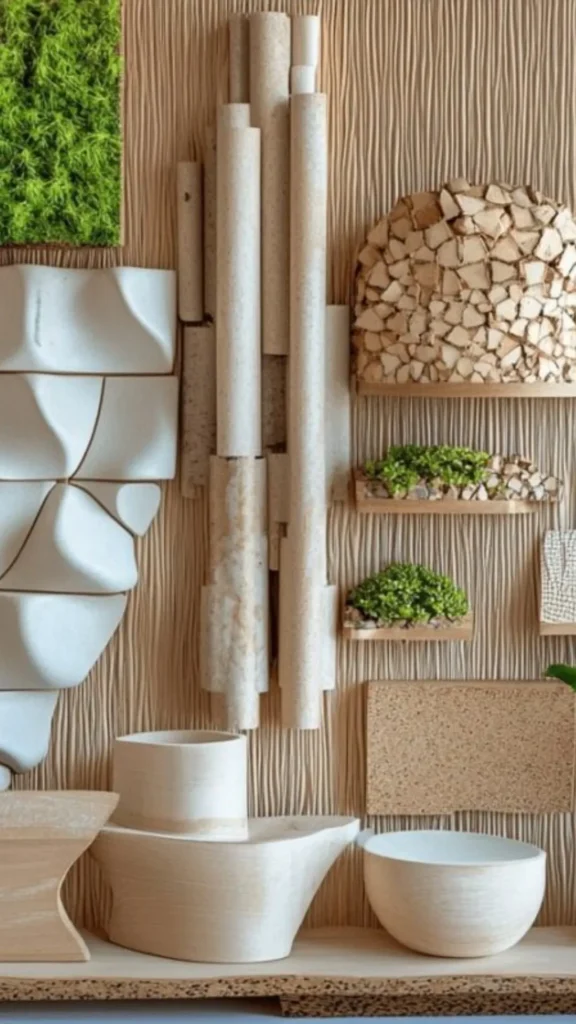
An increasing number of furniture brands now offer take-back schemes for old pieces at end of life, ensuring materials are properly recycled or refurbished rather than sent to landfill when a household eventually wants to update or replace an item.
Checking for this kind of program before making a significant furniture purchase adds an extra layer of accountability to the buying decision, extending sustainable thinking beyond the piece’s active life in your home.
Pinterest keywords: Sustainable Interior Design · Conscious Home Decor · Eco Friendly Home Decor
21. Choosing Reclaimed or Recycled Glass and Ceramics
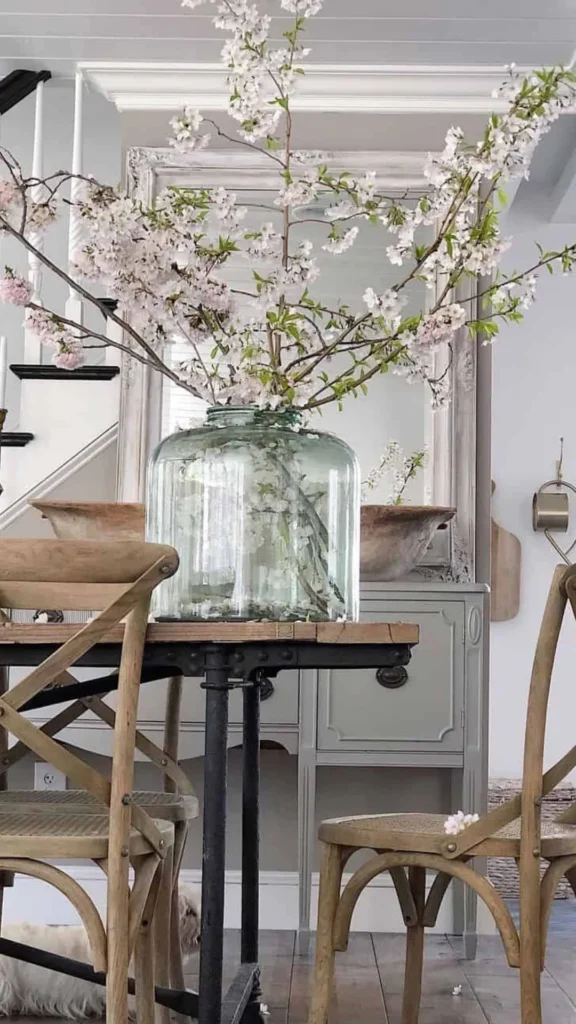
Vases, drinking glasses, and decorative ceramics made from recycled glass or reclaimed clay carry the same beauty and function as their conventionally manufactured counterparts while requiring significantly less raw material extraction and energy to produce.
Many of these pieces also carry a slight, appealing irregularity, bubbles in recycled glass, subtle variation in reclaimed ceramic glaze, that aligns naturally with the wabi-sabi appreciation for imperfection found throughout organic modern and Japandi design.
Pinterest keywords: Sustainable Interior Design · Natural Materials Interior Design · Organic Home Materials
22. A Sustainable Approach to Seasonal Decorating
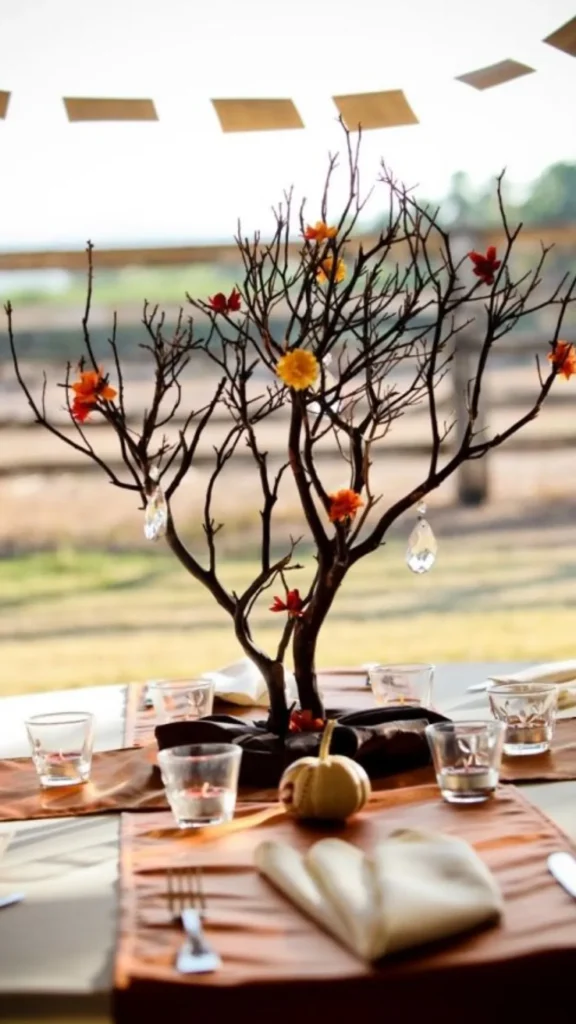
Choosing natural, reusable seasonal decorations, dried branches, pressed botanicals, natural pinecones, over disposable plastic seasonal decor reduces the volume of single-use decorative items that typically end up in landfill after each holiday or season passes.
These natural alternatives also tend to photograph and age more beautifully than their synthetic counterparts, fitting seamlessly into the same warm, earthy palette that defines sustainable interior design throughout the rest of the year.
Pinterest keywords: Sustainable Interior Design · Natural Materials Interior Design · Slow Living Interior
23. Supporting Small and Independent Craftspeople
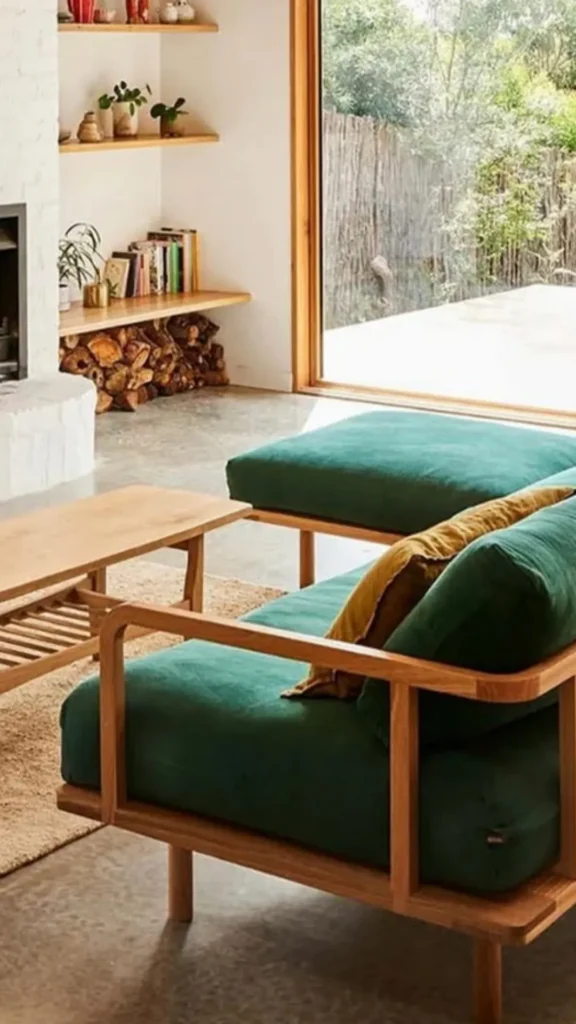
Commissioning or purchasing directly from small independent furniture makers and craftspeople, rather than large mass-manufacturers, often results in more sustainable production methods by default, smaller batch sizes, local materials, and considerably less transportation involved.
This choice also tends to produce genuinely more distinctive, characterful pieces, since independent makers rarely have the capacity or incentive to mass-produce identical items at scale.
Pinterest keywords: Sustainable Interior Design · Vintage Furniture Home · Conscious Home Decor
24. Reducing Packaging Waste from Home Deliveries
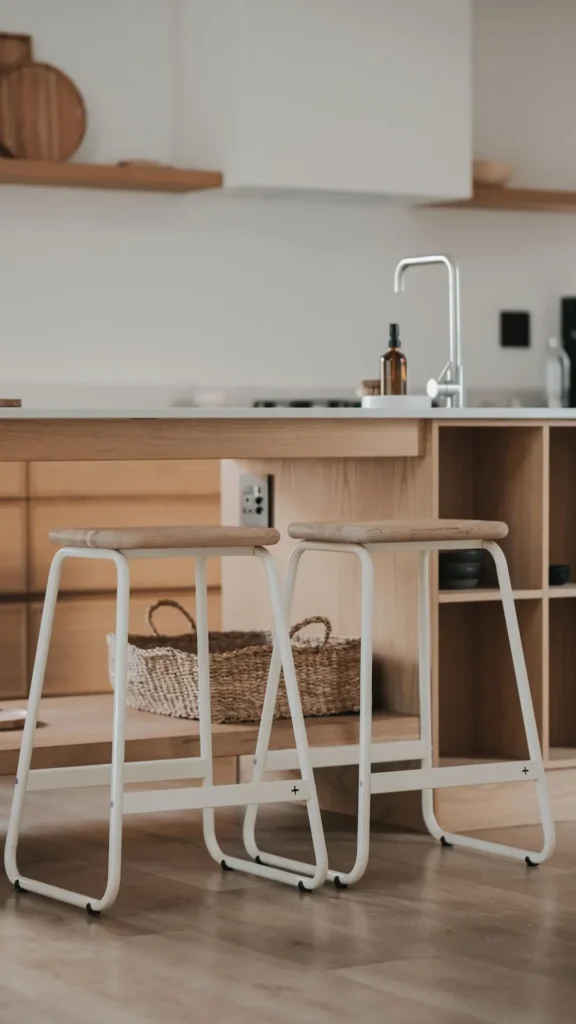
Choosing retailers and brands that use minimal, genuinely recyclable packaging, and consolidating orders where possible rather than making frequent small purchases, reduces the surprisingly significant volume of cardboard and plastic waste generated simply by furnishing a home over time.
This is a small, easily overlooked consideration compared to material or furniture choices, but it compounds meaningfully across the dozens of deliveries most home projects eventually involve.
Pinterest keywords: Sustainable Interior Design · Conscious Home Decor · Eco Friendly Home Decor
25. Sustainable Interior Design as an Ongoing Practice, Not a Finished Project
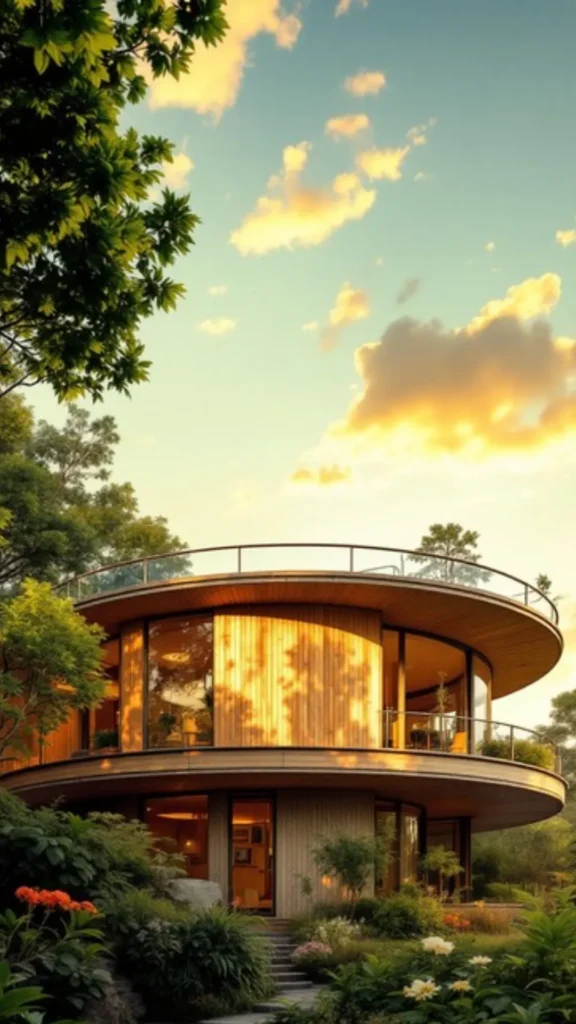
The most genuinely sustainable homes are rarely finished in a single renovation or shopping trip, they develop gradually over years, each new piece considered against the same questions of materials, longevity, and genuine need.
Treating sustainability as an ongoing practice rather than a box to check keeps every future decision held to the same standard, ensuring the home continues improving both aesthetically and environmentally for as long as it’s lived in. For more on bringing living, natural elements into this kind of considered home, visit our Biophilic Home Design guide.
Pinterest keywords: Sustainable Interior Design · Biophilic Home Design · Natural Materials Interior Design
For more on biophilic elements that complement sustainable design beautifully, visit our Biophilic Home Design guide.
Final Thoughts
Sustainable interior design in 2026 is not a sacrifice. It is not a compromise between what you want and what is responsible. It is, increasingly and genuinely, the most beautiful way to design a home, because natural materials are beautiful, because vintage pieces have character, because quality furniture ages better than cheap alternatives, and because a home that is considered in its choices is always more beautiful than one that is assembled carelessly.
Design your home with intention. Choose materials that last. Buy pieces that matter. The most sustainable home is also the most beautiful one. 🌿


