


Walk into a room filled with natural light, living plants, warm wood surfaces, and the quiet sound of water nearby, and something happens physiologically. Your heart rate drops. Your breathing deepens. Your mind settles. That’s biophilic home design at work, and the science behind why it makes us feel so profoundly better is both fascinating and completely compelling.
Biophilic design is the practice of integrating nature, living plants, natural materials, organic forms, water, light, and earthy colors, directly into our built environments. It’s one of the most transformative design philosophies of 2026, and the best part is that it scales beautifully from a single plant on a windowsill to a full architectural redesign. Here’s how to bring it into your home. 🌿
What Is Biophilic Home Design?
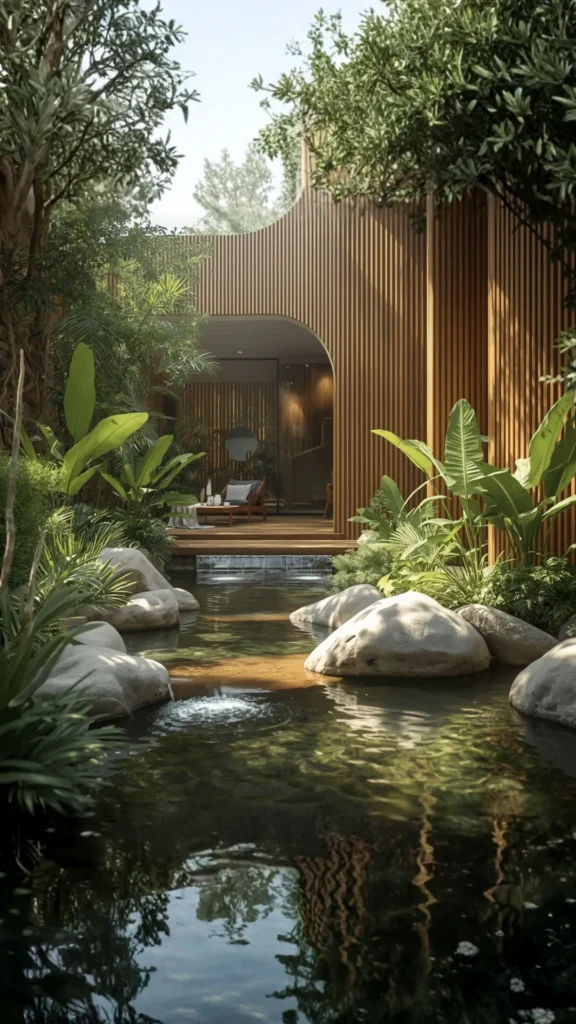
The word biophilia literally means “love of life and the living world”, a term coined by the biologist E.O. Wilson to describe the innate human connection to nature that has been part of our psychology for hundreds of thousands of years. Biophilic design is the architectural and interior response to that connection, the deliberate integration of natural elements into spaces where people live and work.
Research consistently shows that spaces designed with biophilic principles reduce stress, improve sleep quality, boost creativity, and elevate mood in ways that conventionally designed spaces simply don’t. According to Architectural Digest, biophilic interior design has become one of the defining wellness-focused design movements of the mid-2020s, with demand for living walls, natural materials, and organic forms at an all-time high heading into 2026.
In practical terms, biophilic home design doesn’t require a garden or a ground floor, it’s about bringing the essence of the natural world inside through living plants, natural textures, organic shapes, abundant light, and a color palette drawn from the earth.
1. The Living Moss Wall
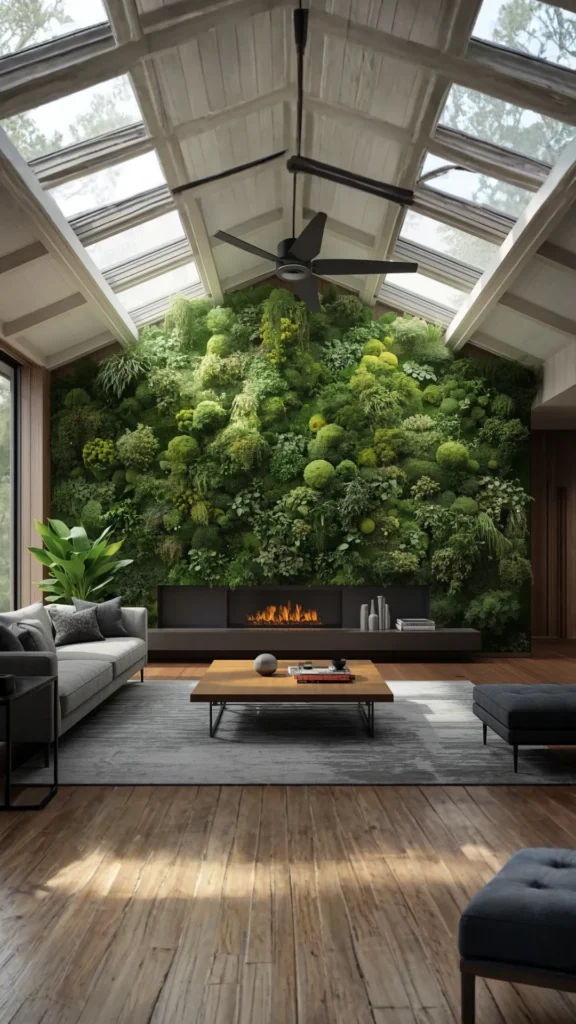
The living moss wall is perhaps the most dramatic expression of biophilic home design available, and in 2026, it’s moving from commercial spaces and luxury hotels into everyday homes with remarkable momentum. A preserved or living moss panel on a feature wall brings a richness of texture and color that no paint, wallpaper, or artwork can replicate.
Preserved moss walls require no watering or maintenance, the moss is treated to retain its color and texture indefinitely without soil or water. Living moss walls do require a misting system but reward that effort with a wall that is genuinely, breathtakingly alive. Either way, the effect in a living room, entrance hall, or bedroom is extraordinary — like a piece of forest has been brought indoors and framed on your wall.
Pinterest keywords: Biophilic Wall · Moss Wall Interior Design · Plant Wall Indoor
2. Indoor Plant Wall with Floating Shelves
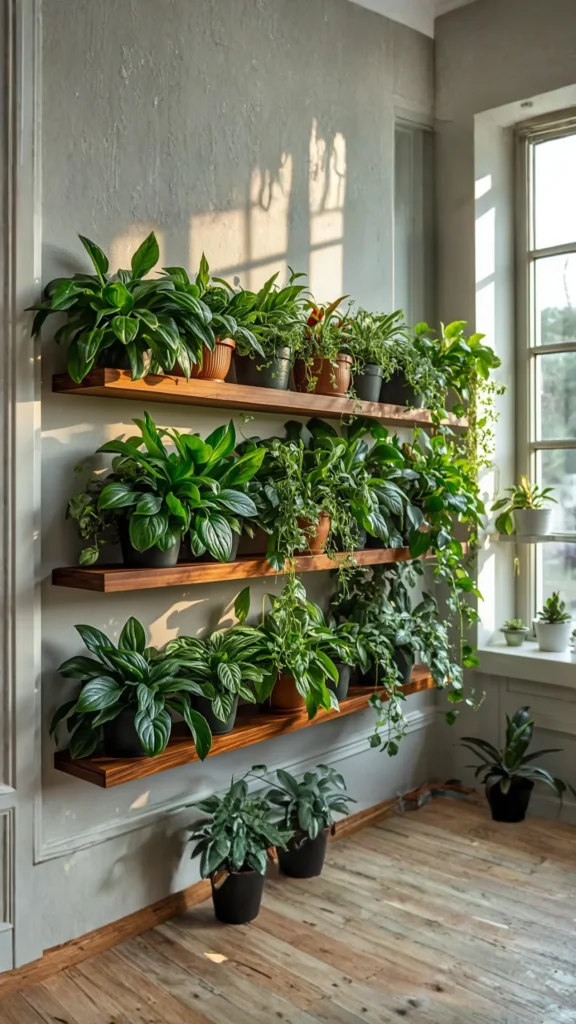
For a more accessible take on the wall-of-nature concept, an indoor plant wall with floating wood shelves achieves a similarly lush and beautiful result with far less investment. Staggered walnut or oak floating shelves at different heights, loaded with a thoughtful mix of trailing plants, upright specimens, and small pots, creates a verdant wall feature that transforms the entire energy of a room.
The key is variety, combine trailing pothos that drape over shelf edges, upright snake plants that add height and structure, small ceramic pots of succulents or air plants, and one or two larger statement specimens like a monstera or fiddle leaf fig. The combination of warm wood shelving and abundant green against a warm white wall captures the essence of biophilic design beautifully, organic, layered, and deeply alive.
Pinterest keywords: Plant Wall Ideas Indoor · Plant Interior Design · Biophilic Home
3. Natural Materials Throughout Every Room
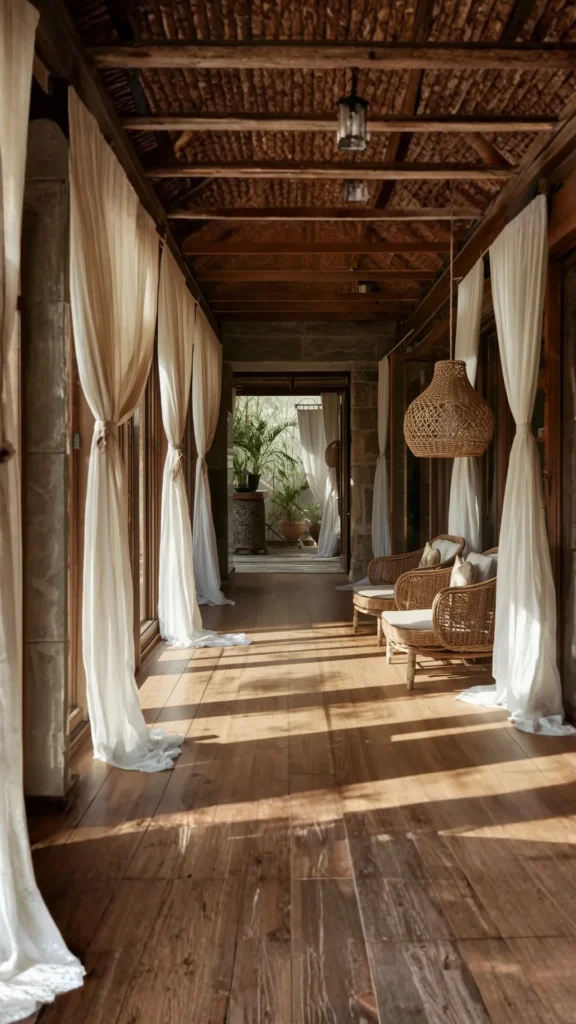
Biophilic home design is as much about what surfaces feel like as what they look like. Natural materials, solid wood, stone, linen, cotton, ceramic, bamboo, rattan, and jute, carry a tactile quality that connects us to the natural world in a way that synthetic alternatives simply cannot.
Running solid wood flooring throughout your home creates a continuous natural surface underfoot that both looks beautiful and feels warm under bare feet. Stone countertops with visible natural veining, linen upholstery that softens with use, and rattan accessories that add organic texture all contribute to an interior that feels genuinely connected to nature. The goal is a home where every surface you touch reminds you that you are part of the natural world, not separated from it.
Pinterest keywords: Natural Materials Interior Design · Biophilic Home · Natural Style Interior Design
4. Maximizing Natural Light
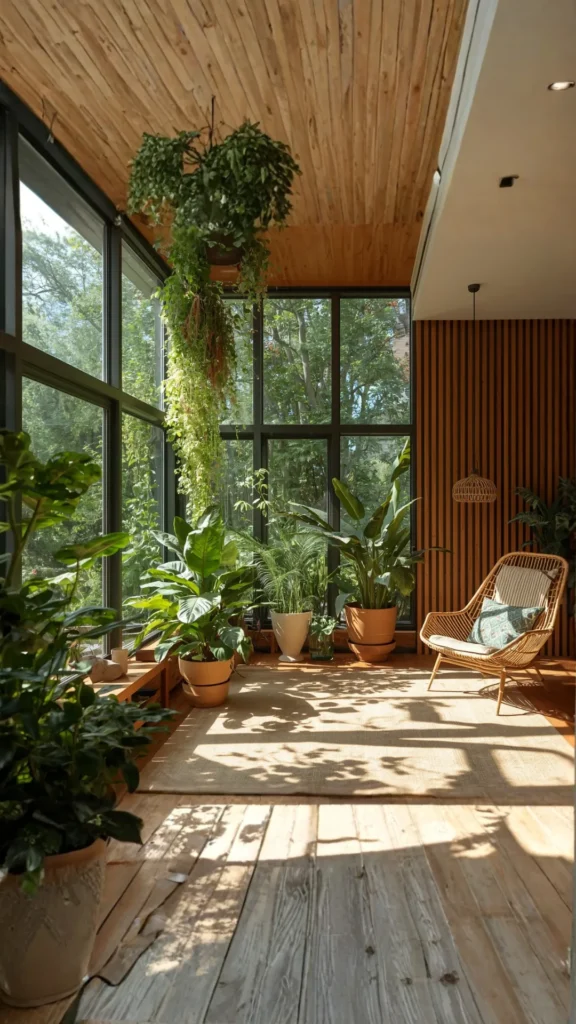
Light is one of the most fundamental elements of biophilic design, and the difference between a home that feels naturally alive and one that feels artificially lit comes down almost entirely to how effectively natural light is maximized and distributed.
In practice, this means treating windows as the most important design element in every room. Keep window sills clear, choose sheer linen curtains rather than heavy drapes that block light, and use large mirrors positioned to catch and bounce natural light into darker corners. If your budget allows, larger windows or skylights are among the single most transformative biophilic investments you can make. Where natural light is genuinely limited, warm-spectrum artificial lighting that mimics the quality of daylight is the best substitute.
Pinterest keywords: Biophilic Home · Forest Home Interior Design · Natural Style Interior Design
5. Water Features Inside the Home
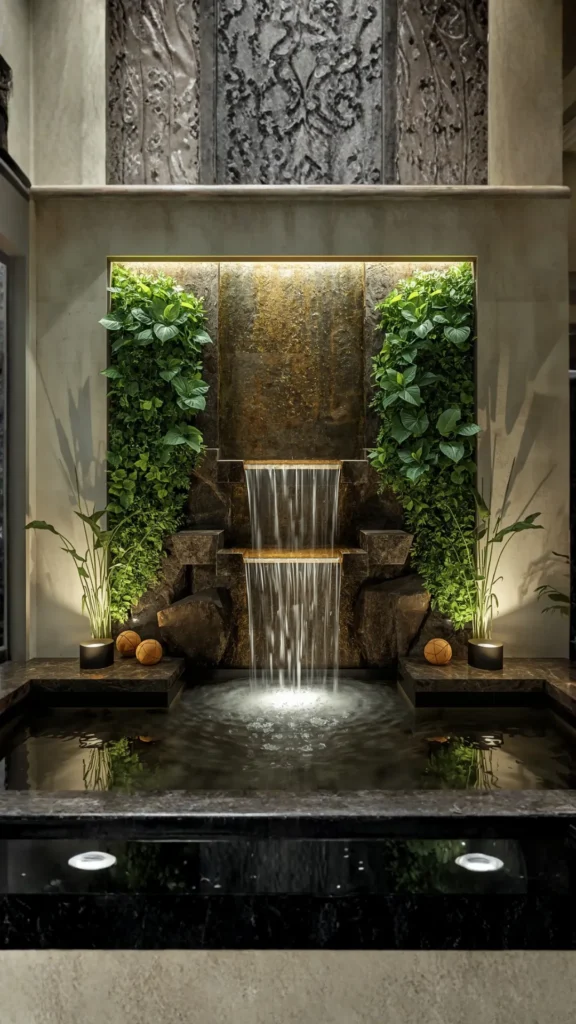
The sound of water is one of the most reliably calming sensory experiences humans know, and bringing that sound inside through a biophilic water feature is one of the most impactful design choices available. Indoor wall fountains, tabletop water features, and even an indoor pond in a larger hallway or living space all introduce that calming auditory element that connects our nervous system to the natural world.
Even a small, simple tabletop water feature in a bedroom or home office creates a measurable difference to how the space feels to be in. The gentle sound of flowing water masks background noise, encourages focus, and creates a subtle sense of being in a natural environment that our minds find deeply reassuring. For a more dramatic effect, a wall-mounted indoor fountain in an entrance hall or living room becomes both a sound experience and a stunning visual feature.
Pinterest keywords: Biophilic Home · Natural Style Interior Design · Forest Home Interior Design
6. Biophilic Bedroom, Sleep Like You’re in a Forest
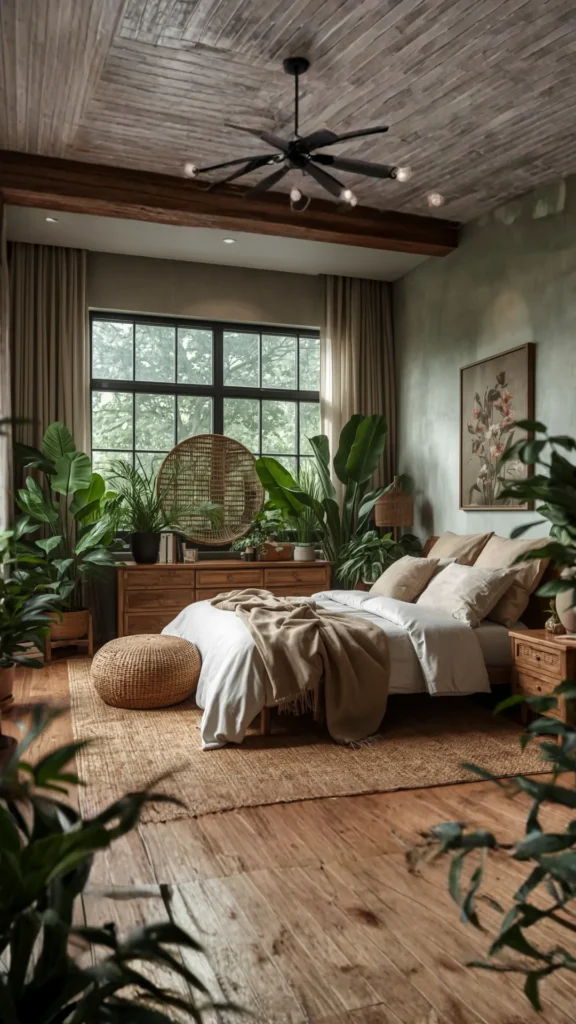
The bedroom is arguably the most important room for biophilic design principles, because the quality of our sleep is directly influenced by our environment, and a bedroom that connects us to nature consistently produces better rest than one that doesn’t.
Abundant plants that improve air quality while you sleep, peace lilies, snake plants, and pothos are all excellent bedroom choices. Solid wood furniture that adds warmth and natural character. Linen or organic cotton bedding that breathes naturally and feels beautiful against skin. Earthy wall tones that feel like the inside of a forest at dusk. And as much natural morning light as possible, filtered through sheer curtains rather than blocked by heavy ones.
For more bedroom inspiration that complements the biophilic aesthetic beautifully, visit our guide on Cozy Cabin Bedroom Ideas
Pinterest keywords: Biophilic Home · Natural Style Interior Design · Plant Interior Design
7. Organic Shapes and Biomorphic Furniture
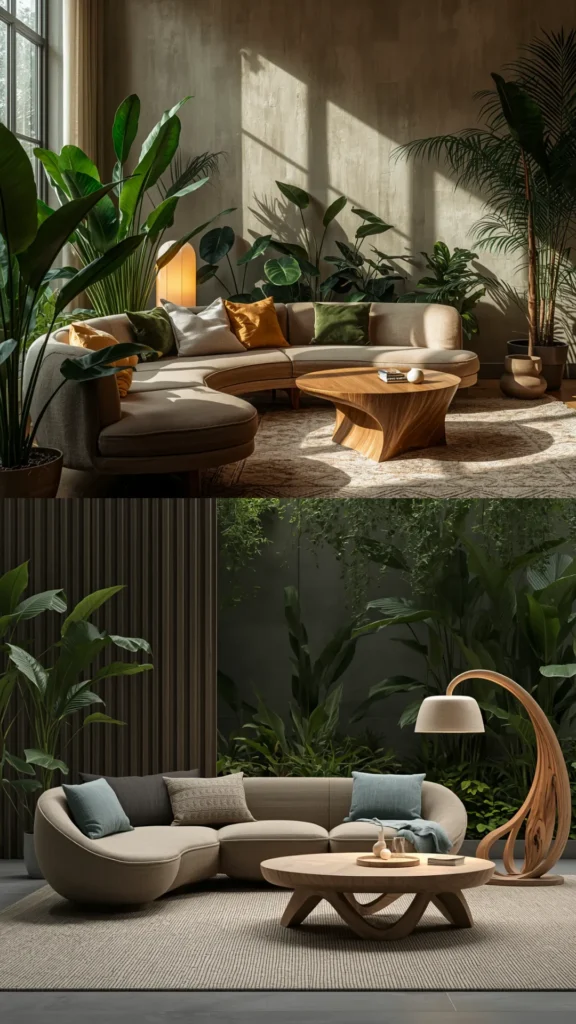
Nature very rarely produces straight lines or sharp right angles, and biophilic design takes its cue from that. Incorporating furniture and objects with organic, flowing, biomorphic forms reinforces the connection to the natural world through shape alone, even before any plant or natural material is added.
Curved sofas with organic silhouettes, kidney-shaped coffee tables, sculptural ceramic vases, arched floor lamps, and wave-shaped bookshelves all contribute to an interior where the forms themselves feel nature-inspired. When these organic shapes are combined with natural materials and living plants, the biophilic effect compounds beautifully, the space begins to feel like an extension of the natural world rather than a refuge from it.
Pinterest keywords: Organic Modern Interior · Biophilic Home · Natural Materials Interior Design
8. The Biophilic Bathroom
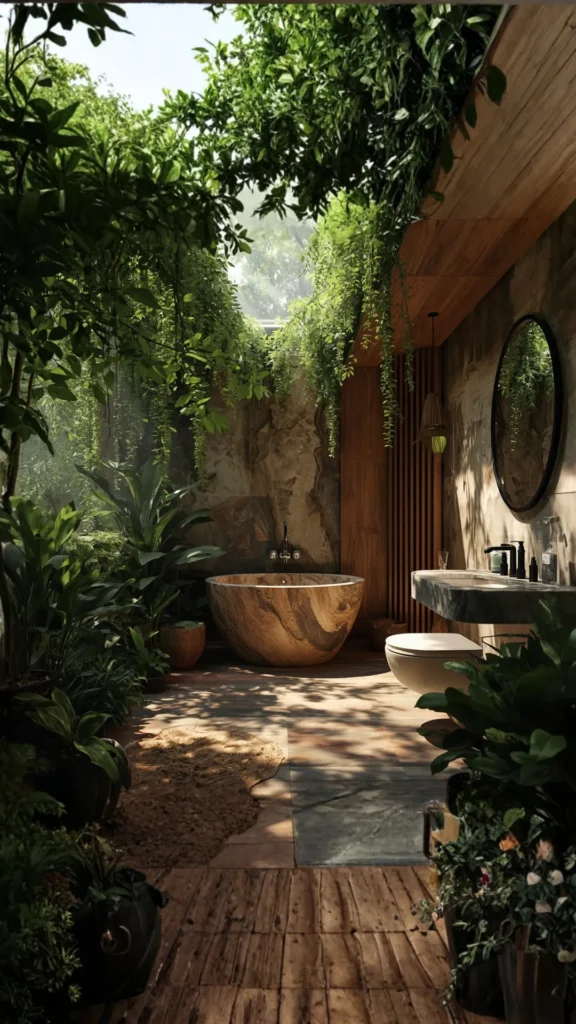
The bathroom is one of the most naturally biophilic rooms in any home, it already has warmth, humidity, and often more privacy than other spaces. Leaning into that with a fully biophilic bathroom approach creates a spa experience that most people struggle to find anywhere outside of a five-star hotel.
Abundant humidity-loving plants, monstera, pothos, Boston fern, bamboo, thrive in bathrooms and add a lushness that transforms the whole room. Natural stone tiles, warm wood vanities, rattan accessories, and candlelight complete the picture. The goal is a bathroom that feels like a private forest clearing, warm, alive, and completely disconnected from the pace of the outside world.
Pinterest keywords: Biophilic Home · Natural Style Interior Design · Plant Interior Design
9. Earthy Color Palette, Nature’s Own Palette
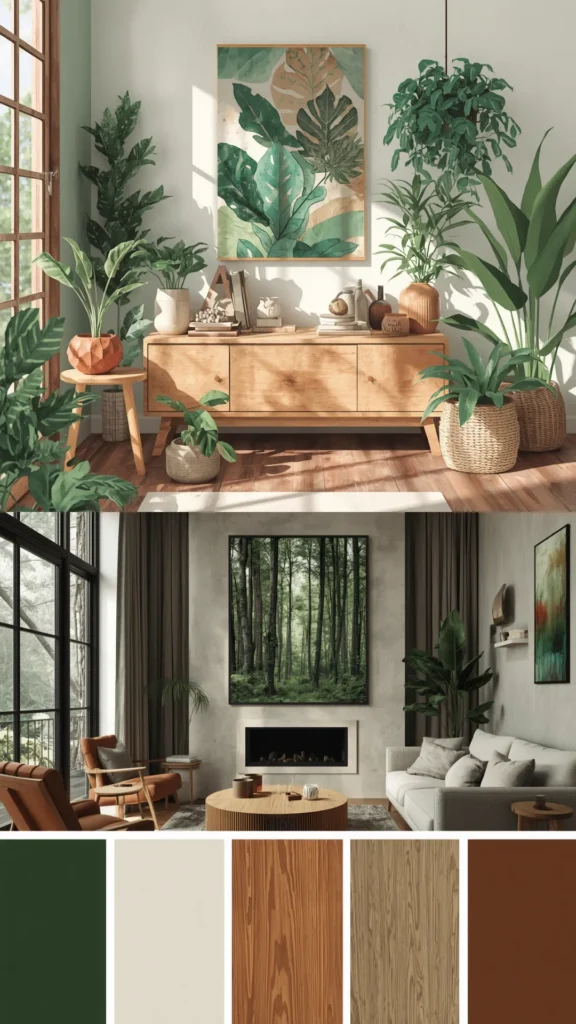
The biophilic home design color palette is essentially nature’s own, the colors you would see walking through a forest, across a meadow, or along a shoreline. These colors work because our brains are evolutionarily calibrated to find them calming and pleasurable.
The biophilic palette moves through warm forest greens, from pale sage to deep moss, alongside earthy neutrals like warm white, sandy beige, and rich terracotta. Wood tones provide a warm brown backbone throughout, and occasional deep tones like charcoal, navy, or rich chocolate add depth and grounding. What the biophilic palette never includes is anything synthetic-feeling, no bright primary colors, no cool greys, and nothing that couldn’t exist in nature.
Pinterest keywords: Earthy Interior Design · Natural Style Interior Design · Biophilic Home
10. Small Space Biophilic Design
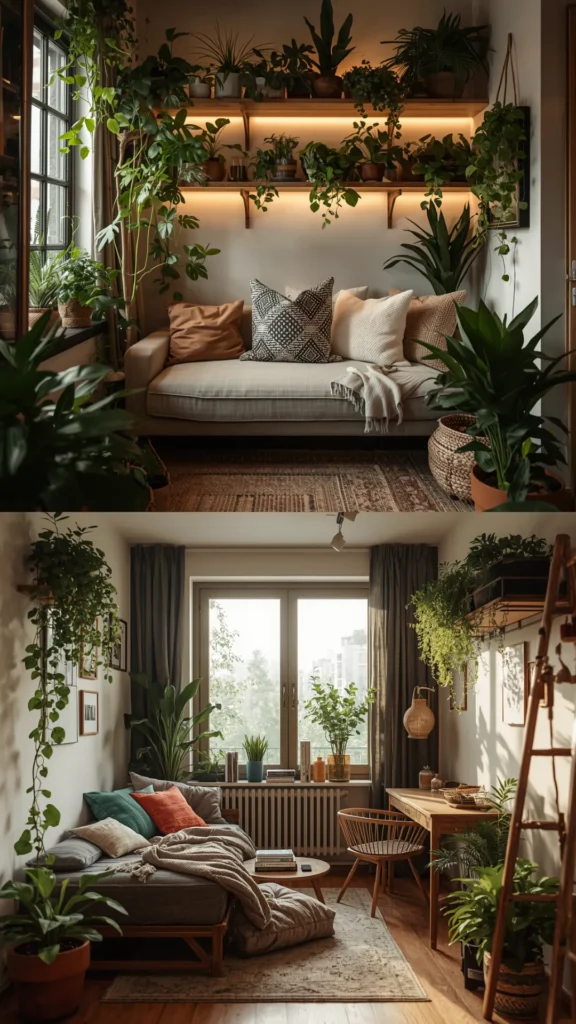
One of the most common misconceptions about biophilic home design is that it requires large spaces to work effectively. In reality, the principles of biophilic design are often most powerful in small spaces, precisely because in a compact room, even a few well-chosen natural elements have an outsized impact on how the space feels.
A single large plant in a small living room can shift the entire energy of the space. One wall of warm natural wood paneling in a compact bedroom creates a cocooning forest quality. A small tabletop water feature in a studio apartment introduces that calming sound element without requiring any floor space at all. Biophilic design in a small space is about maximizing sensory connection to nature within whatever footprint is available, and the results are consistently remarkable.
11. A Living Green Wall in the Home Office
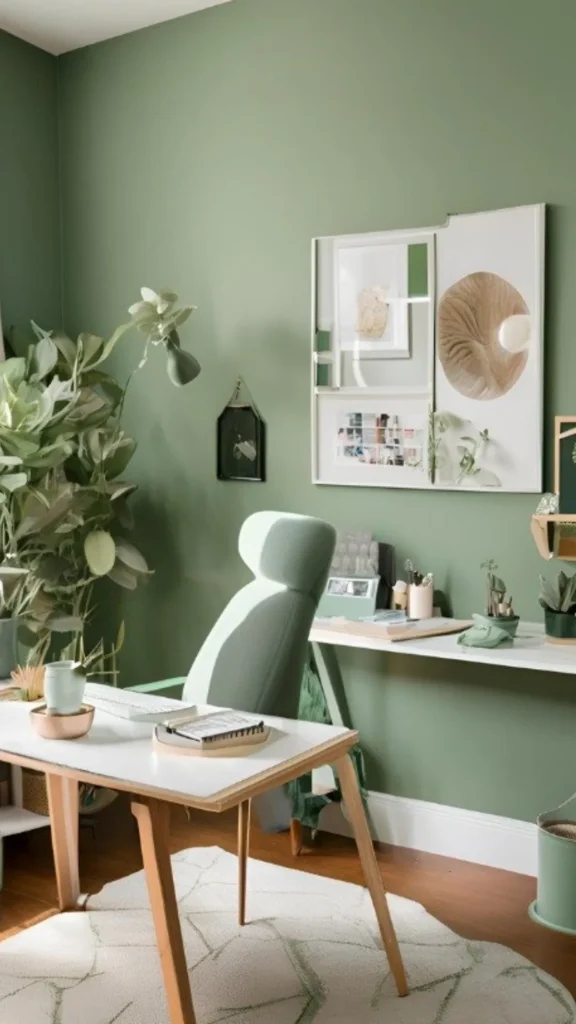
A vertical planted panel positioned behind or beside a desk brings genuine air-purifying greenery into the room where focus and calm matter most. Studies on workplace biophilia consistently link visible greenery to improved concentration and reduced mental fatigue.
Even a modest panel of six to eight small plants set into a wall-mounted frame creates enough visual presence to change how the whole room feels during a long work day.
Pinterest keywords: Biophilic Home · Plant Wall Ideas Indoor · Natural Style Interior Design
12. Skylights That Track the Path of the Sun
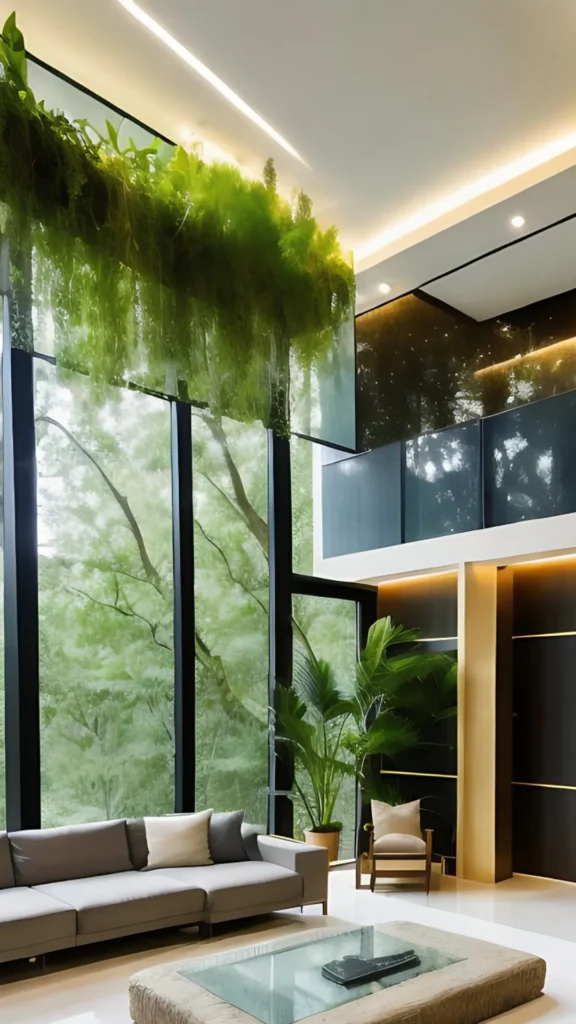
A skylight positioned to track the sun’s movement introduces a quality of light that shifts visibly through the day, connecting the interior to the passage of time in a way that artificial lighting never can.
This kind of light also reveals natural materials, wood grain, stone texture, plant foliage, at their most alive, catching detail that flat, static lighting flattens entirely.
Pinterest keywords: Biophilic Home · Natural Style Interior Design · Forest Home Interior Design
13. A Reclaimed Wood Feature Wall
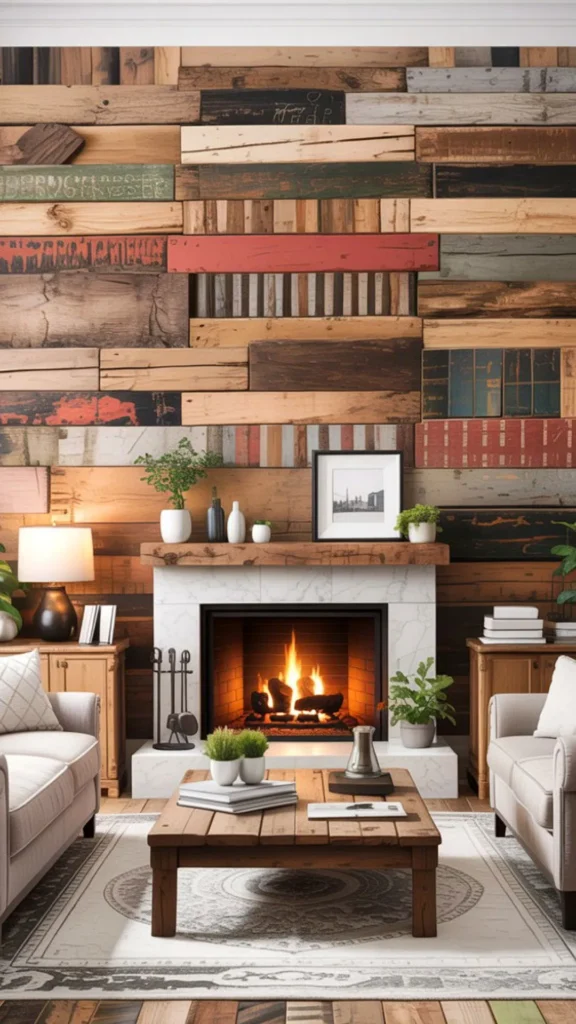
Reclaimed timber, with its visible nail holes, weathering, and grain variation, carries a story of previous use that new wood simply cannot replicate. A feature wall built from reclaimed boards introduces both texture and a genuine connection to the material’s origin.
This aligns directly with biophilic design’s deeper philosophy, that materials with visible history and imperfection connect us more meaningfully to the natural world than anything manufactured to look flawless.
Pinterest keywords: Biophilic Home · Natural Materials Interior Design · Forest Home Interior Design
14. A Dedicated Herb Garden Windowsill
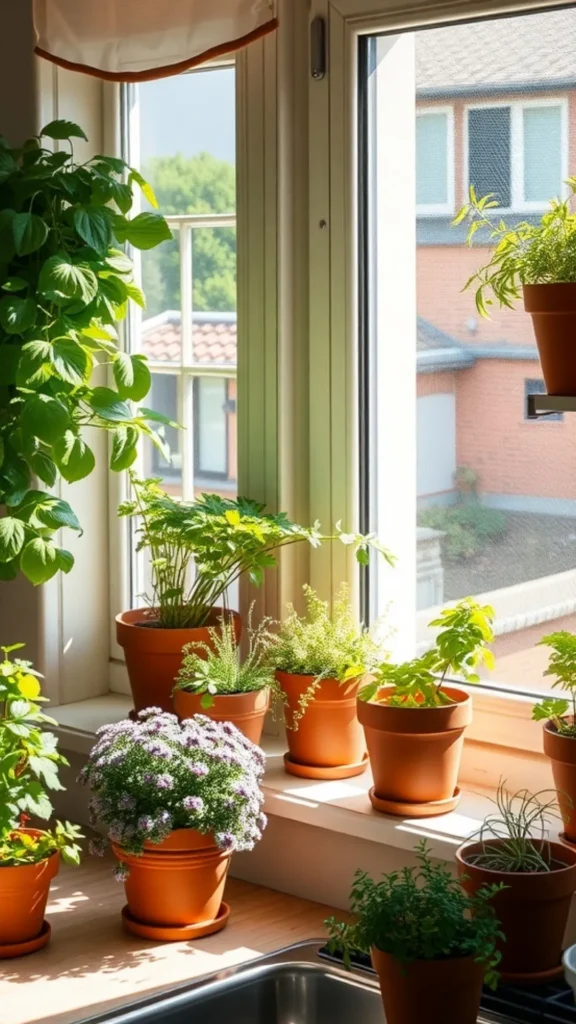
A row of terracotta pots filled with basil, mint, rosemary, and thyme along a sunny windowsill brings a living, edible layer of biophilic design directly into daily cooking and eating rituals.
Beyond the visual greenery, the act of touching, trimming, and using the herbs creates a tactile and sensory connection to nature that purely decorative plants don’t offer in quite the same way.
Pinterest keywords: Biophilic Home · Indoor Herb Wall Kitchen · Plant Interior Design
15. Natural Ventilation and Airflow Design
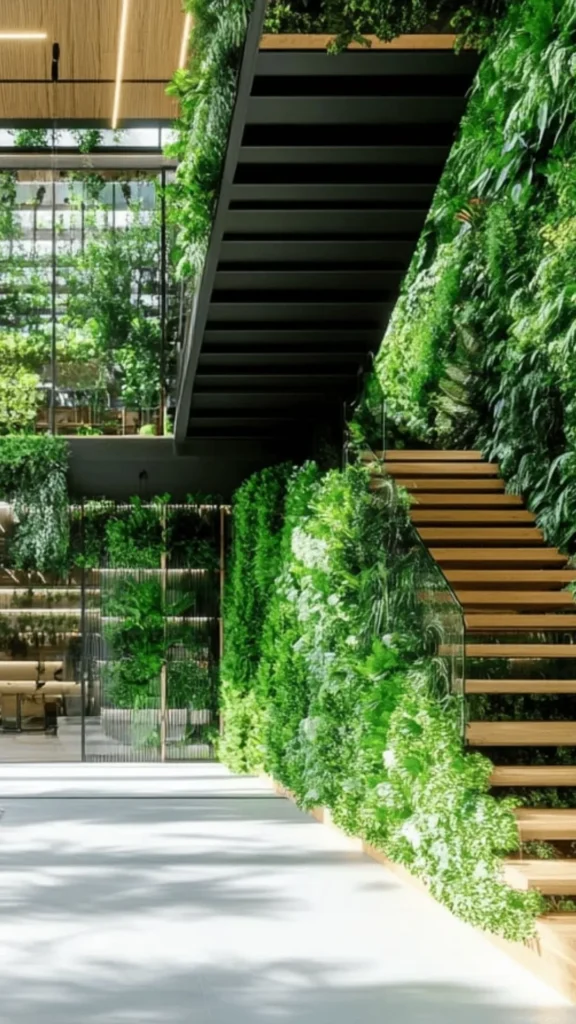
Positioning windows and doors to allow natural cross ventilation reconnects a home to the changing seasons and outdoor air quality in a way that sealed, climate-controlled interiors never achieve.
Even opening windows for twenty minutes each morning introduces fresh air circulation and the subtle sounds and scents of the outdoors, both genuinely core to the biophilic philosophy of sensory connection to nature.
Pinterest keywords: Biophilic Home · Natural Style Interior Design · Forest Home Interior Design
16. A Stone or Pebble Accent Floor Zone
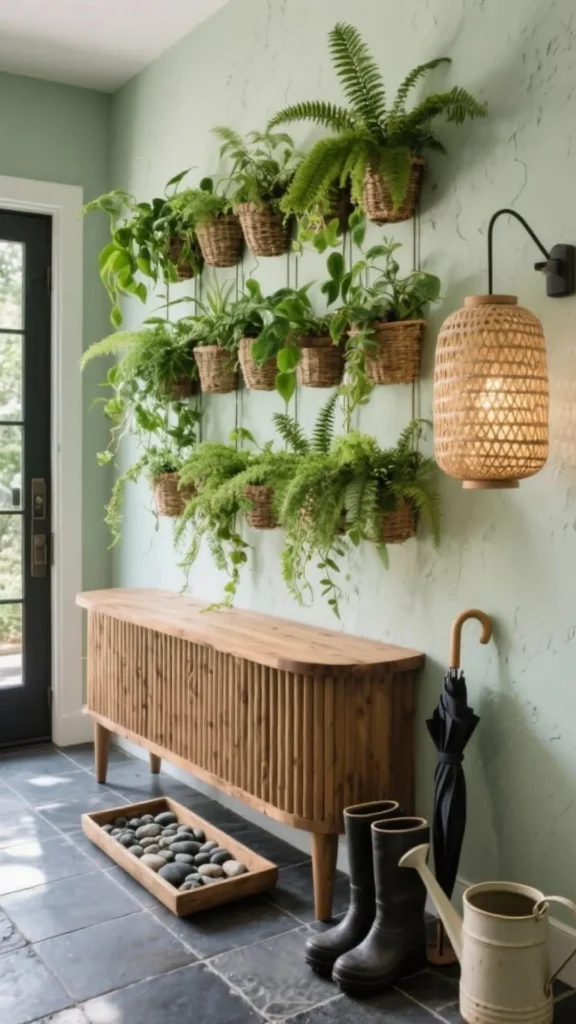
A small zone of natural stone or smooth pebbles set into an entryway or bathroom floor introduces genuine geological texture underfoot, a sensory detail that connects the home to the earth in the most literal sense possible.
This kind of accent works especially well as a transition point between indoor and outdoor spaces, softening the boundary between the two.
Pinterest keywords: Biophilic Home · Natural Materials Interior Design · Natural Style Interior Design
17. Circadian Lighting That Shifts Throughout the Day
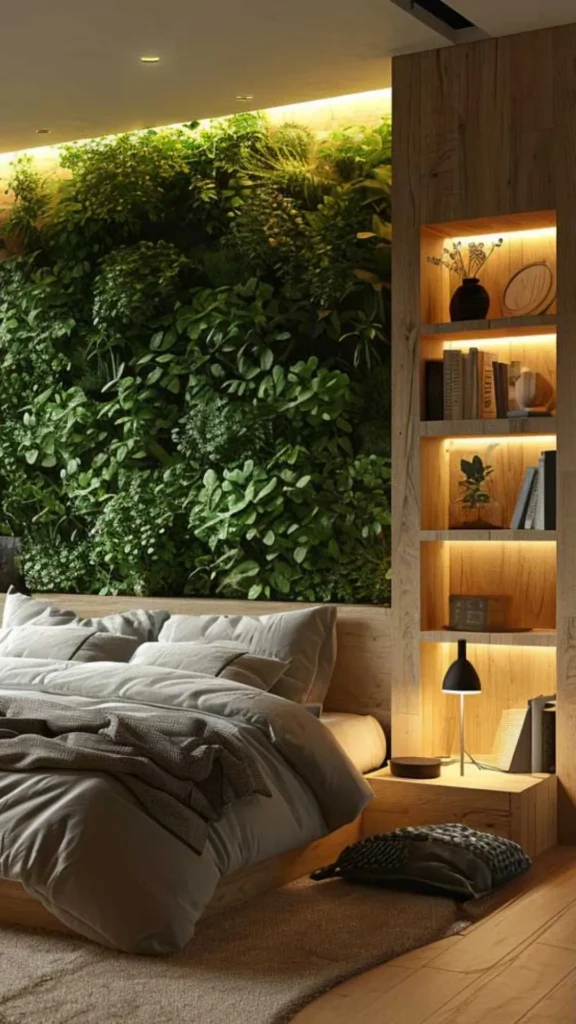
Circadian lighting systems that automatically shift from cooler, brighter tones in the morning to warm, dim tones in the evening mimic the natural progression of daylight, supporting the body’s own internal clock.
This technology-enabled approach to biophilic design proves that connecting a home to nature’s rhythms doesn’t always require a literal natural element, sometimes it means designing systems that behave the way nature does.
Pinterest keywords: Biophilic Home · Natural Style Interior Design · Forest Home Interior Design
Pinterest keywords: Biophilic Home · Natural Style Interior Design · Forest Home Interior Design
18. A Living Room Fish Tank or Aquascape
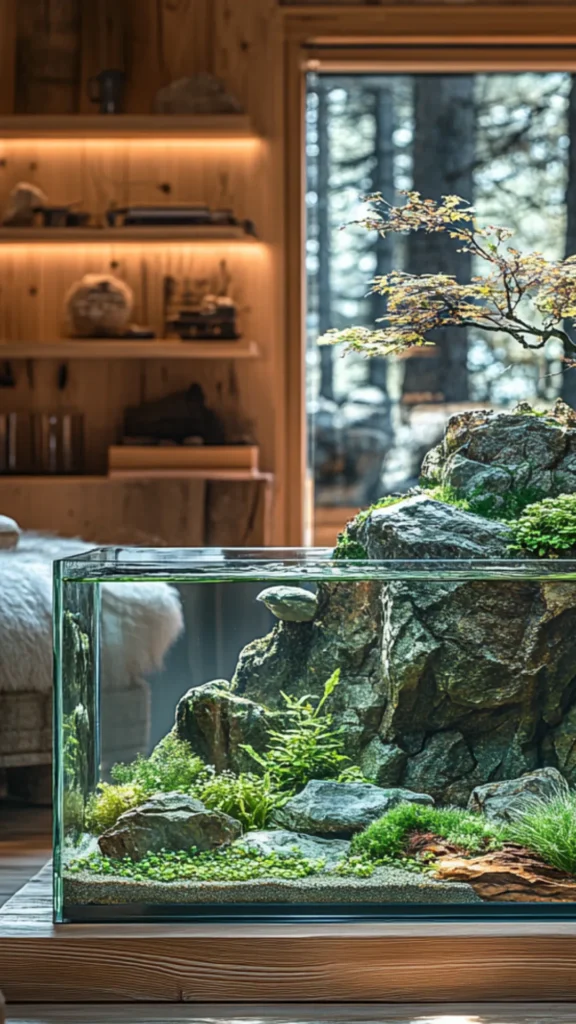
A densely planted freshwater aquascape brings a living, moving ecosystem directly into the living room, combining water, plant life, and gentle movement in a single feature that rewards quiet observation.
Unlike a plain glass tank, an aquascape styled with driftwood, stone, and carpeting plants reads as a genuine piece of natural design rather than simply a pet enclosure.
Pinterest keywords: Biophilic Home · Natural Style Interior Design · Plant Interior Design
19. Cork and Natural Fiber Wall Coverings
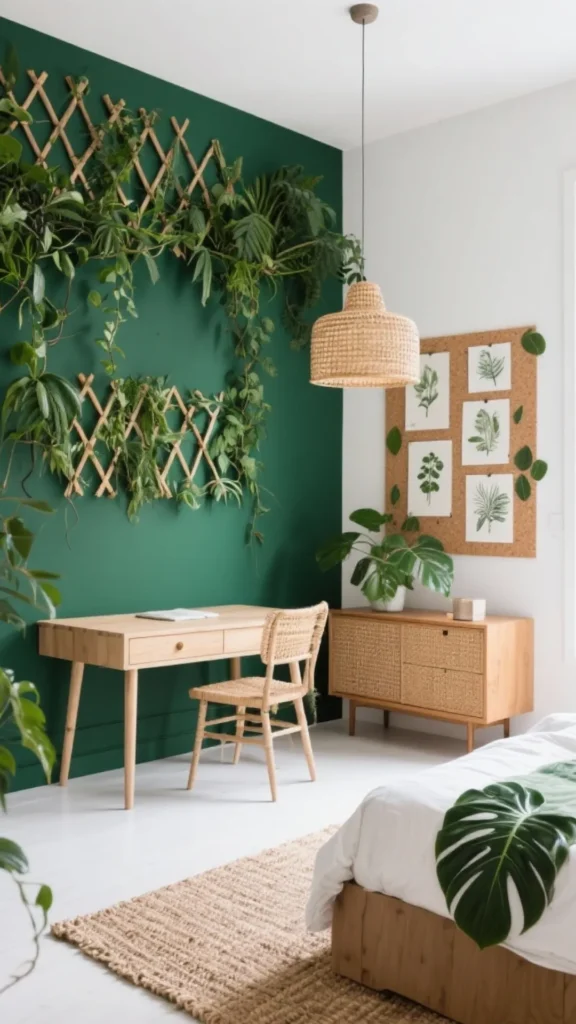
Cork, grasscloth, and other natural fiber wall coverings introduce organic texture and even acoustic softening to a room, a quieter, more tactile alternative to painted plaster that still reads as calm and neutral.
These materials age gracefully and develop subtle character over time, aligning with biophilic design’s broader appreciation for materials that improve rather than deteriorate with age.
Pinterest keywords: Biophilic Home · Natural Materials Interior Design · Natural Style Interior Design
20. A Sunroom or Conservatory Plant Room
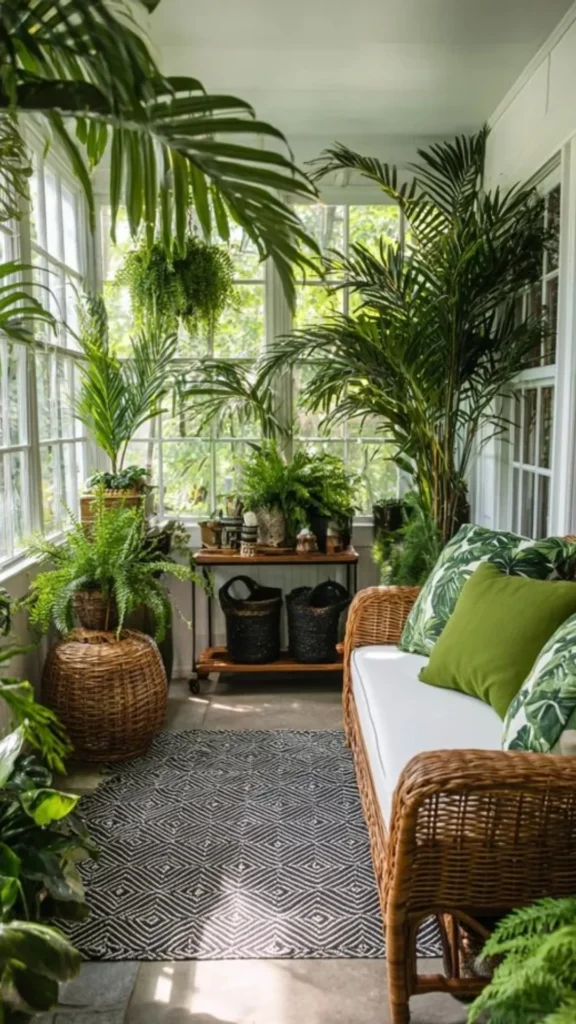
A dedicated glass sunroom or conservatory, filled with an abundance of larger plants, creates a genuine indoor garden retreat where the boundary between inside and outside almost disappears entirely.
Furnished simply, with rattan seating and warm wood accents rather than heavy upholstery, this room becomes the most restorative space in the entire home during every season of the year.
Pinterest keywords: Biophilic Home · Forest Home Interior Design · Natural Style Interior Design
21. Biophilic Design for Pet-Friendly Homes
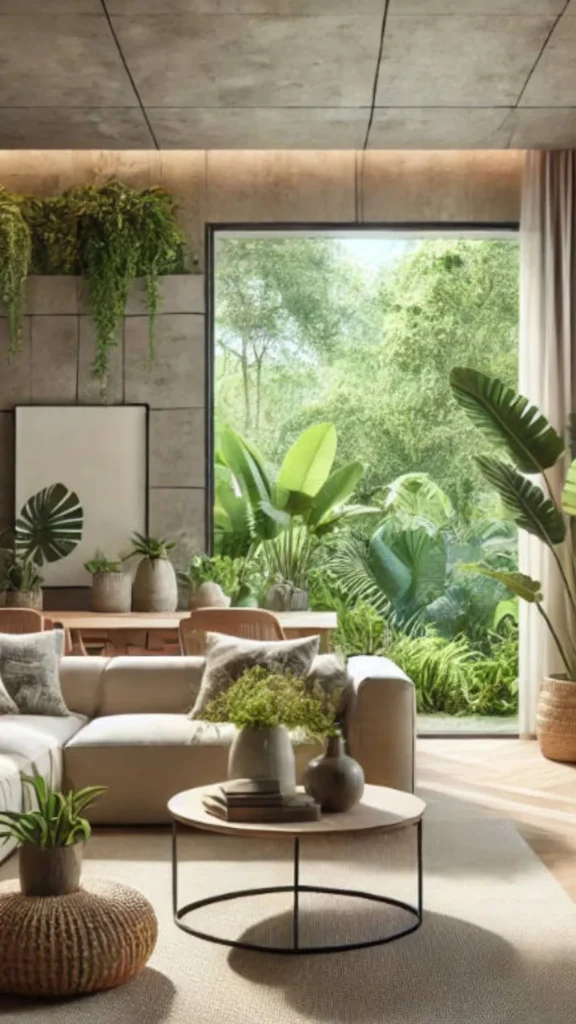
Choosing pet-safe plant varieties, spider plants, areca palms, and Boston ferns among them, allows biophilic design principles to be applied fully even in homes shared with cats and dogs, without compromising on safety.
Natural, hard-wearing materials like sisal rugs and solid wood furniture also tend to weather pet life more gracefully than delicate synthetic alternatives, another reason biophilic choices often suit family homes particularly well.
Pinterest keywords: Biophilic Home · Natural Materials Interior Design · Plant Interior Design
22. A Living Wall in a Stairwell
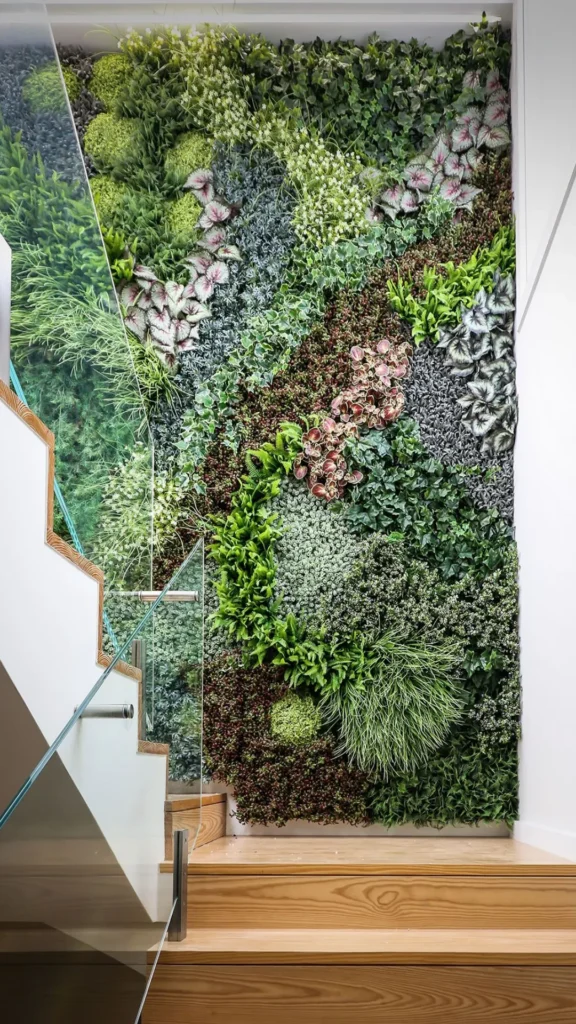
A vertical planted wall installed alongside a staircase makes use of an often-overlooked vertical space, transforming a purely functional transition zone into one of the home’s most memorable design features.
Because stairwells are frequently walked past rather than lingered in, this application of biophilic design rewards daily movement through the home with a constant, changing dose of greenery.
Pinterest keywords: Biophilic Home · Moss Wall Interior Design · Plant Wall Ideas Indoor
23. Weather-Responsive Window Treatments
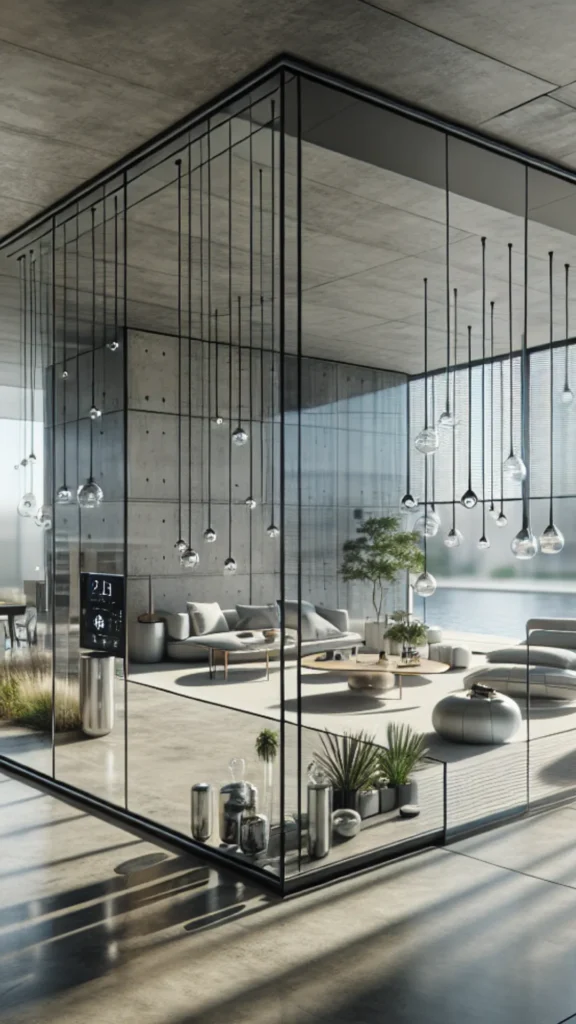
Automated blinds or curtains that respond to the sun’s position throughout the day help a home track natural light patterns more closely, opening fully during soft morning light and easing closed during harsh midday sun.
This kind of responsive design keeps interiors more attuned to outdoor conditions than static window treatments ever could, a subtle but meaningful expression of biophilic thinking.
Pinterest keywords: EBiophilic Home · Natural Style Interior Design · Forest Home Interior Design
24. A Biophilic Home Gym
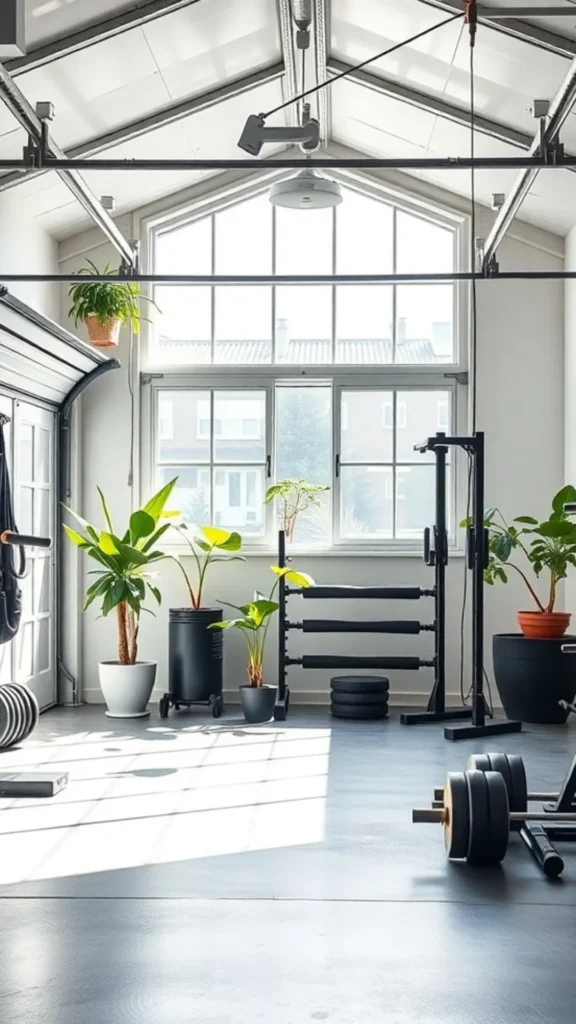
Positioning a home gym near a large window, and filling the space with resilient plants like snake plants and pothos, brings biophilic calm into a room usually associated with sterile, clinical design.
The combination of natural light, greenery, and warm wood flooring underfoot makes exercise feel considerably less like a chore and considerably more like a genuine daily ritual.
Pinterest keywords: Biophilic Home · Natural Style Interior Design · Organic Modern Interior
25. Designing a Home Around the View
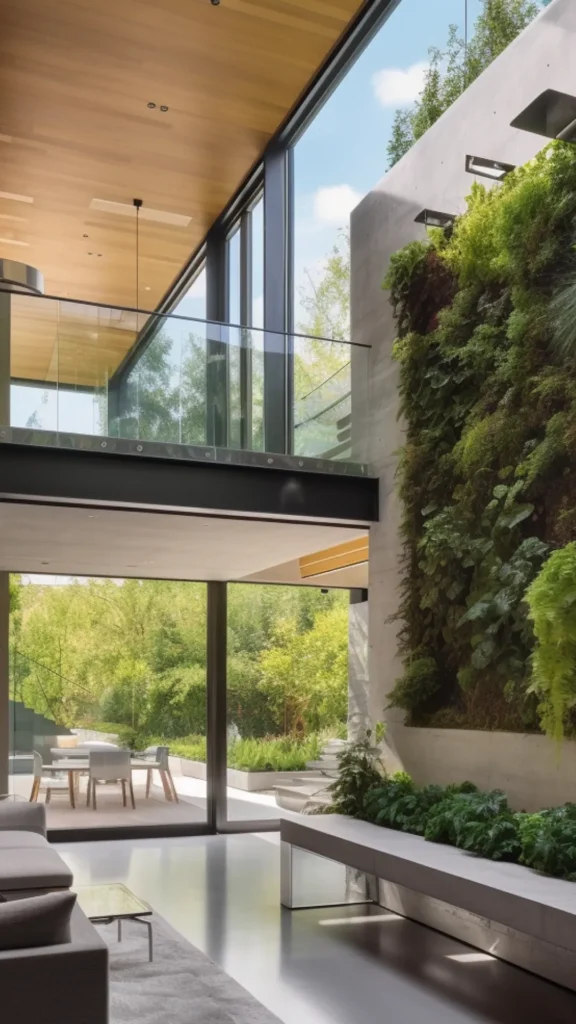
The single most powerful biophilic design decision is often the simplest, orienting your most-used furniture toward whatever natural view your home offers, a garden, a tree line, a patch of sky, rather than toward a television or a blank wall.
This final principle ties every other biophilic idea together, reminding us that connection to nature is as much about attention and orientation as it is about material choice. For more on the organic forms that complement biophilic design beautifully, visit our Organic Modern Interior Design guide.
Pinterest keywords: Biophilic Home · Organic Modern Interior · Natural Style Interior Design
How to Start Your Biophilic Home Journey
The most encouraging thing about biophilic home design is that you can start immediately with almost no investment at all. Here’s a practical, progressive approach:
Today: Buy one plant, something beautiful and relatively low maintenance. A pothos, a peace lily, or a snake plant. Place it where you’ll see it most. Notice the difference.
This week: Swap your light bulbs to the warmest available tone throughout your home. Add a wooden tray or a natural stone object to your living room. These small material changes shift the sensory quality of a room immediately.
This month: Add more plants, aim for at least one per room. Replace one synthetic textile with a natural one, a linen throw, a jute rug, or a cotton cushion cover.
When you’re ready to invest: A living moss panel, a natural stone feature, or a significant indoor tree like a large fiddle leaf fig or olive tree will transform how your home feels entirely.
Final Thoughts
Biophilic home design is ultimately about remembering something we’ve always known but modern life has made it easy to forget, that we are part of nature, not separate from it. When our homes reflect that truth through living plants, natural materials, organic forms, and abundant light, they stop being places we live in and start being places we genuinely thrive in.
Start with a single plant. Add warmth. Follow your instincts. Nature will do the rest. 🌿


