


There is a particular quality that the best Japandi bedrooms share, and it’s not something that can be captured in a list of furniture pieces or a specific paint color. It’s a feeling. Walk into a genuinely Japandi bedroom and something in you responds before your analytical mind has time to catch up. Your breathing slows. The visual noise that clutters most modern interiors simply isn’t there, and in its absence, something deeply restorative takes its place.
Japandi bedroom ideas are built on the intersection of two philosophies that share more than they differ, the Japanese appreciation for natural materials, honest imperfection, and the quiet beauty of restraint, and the Scandinavian commitment to warmth, function, and the kind of cozy contentment the Danes call hygge. Together they create bedrooms that are warm without being cluttered, minimal without being cold, and beautiful without demanding attention in the exhausting way that over-decorated rooms do. Here are 10 ideas for creating one. 🌿
What a Japandi Bedroom Actually Feels Like
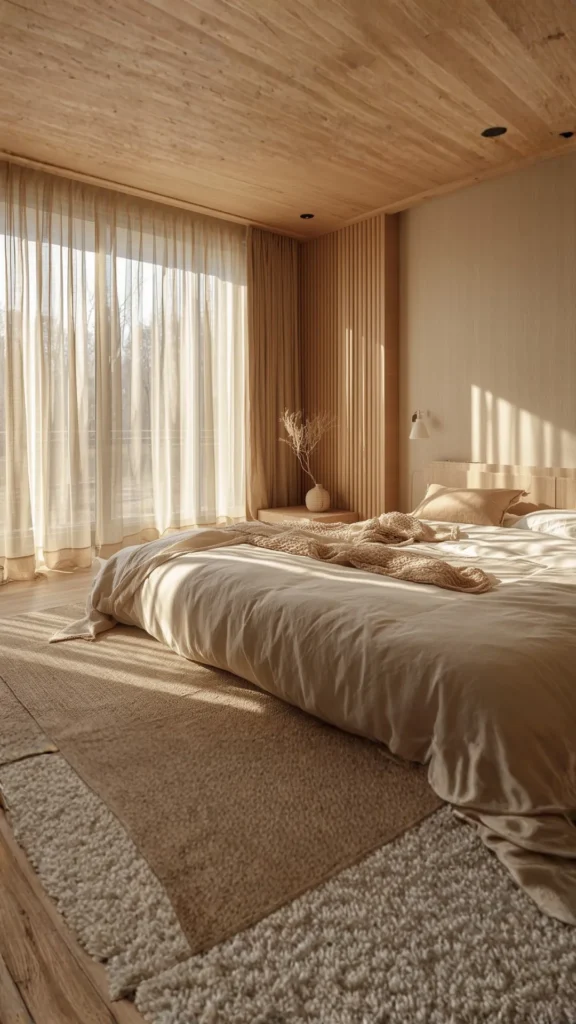
A Japandi bedroom is not simply a room with a minimal aesthetic and some warm wood furniture. It’s a room designed specifically and deliberately around the quality of the experience of being in it, not the appearance of it in a photograph. The difference matters enormously in practice. Rooms designed for photographs often sacrifice the sensory warmth and genuine comfort that rooms designed for living prioritize above everything else.
According to Architectural Digest, the Japandi bedroom has become the most consistently aspired-to sleep space of 2026, driven by a growing cultural recognition that the quality of our sleep environment is as important as any other wellness investment we make in our daily lives.
1. A Low Platform Bed as the Grounding Foundation

The bed is the most important single decision in any Japandi bedroom, and the low platform bed is the form that most naturally and most completely expresses the Japandi philosophy. Closer to the floor than conventional Western bed frames, the low platform brings the visual weight of the room’s most substantial piece of furniture down toward the ground, creating the settled, grounded quality that is the most immediately recognizable characteristic of a genuinely Japandi sleep space.
This closeness to the floor has deep roots in Japanese interior philosophy, where proximity to the earth is associated with stability, humility, and genuine comfort rather than the performative status that elevated furniture sometimes projects. In a Western bedroom context, even a bed that sits a few inches lower than conventional height shifts the room’s center of gravity downward and creates a calm, settled quality that higher bed frames simply cannot replicate.
How to style it: Choose a platform bed with a simple, clean headboard in warm wood or a low-profile upholstered form in linen or bouclé. Keep the bed frame profile as clean and uninterrupted as possible. The platform form is beautiful precisely because it’s restrained, and anything that adds visual complexity to the frame undermines the grounded quality that makes it work.
Pinterest keywords: Japandi Bedroom Ideas · Low Platform Bed · Japandi Bed 2026
2. Warm Linen Bedding in Muted Neutral Tones

Linen is the textile that most completely expresses the Japandi bedroom philosophy, honest, natural, beautiful in its slight imperfection, and genuinely better to sleep in than any synthetic alternative. The natural breathability of linen regulates temperature more effectively than cotton or polyester, making it not just aesthetically superior but genuinely more comfortable through all seasons.
In a Japandi bedroom, linen bedding in warm white, oat, soft warm sand, or muted sage creates the neutral, natural foundation from which every other textural and material choice in the room radiates. The slight rumple and natural texture of linen, which becomes more beautiful rather than less with each wash, contributes to the wabi-sabi-adjacent quality that distinguishes a genuinely Japandi bedroom from a sterile, over-styled one.
How to style it: Layer generously. A fitted linen sheet, a flat linen sheet, a duvet in a warm linen cover, and a folded wool or chunky knit throw at the foot of the bed creates visual richness and tactile variety that a single duvet alone cannot achieve. The layering looks beautiful, and it also makes the bed genuinely more comfortable across different temperatures.
Pinterest keywords: Japandi Bedroom Ideas · Linen Bedding Neutral · Japandi Bedding 2026
3. Warm Wood Furniture Throughout

Wood is the material backbone of every genuinely Japandi bedroom, the element that introduces warmth into a space where upholstered pieces and soft textiles dominate visually, and the material that prevents the room from feeling like a purely soft, undifferentiated environment without structure or depth. Warm oak or walnut bedside tables, a simple wooden dresser with visible grain, warm wood flooring beneath the rug, and where possible, the wooden frame or legs of the bed itself all contribute to the consistent material warmth that makes a Japandi bedroom feel genuinely cohesive.
The specific wood tone matters considerably. Oak and ash in their natural, warm-toned states bring the honey and amber warmth that Japandi requires. Walnut introduces depth and richness. What to avoid is bleached or cool-toned wood, the very pale, almost white Scandinavian woods that lean cool rather than warm. The wood in a Japandi bedroom should feel like something found in a forest rather than something that has been processed to within an inch of its natural character.
How to style it: Allow the grain and natural variation of the wood to be visible and celebrated rather than hidden under paint or stain. The imperfections and irregularities of real wood are part of its wabi-sabi beauty. They’re what make the material feel honest and genuinely alive rather than manufactured and anonymous.
Pinterest keywords: Japandi Bedroom Ideas · Warm Wood Bedroom · Oak Bedroom Furniture 2026
4. A Muted, Nature-Connected Color Palette
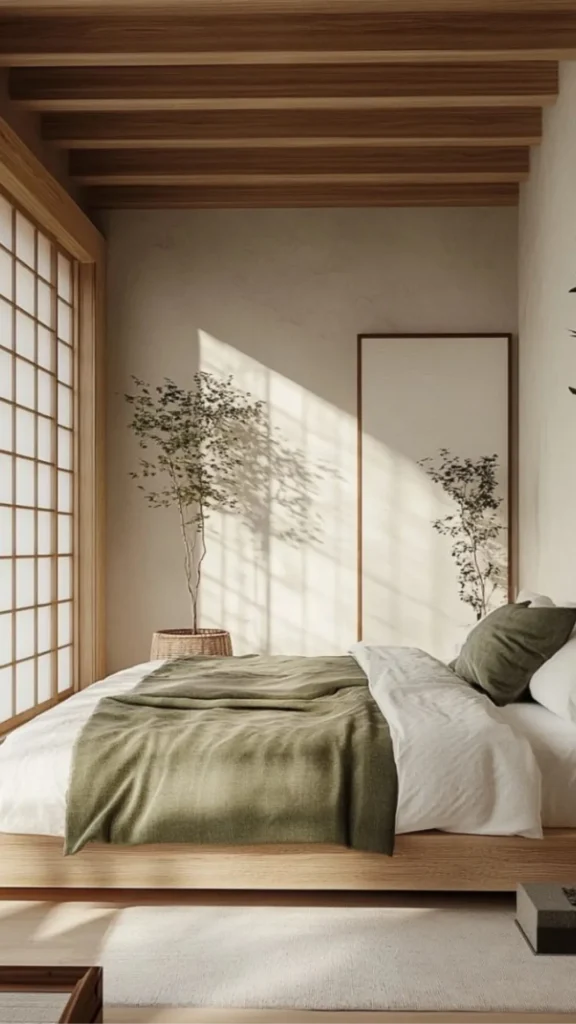
The color palette of a Japandi bedroom is built on restraint and warmth, a narrow range of muted, nature-connected tones used consistently throughout the room, with one carefully chosen earthy accent that provides just enough contrast to prevent the palette from feeling flat or lifeless. Warm white or oat walls, sandy and warm gray neutrals in the upholstery, natural wood tones throughout, and one accent, a soft terracotta cushion, a warm olive plant pot, a deep sage green ceramic, that adds personality without disrupting the calm.
The discipline required to maintain this restraint is considerable and entirely intentional. Every time you’re tempted to add another accent color, another pattern, or another tone that falls outside the established palette, the correct Japandi response is to pause and consider whether the addition genuinely serves the room. The value of a Japandi color palette comes precisely from its consistency, the way every element in the room speaks the same quiet, warm language rather than competing for individual attention.
How to style it: Choose your single accent color before you choose any accessories, and then use it consistently in three or four places throughout the room. One accent color appearing three times is a design decision. Three different accent colors appearing once each is simply a collection of unrelated objects.
Pinterest keywords: Japandi Bedroom Ideas · Japandi Color Palette · Neutral Bedroom Palette 2026
5. Wabi-Sabi Objects That Carry Genuine Character
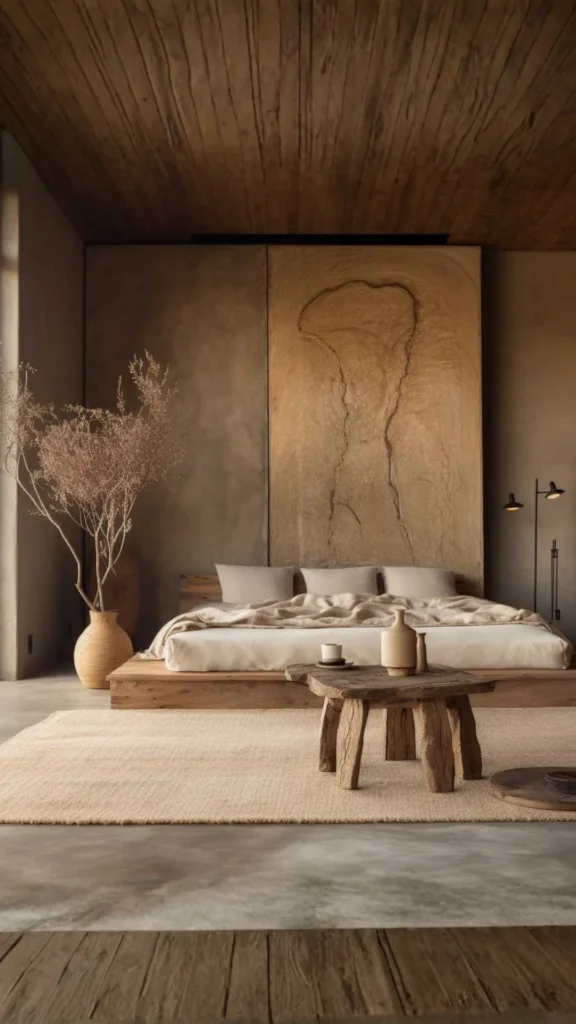
Wabi-sabi, the Japanese aesthetic philosophy of finding beauty in imperfection, incompleteness, and the marks of time, is what gives a Japandi bedroom its soul. A room where every object is perfectly smooth, uniformly manufactured, and flawlessly consistent can be technically accomplished and yet feel emotionally empty. A room where the decorative objects carry evidence of being handmade, of being worn with use, of being genuinely natural rather than perfectly reproduced, feels alive in a way that precision alone cannot produce.
In practice, wabi-sabi in a Japandi bedroom means choosing a handmade ceramic vase whose surface is slightly irregular. A piece of driftwood as a natural sculptural object. A candle that has been burned and shows its use. A linen cushion whose slight imperfections in the weave are visible and celebrated rather than rejected as flaws. These objects don’t diminish the room’s beauty. They are precisely what make it beautiful in the deepest and most genuine sense of that word.
How to style it: When buying decorative objects for a Japandi bedroom, always choose handmade over machine-made where the choice is available. The slight irregularity of a hand-thrown ceramic over a mold-cast one makes all the difference to how the object reads in the room and to how the room feels as a whole.
Pinterest keywords: Wabi-Sabi Bedroom · Japandi Bedroom Ideas · Japandi Decor Objects 2026
6. Warm, Layered Bedside Lighting
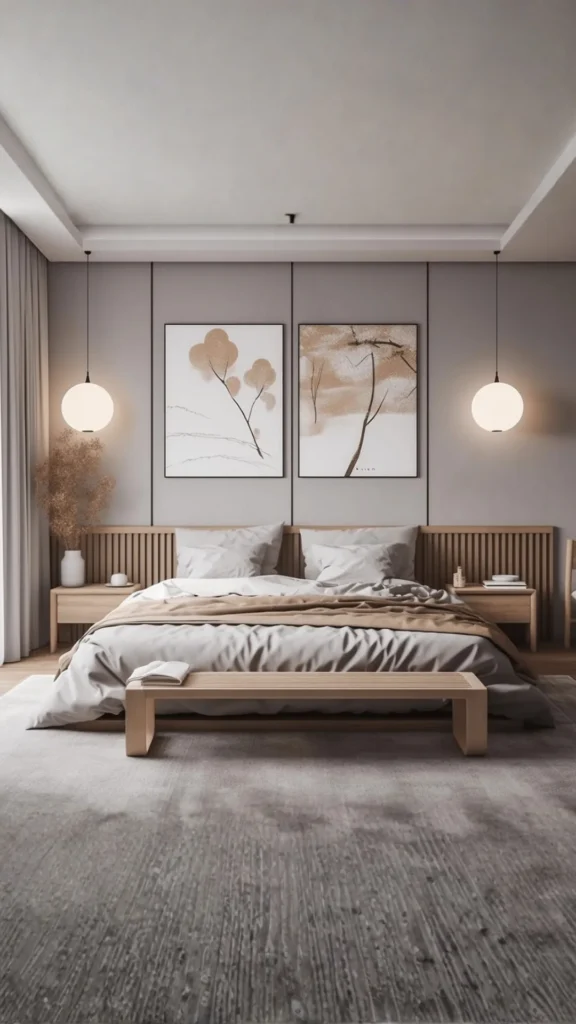
Lighting in a Japandi bedroom follows the same principle as lighting in any room designed for calm and rest, multiple warm sources at varying heights rather than a single overhead fitting, and a color temperature warm enough to signal to the body that the transition toward sleep has begun. In a Japandi context specifically, the material of the light source itself is as important as its position and warmth, it should echo the organic material language of the room rather than sit outside it.
A warm ceramic table lamp on the bedside table with an amber bulb, paired with a warm brass wall sconce slightly above and to the side, creates the most flattering, atmospheric, and genuinely useful bedside lighting arrangement available. The two sources at different heights and positions create a depth and warmth that a single lamp cannot achieve, and the organic modern material of the lamp itself contributes to the room’s material story rather than interrupting it.
How to style it: Use warm white bulbs exclusively throughout the bedroom. 2700K maximum, 2400K ideally. The quality of the bulb’s color temperature matters more than almost any other lighting decision. A beautiful lamp with a cool white bulb undermines every warm material choice in the room around it.
Pinterest keywords: Japandi Bedroom Ideas · Warm Bedside Lighting · Japandi Bedroom Lamp 2026
7. One Beautiful Statement Plant
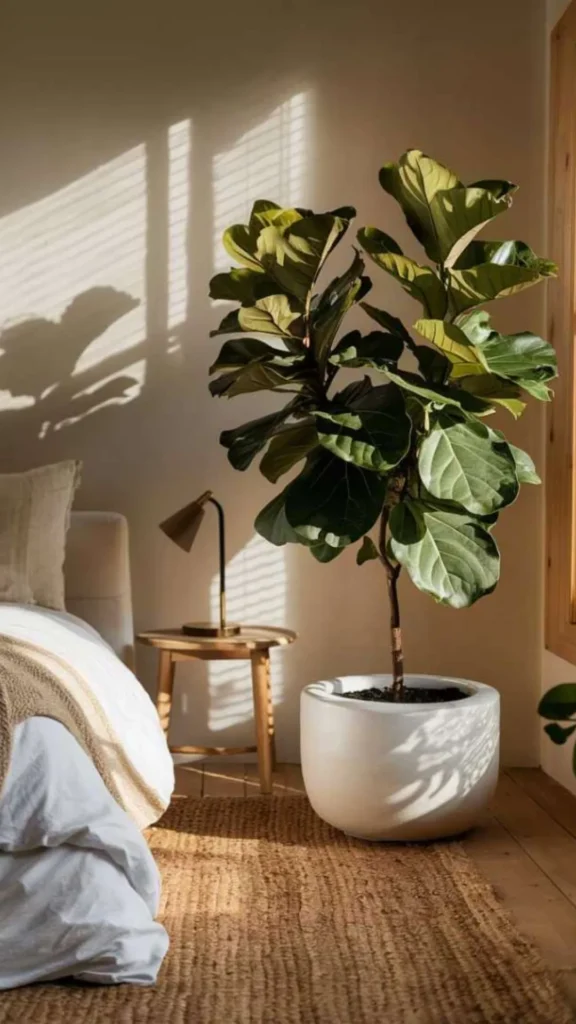
The plant philosophy in a Japandi bedroom is one of quality over quantity. Not the abundant trailing plants in every corner that characterize the boho aesthetic, but one large, genuinely beautiful specimen positioned where it can be fully appreciated and where it has room to be seen as the living, organic presence it is. A fiddle leaf fig with its dramatic architectural leaves, a large monstera whose split fronds catch morning light beautifully, or a generous olive tree in a warm ceramic pot, any of these positioned in a corner where it has room to grow creates a living quality in the bedroom that no object or accessory can replicate.
The single statement plant also embodies the Japandi principle of quality over quantity in its most literal form. One perfectly chosen plant in the right ceramic vessel says more about the room’s values and intentions than a collection of smaller ones scattered across every surface. And it creates a genuinely daily relationship with a living thing in your sleep space, which is perhaps the most quietly meaningful form of biophilic design available.
How to style it: Choose a warm, earthy ceramic pot in a tone that complements the bedroom palette. Position the plant where morning light will reach it, and where it will be one of the first organic, living things your eye finds when you wake up each morning.
Pinterest keywords: Japandi Bedroom Ideas · Bedroom Plant Ideas · Statement Plant Bedroom 2026
8. Natural Textures, Layered with Intention

Texture is what prevents a Japandi bedroom from feeling flat or cold despite its disciplined color palette and restrained decoration. A jute rug underfoot, linen bedding above, a wool throw over one corner of the bed, a rattan pendant overhead, and a ceramic lamp on the bedside table together create a room where the eye moves from surface to surface with genuine pleasure, finding something different and interesting at each stop.
Each of these natural materials also creates acoustic warmth alongside visual warmth. Every soft, natural surface absorbs a little of the room’s ambient sound, collectively creating a quieter, more settled acoustic environment that supports the transition into sleep in a way that hard, reflective surfaces never achieve. The Japandi bedroom is designed to feel restful through every sense, not just through what you see when you enter.
How to style it: Vary the texture scale consistently. A fine linen weave beside a chunky wool beside a smooth ceramic beside a rough jute creates a richer conversation between materials than three surfaces with similar qualities. The contrast between fine and coarse, smooth and rough, is what makes the layering feel genuinely rich rather than repetitive.
Pinterest keywords: Japandi Bedroom Ideas · Natural Textures Bedroom · Layered Bedroom Textures 2026
9. Minimal but Deeply Considered Decoration

In a Japandi bedroom, the decorative objects present are few, and precisely because they are few, each one carries a weight and a presence that objects in a more abundantly decorated room never achieve. A single large piece of artwork above the dresser. Three ceramics on the bedside surface. One plant. A single candle. These choices are deliberate, limited, and genuinely considered, and the restraint around them is what gives each individual element its visual significance.
The principle here is one that minimalism often misunderstands. It isn’t about removing everything beautiful or meaningful. It’s about removing everything that isn’t genuinely beautiful or genuinely meaningful, and then allowing what remains to be fully seen and appreciated on its own terms. A bedroom with three objects you truly love will always feel more personal and more deeply considered than one with thirty objects chosen with less intention.
How to style it: Before adding anything new to a Japandi bedroom, consciously consider removing one existing item. This practice of editing before adding keeps the room honest and prevents the gradual accumulation of objects that erodes the calm and the sense of intention over time.
Pinterest keywords: Japandi Bedroom Ideas · Minimal Bedroom Decor · Japandi Style Bedroom 2026
10. The Power of Deliberately Empty Surfaces
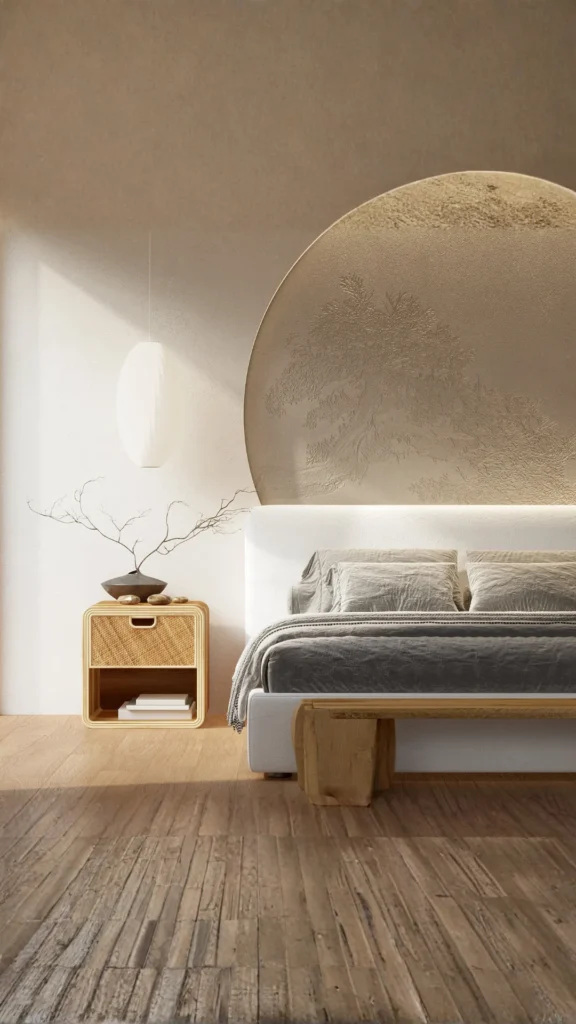
The most counterintuitive and most powerful Japandi bedroom principle is the deliberate, intentional use of empty surface space as a design element in its own right. In most homes, every horizontal surface in the bedroom accumulates objects over time until there is no visible surface left. In a Japandi bedroom, empty surface is protected and preserved with the same care and intentionality given to the objects placed on it.
This isn’t minimalism for its own sake. It’s a genuine understanding that negative space gives the objects present their visual weight and their presence. A single handmade ceramic vase on a completely clear bedside table is more visible, more beautiful, and more considered than the same vase on a surface covered with charging cables, hand cream, books, water glasses, and accumulated items without a clear home. The empty space around the vase is what allows it to be truly seen and appreciated.
11. A Considered Approach to Closet and Wardrobe Doors
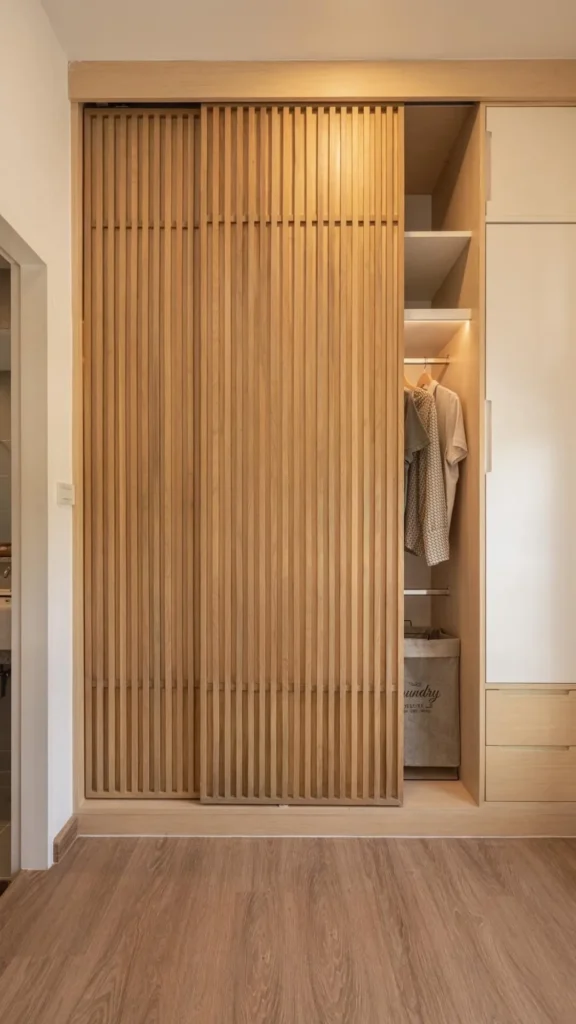
Wardrobe doors finished in warm reeded or slatted wood, rather than flat painted panels, extend the room’s material language into what is often the largest single surface in a bedroom. The vertical grooves catch light beautifully throughout the day, giving a purely functional storage wall the same considered quality as any other piece of furniture in the room.
This detail rewards a modest additional investment far beyond its cost, turning what would otherwise be the most anonymous surface in the bedroom into one of its most quietly beautiful.
Pinterest keywords: Japandi Bedroom Ideas · Warm Wood Bedroom · Oak Bedroom Furniture 2026
12. A Sliding Shoji Inspired Room Divider
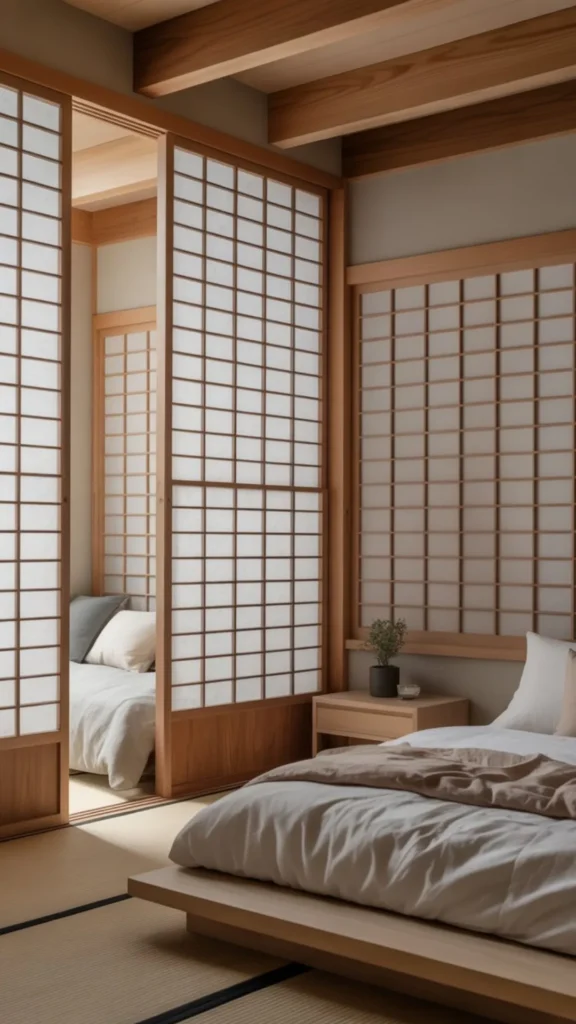
A modern interpretation of a shoji screen, frosted glass or woven paper within a slim wood frame, filters light softly between the bedroom and an adjoining dressing corner, preserving the sense of openness central to the aesthetic. Unlike a solid wall, the screen never fully blocks light or a sense of connection between the two zones.
This kind of divider suits bedrooms with an awkward alcove or an underused corner particularly well, giving that space genuine definition without the cost or permanence of new construction.
Pinterest keywords: Japandi Bedroom Ideas · Japandi Bed 2026 · Warm Bedroom Lighting 2026
13. A Natural Fiber Rug That Extends Beyond the Bed
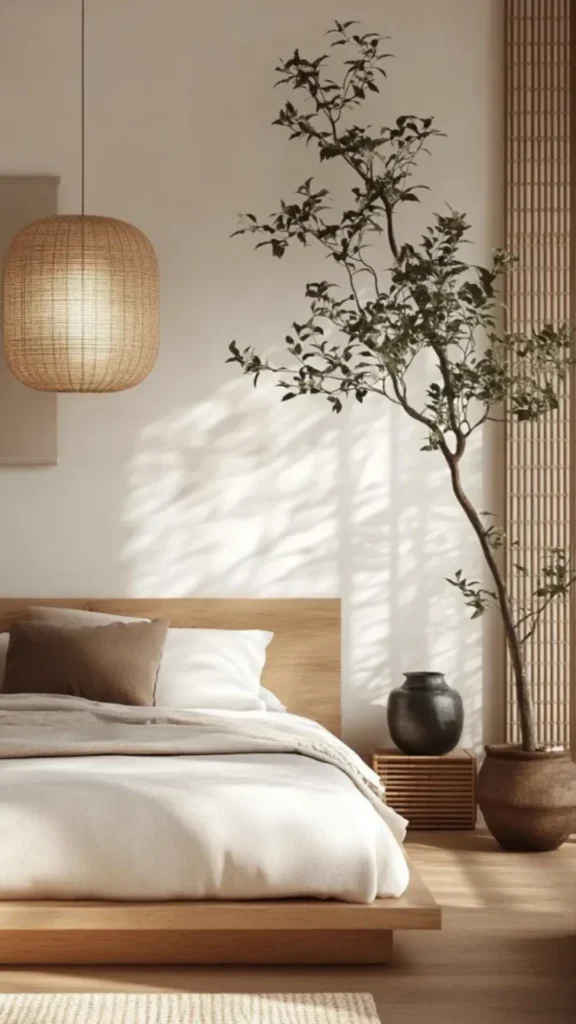
A jute or wool rug, sized to extend at least sixty centimeters beyond the sides and foot of the platform bed, adds genuine warmth underfoot on the coldest mornings while grounding the room’s furniture arrangement in the same way a well-sized rug anchors a living room seating zone.
Placing the rug down before positioning the furniture ensures the whole arrangement responds to it, rather than the rug being fitted awkwardly around furniture already in place.
Pinterest keywords: Japandi Bedroom Ideas · Linen Bedding Neutral · Japandi Bedding 2026
14. A Small Dressing Corner with a Vanity Stool
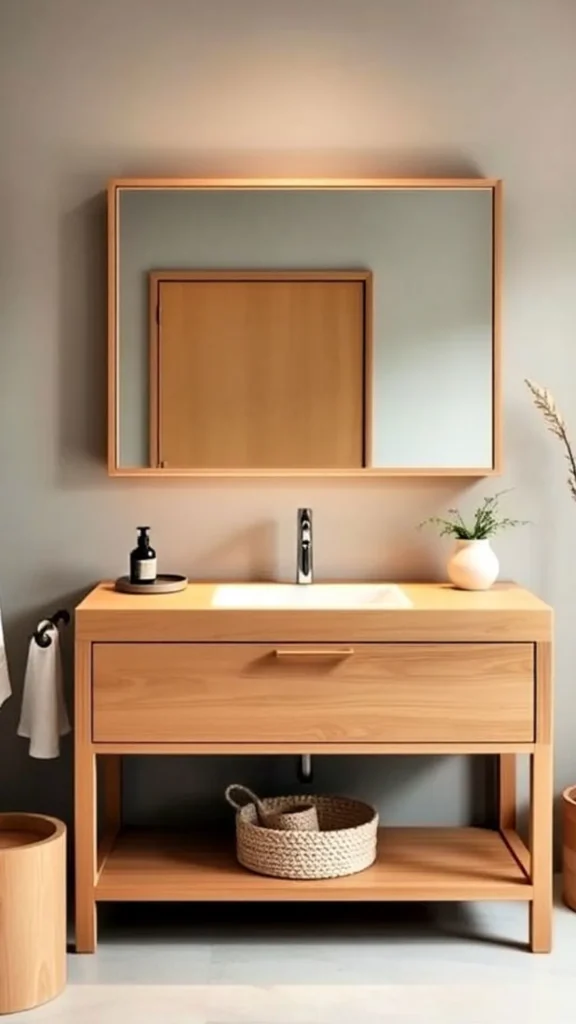
A compact vanity table with a low woven stool, positioned in a quiet corner, brings a genuine getting ready ritual into the bedroom without requiring a separate dressing room. Styled simply with a small tray for jewelry and one stem in a ceramic vessel, the corner earns its place through daily use as much as its aesthetic.
This addition also gives the bedroom a second, more intimate destination beyond the bed itself, somewhere to sit for a few quiet minutes before the day fully begins.
Pinterest keywords: Japandi Bedroom Ideas · Warm Wood Bedroom · Japandi Color Palette
15. Seasonal Styling Without Full Redecoration
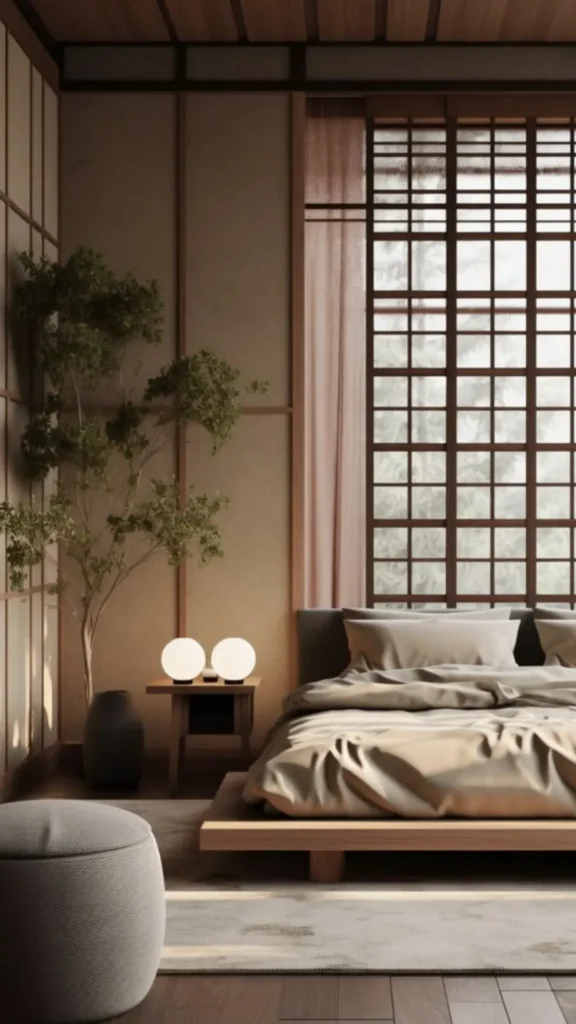
Rather than a full seasonal refresh, a genuinely Japandi bedroom shifts subtly. A different dried branch in the vase, a heavier wool throw in winter swapped for lighter linen in summer, while every other element of the room stays exactly the same throughout the year.
This restrained approach to seasonal change mirrors the broader philosophy that meaningful change comes from small, considered gestures rather than wholesale redecoration of a room already resolved.
Pinterest keywords: Japandi Bedroom Ideas · Wabi-Sabi Bedroom · Japandi Decor Objects 2026
16. A Japandi Bedroom for Family Life
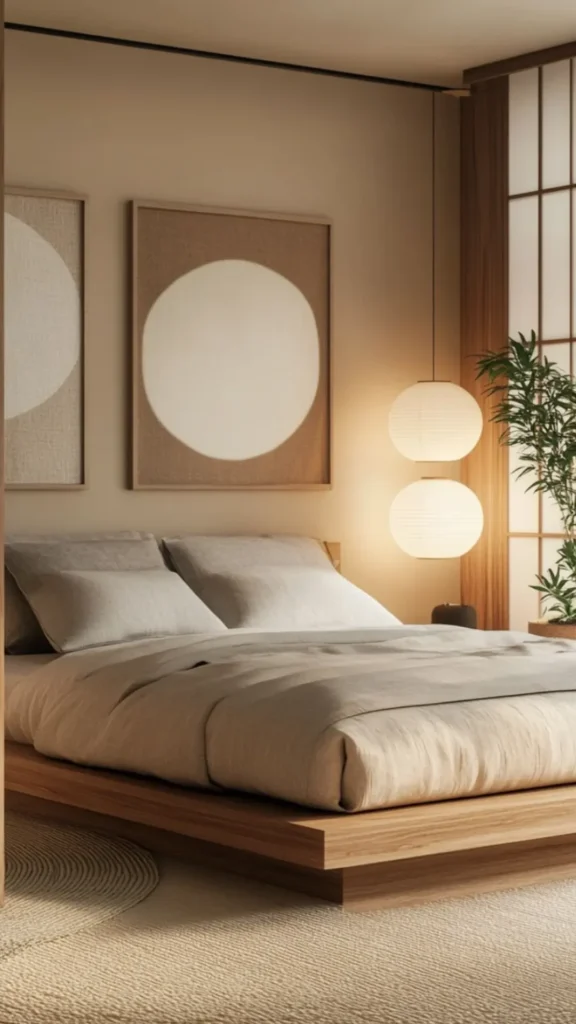
Choosing performance linen fabrics that resist stains, and keeping fragile ceramics on higher shelves, allows the Japandi aesthetic to coexist genuinely with young children rather than being reserved for adult-only spaces. The philosophy’s core emphasis on fewer, better-chosen things actually suits family life particularly well.
Fewer objects mean fewer things to trip over and fewer things to tidy, and the calmer visual environment this creates benefits every member of the household, not just the adults who chose the aesthetic.
Pinterest keywords: Japandi Bedroom Ideas · Neutral Bedroom Palette 2026 · Japandi Bed 2026
17. A Small Japandi Bedroom
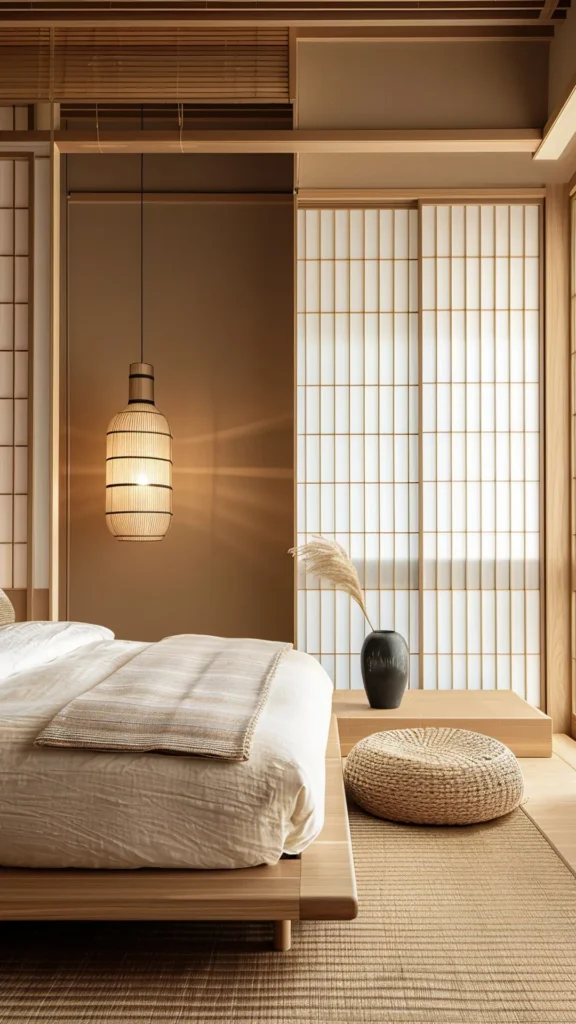
In a smaller bedroom, the Japandi principles of restraint and low profile furniture become more powerful rather than less. One low platform bed and disciplined editing can achieve genuine spaciousness regardless of the room’s actual square footage, proving that Japandi calm has little to do with scale.
This proves the aesthetic scales beautifully to compact spaces, the same restraint that defines a larger Japandi bedroom working just as effectively, and often more strikingly, in a tighter footprint.
Pinterest keywords: Japandi Bedroom Ideas · Low Platform Bed · Minimal Bedroom Decor 2026
18. A Considered Scent Ritual
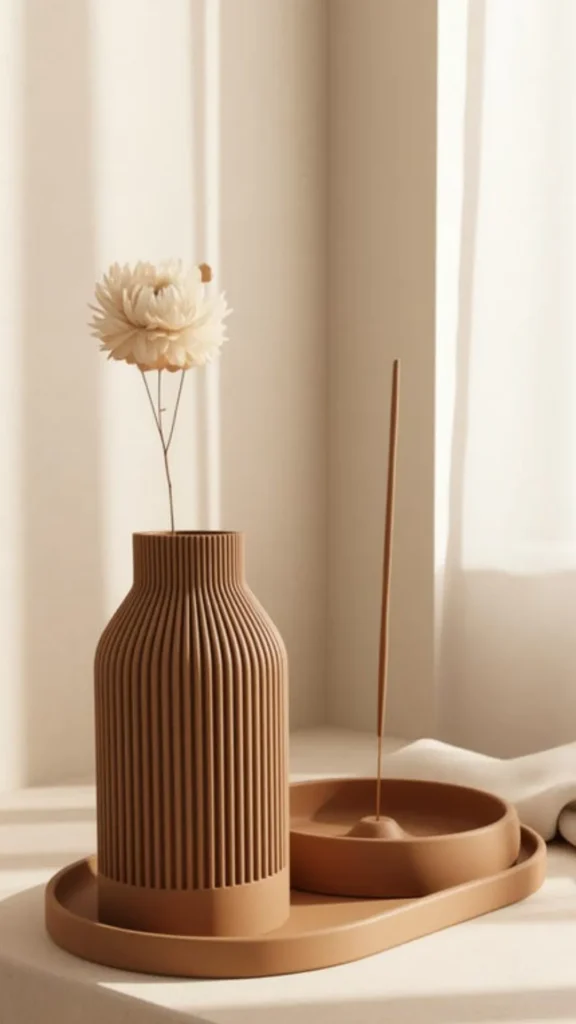
A single considered scent, cedarwood or sandalwood, introduced through one quality candle lit each evening as part of a wind-down routine, extends the Japandi sensory experience beyond sight and touch into smell. This reinforces the same nightly ritual that signals to the body that rest is approaching.
Repeated consistently, this small habit trains the mind to associate the scent itself with the transition toward sleep, turning a beautiful object into a genuinely functional tool.
Pinterest keywords: Japandi Bedroom Ideas · Japandi Decor Objects 2026 · Warm Bedside Lighting
19. A Guest Bedroom Built on Japandi Principles
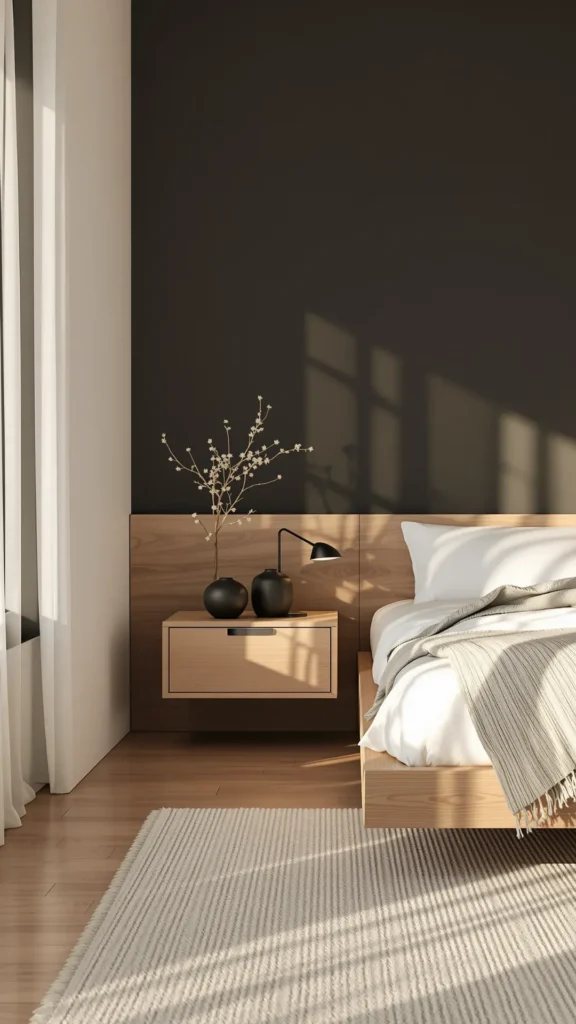
A guest bedroom furnished with the same warm linen, low platform bed, and single beautiful plant used throughout the primary bedroom communicates genuine hospitality, proving the Japandi approach requires no less care in a room used only occasionally by visitors.
The consistency between primary and guest bedrooms also makes the whole home feel more coherently designed, rather than treating guest spaces as an afterthought furnished with whatever was left over.
Pinterest keywords: Japandi Bedroom Ideas · Japandi Bedding 2026 · Statement Plant Bedroom 2026
20. A Considered Bookshelf for Bedtime Reading
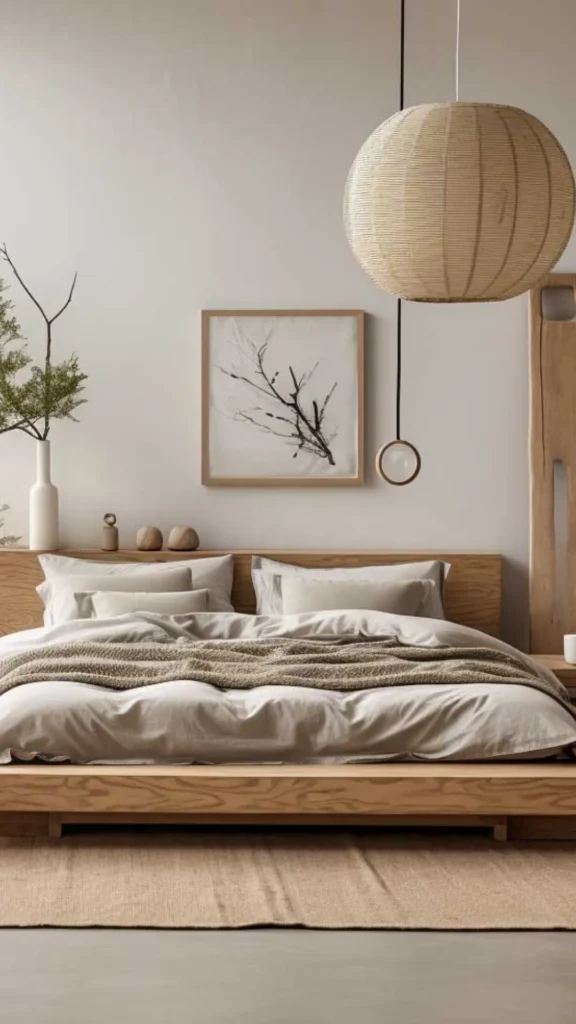
A low, horizontal shelf holding an edited selection of genuinely loved books, one ceramic object, and generous negative space brings real function into the room without disrupting its restrained visual language. Editing the collection to titles actually being read, rather than every book ever received, applies the same intentional selection found throughout the rest of the room.
The horizontal orientation also keeps the shelf’s visual weight low, consistent with the room’s broader commitment to grounded, floor-hugging furniture forms.
Pinterest keywords: Japandi Bedroom Ideas · Minimal Bedroom Decor · Oak Bedroom Furniture 2026
21. A Curtain That Manages Light Without Blocking Warmth
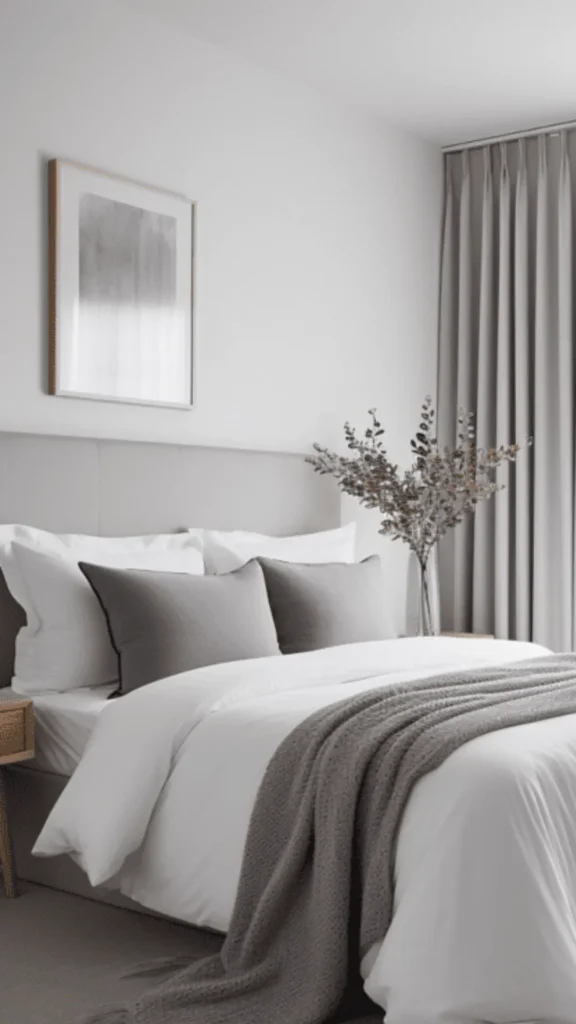
Layering a discreet blackout lining behind visible sheer linen preserves the room’s soft daytime aesthetic while still delivering genuine darkness for sleep when needed. This combination lets morning light filter in gently on weekends while offering full control on nights when complete darkness matters more.
Hanging both layers from ceiling height, rather than the window frame itself, also makes the whole window wall feel taller and more generously proportioned.
Pinterest keywords: Japandi Bedroom Ideas · Japandi Bedroom Lamp 2026 · Warm Bedside Lighting
22. A Bouclé or Wool Accent Against the Linen
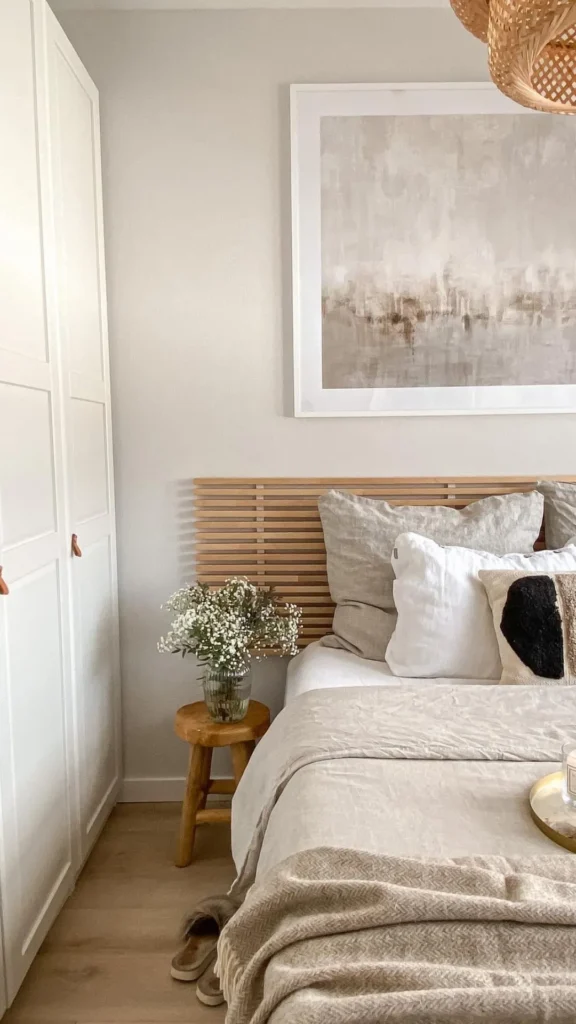
One bouclé or chunky wool cushion against the linen bedding introduces textural contrast within the same warm neutral family, adding richness without disrupting the room’s disciplined color palette. The looped, dimensional surface of bouclé beside the flatter weave of linen is one of the most reliably beautiful texture pairings available in any bedroom.
Keeping this contrast to a single cushion, rather than several, preserves the restraint that defines the rest of the room’s styling.
Pinterest keywords: Japandi Bedroom Ideas · Natural Textures Bedroom · Layered Bedroom Textures 2026
23. A Ceiling Treatment That Extends the Calm Upward
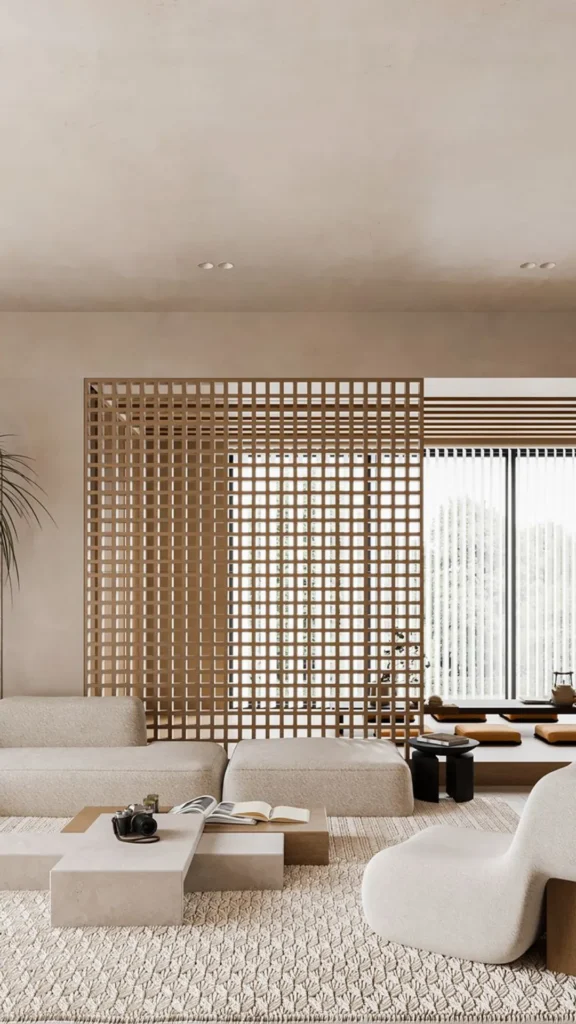
Painting the ceiling a shade deeper than the walls, rather than leaving it plain white, extends the room’s enveloping calm upward and removes the harsh visual line where a stark white ceiling meets a warm wall. This small departure from convention makes a noticeable difference to how settled the room feels overall.
The technique works particularly well in bedrooms with lower ceilings, where the deeper tone above enhances the sense of coziness rather than making the room feel smaller.
Pinterest keywords: Japandi Bedroom Ideas · Japandi Color Palette · Warm Wood Bedroom
24. Caring for Bedroom Ceramics and Wood Over Time
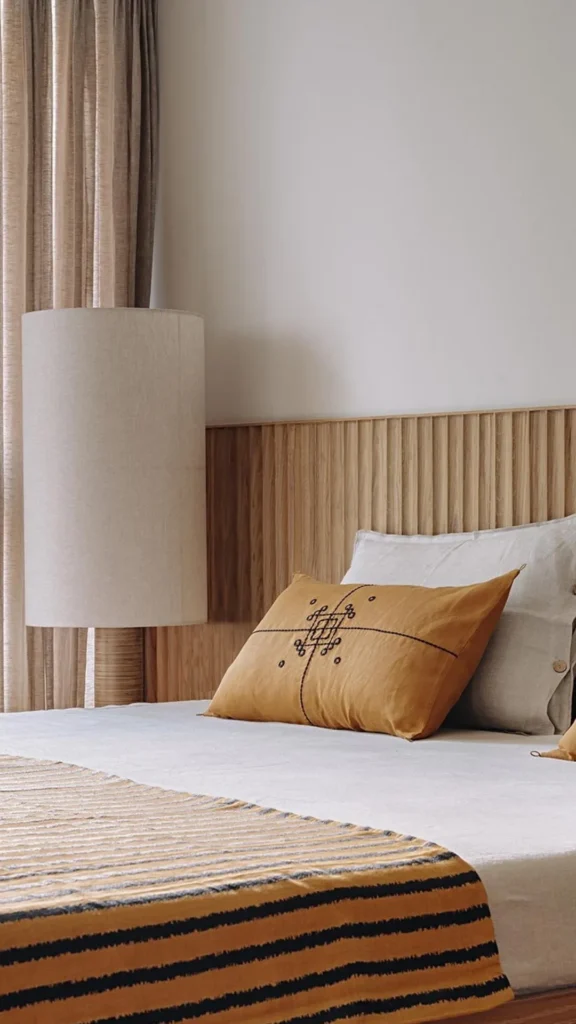
A light annual oiling for solid wood furniture, and gentle handling of handmade ceramics, keeps every material in the Japandi bedroom aging gracefully, each piece developing its own quiet patina of daily use rather than showing premature wear. This maintenance takes very little time but meaningfully extends the beauty and lifespan of the room’s most significant investments.
Small habits, like removing jewelry before touching a bouclé cushion or using a soft brush to dust ceramic surfaces, protect these materials without requiring any real effort.
Pinterest keywords: Japandi Bedroom Ideas · Wabi-Sabi Bedroom · Oak Bedroom Furniture 2026
25. Why the Japandi Bedroom Rewards Ongoing Discipline
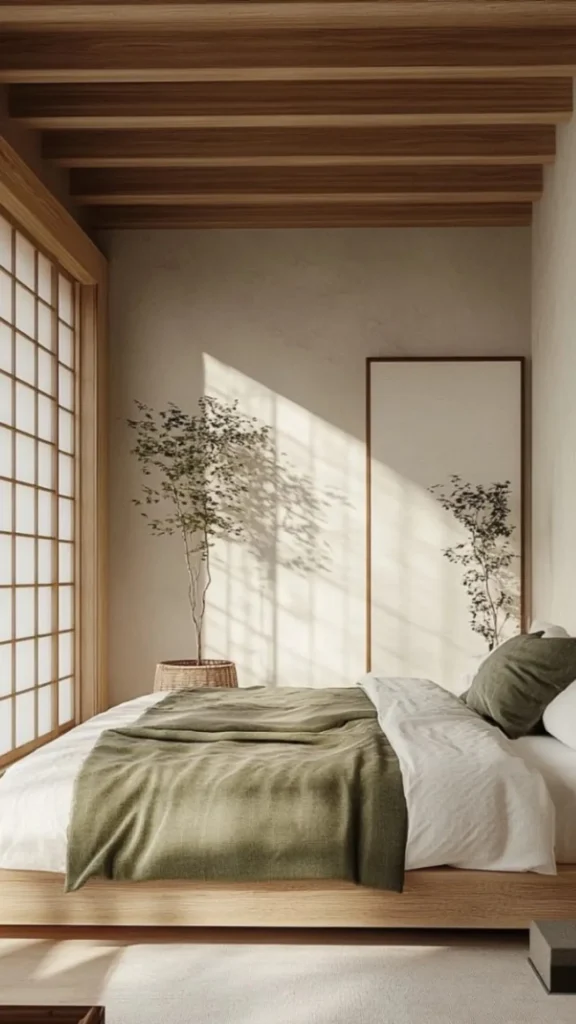
The calm a Japandi bedroom produces depends on continued discipline rather than a single decorating decision. Editing regularly and protecting negative space are what separate a bedroom that merely looks Japandi in photographs from one that delivers genuine rest every single night, regardless of how the room was styled on the day it was first finished.
For more on how these principles apply throughout the rest of the home, visit our Japandi Interior Design Ideas guide.
Pinterest keywords: Japandi Bedroom Ideas · Japandi Interior Design Ideas · Japandi Color Palette
For more on creating a complete, beautifully considered sleep space, visit our Organic Modern Bedroom Ideas guide.
Final Thoughts
A Japandi bedroom is ultimately the result of subtraction as much as addition, a process of removing what doesn’t genuinely belong until what remains feels completely right and completely yours. That process takes patience, and a willingness to resist the accumulative instinct that most of us bring to our homes. But the result, a room that genuinely settles you every single time you walk into it, is worth every considered and intentional decision that creates it. 🌿


