

An organic modern home built on beautiful natural materials, warm earthy colors, and curved furniture can still feel somehow incomplete. Warm but slightly anonymous. Considered but not deeply personal. Beautiful to photograph but not quite alive in the way the most genuinely beautiful homes are alive. The missing quality in almost every case is wabi-sabi.
Wabi-sabi objects in an organic modern home are the things that no interior designer can specify and no showroom can supply. They are the slightly irregular handmade ceramic, the piece of driftwood found at the shoreline, the worn wooden bowl inherited from someone who used it every day for decades. Their imperfection is not a flaw. It is the quality that gives the organic modern home its genuine soul, its warmth, and its irreplaceable personal character. Here are 15 specific ways to introduce that quality throughout your home. 🌿
Why Wabi-Sabi Objects Give an Organic Modern Home Its Genuine Soul
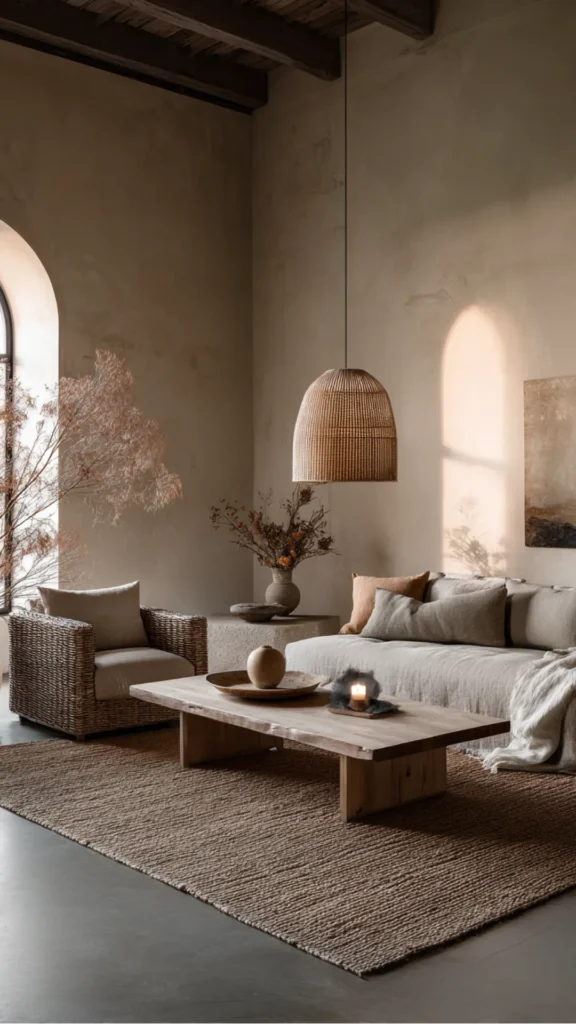
The organic modern aesthetic provides the warmth of natural materials and the beauty of organic form. But without wabi-sabi, it risks producing rooms that look genuinely beautiful in photographs while feeling slightly impersonal in daily life. According to Dezeen, the integration of wabi-sabi objects into organic modern and Japandi interiors has become one of the most discussed and most influential design conversations of 2026, as homeowners increasingly recognize that manufactured perfection, however beautiful, cannot produce the warmth and character that genuine imperfection consistently achieves.
1. A Hand-Thrown Ceramic Vase with a Visible Irregular Rim
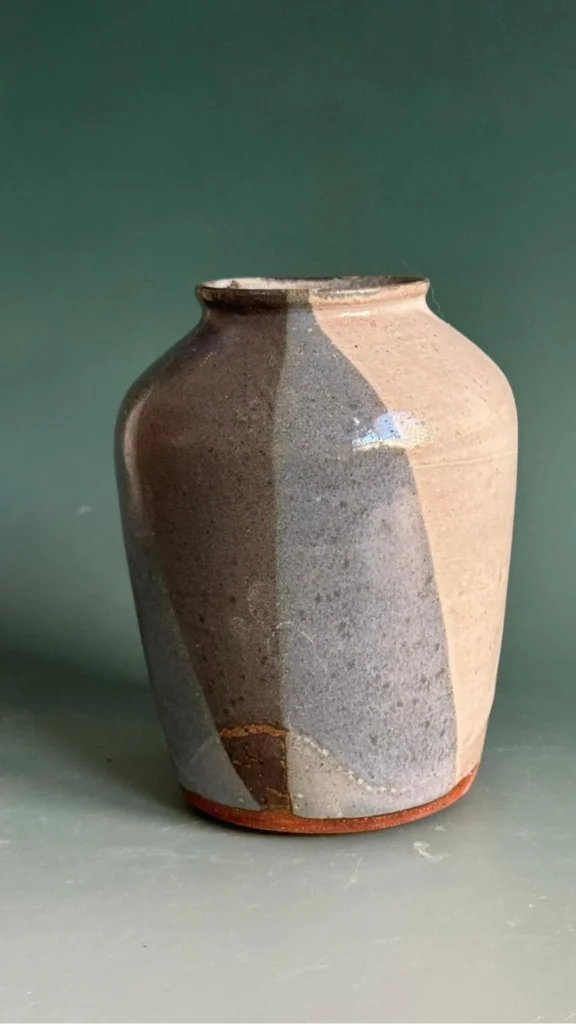
A hand-thrown ceramic vase whose rim is visibly irregular, where one side sits slightly higher than the other and the surface shows the slight variations of finger pressure from the potter’s hands, is the most immediately available and most broadly applicable wabi-sabi object in any organic modern home.
The irregularity is not a manufacturing defect. It is the evidence of human making, the record of the specific hands that formed this specific object on a specific day. No two are identical. That irreproducibility is precisely what gives the piece its warmth and its presence on any surface it occupies.
Pinterest keywords: Wabi-Sabi Objects Organic Modern Home · Hand-Thrown Ceramic Irregular Rim · Wabi-Sabi Ceramic Vase 2026
2. A Piece of Driftwood Used as a Sculptural Object
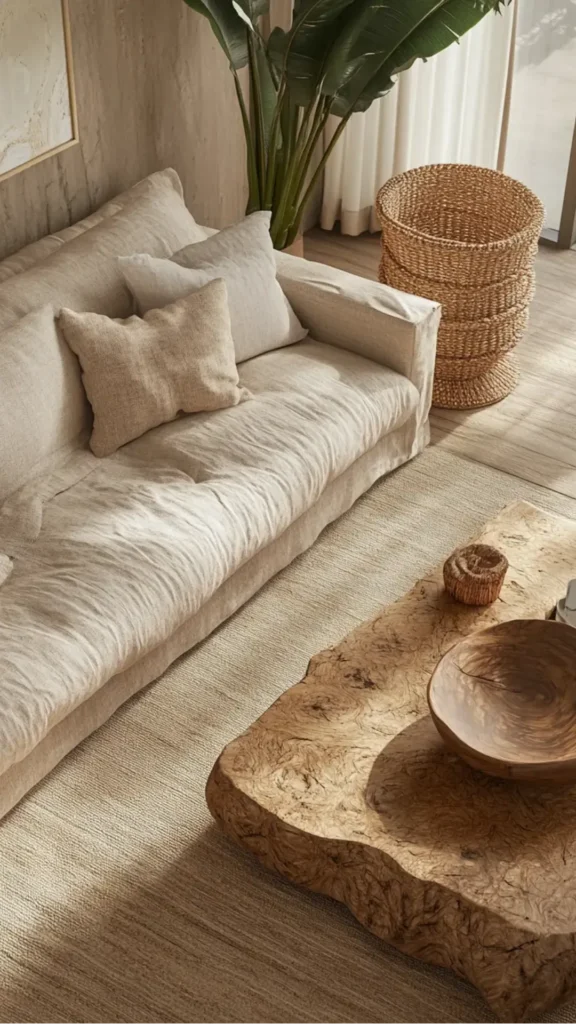
A piece of driftwood chosen for its naturally interesting form and placed deliberately on the coffee table, the console, or the open shelf as a sculptural object is the wabi-sabi object that most completely embodies the philosophy’s appreciation for natural aging and natural process. The driftwood’s form was created by water, time, and the specific conditions of a specific shoreline. No human hand designed it and no manufacturing process can replicate it.
Its smooth, pale, weathered surface creates a texture and material contrast on any warm wood surface that is completely unlike any other natural material. Its connection to a specific place and a specific natural process makes it the most genuinely site-specific and most genuinely irreplaceable object available.
Pinterest keywords: Wabi-Sabi Objects Organic Modern Home · Driftwood Sculptural Object · Driftwood Coffee Table Decor 2026
3. A Burned Candle That Shows Its History of Use
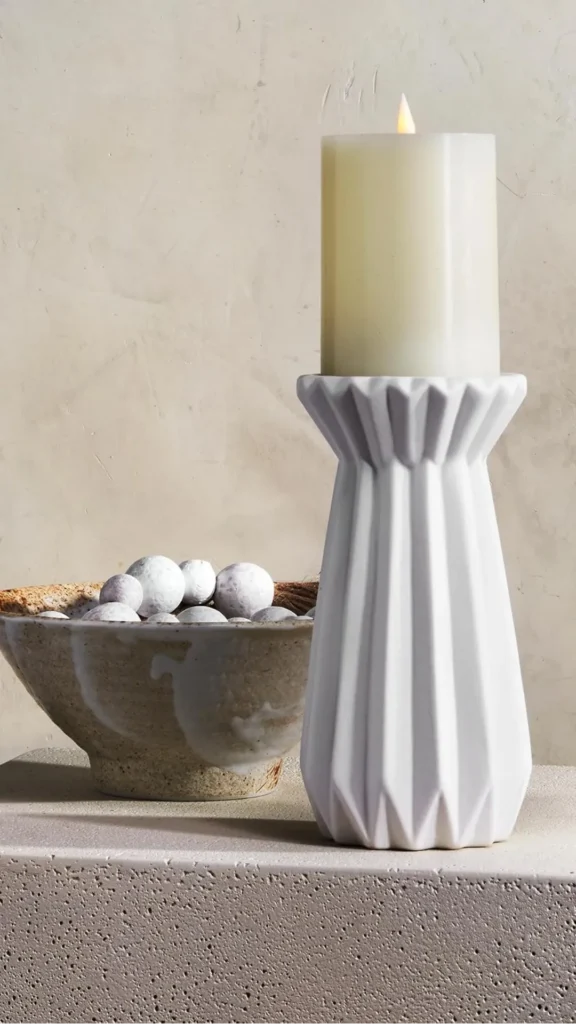
A pillar candle that has been regularly lit and shows its accumulated history of use, shortened by burning, marked by drips, and settled in its ceramic holder with the slightly imperfect honesty of an object that serves its purpose daily, is one of the most quietly powerful wabi-sabi objects available in any organic modern home.
The temptation to replace a used candle with a fresh, perfect one before it has been fully burned is precisely the anti-wabi-sabi instinct. The most genuinely wabi-sabi candle is the one that has been lit dozens of times and shows every one of those uses in its form.
Pinterest keywords: Wabi-Sabi Objects Organic Modern Home · Burned Candle Wabi-Sabi · Used Candle Ceramic Holder 2026
4. A Worn Wooden Bowl with Visible Age Marks
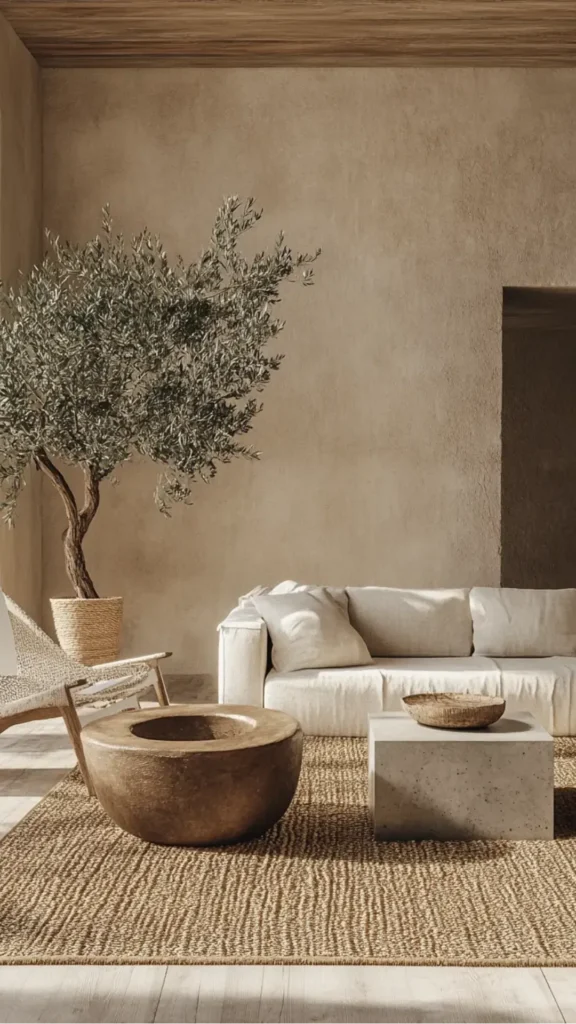
A wooden bowl that shows its age in every surface, the slight darkening at the center from years of use, the smooth, deep patina of handling, the occasional small crack sealed with age, is the wabi-sabi object that most directly connects to the Japanese concept of mono no aware, the beauty of things that carry evidence of time passing.
A new wooden bowl, however beautiful in form and material, has none of this depth. It can become it over years of daily use. But the bowl that is already worn and already aged brings the most immediate and the most irreplaceable warmth to any organic modern surface.
Pinterest keywords: Wabi-Sabi Objects Organic Modern Home · Worn Wooden Bowl Age Marks · Aged Wood Object Decor 2026
5. Dried Seed Heads and Botanicals in Their Natural State
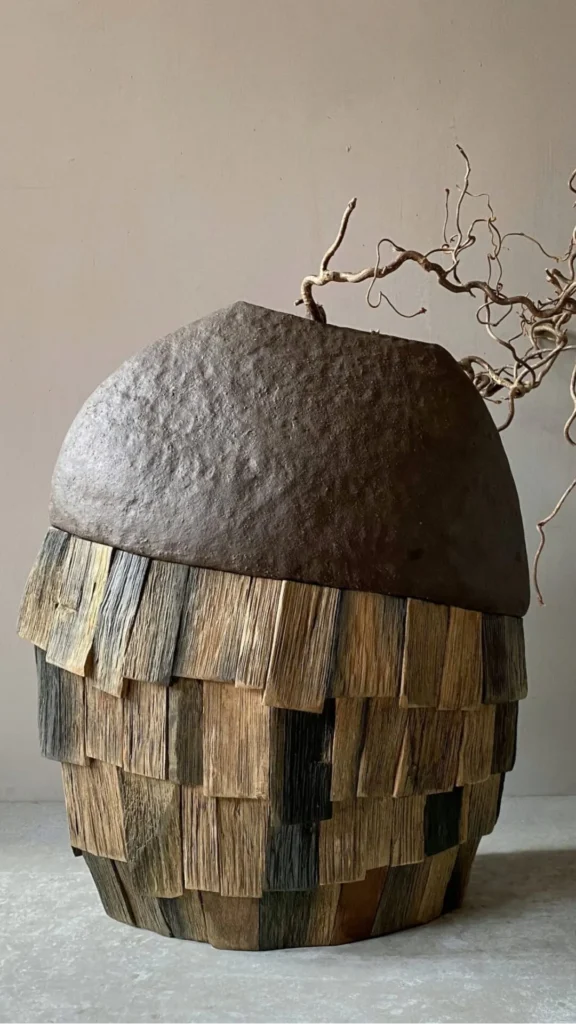
Dried seed heads, dried grasses, dried flower heads, and dried botanical stems in their completely natural, undyed, unprocessed state are the wabi-sabi objects that most directly connect the organic modern home to the actual natural world outside it. Their natural imperfection, the slight asymmetry of each stem, the papery, fragile quality of each dried head, and the honest earthy tone of completely natural plant material all contribute the organic, living-world character that manufactured botanical alternatives never achieve.
Buy them from farmers markets or collect them from fields and hedgerows where permitted. Their connection to a specific place and a specific season is part of their wabi-sabi character.
Pinterest keywords: Wabi-Sabi Objects Organic Modern Home · Dried Seed Heads Natural State · Natural Dried Botanicals 2026
6. A Smooth River Stone Used as a Paperweight or Object
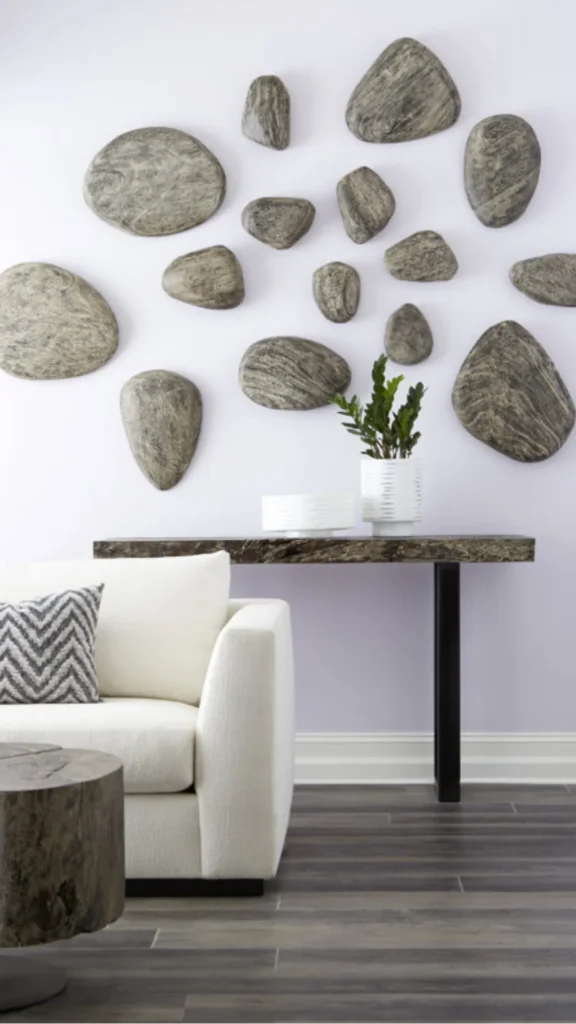
A smooth river stone, chosen for its satisfying weight, its naturally interesting color variation, and its cool, tactile surface, placed deliberately on a warm wood desk, console, or shelf as an object of genuine natural beauty, is the wabi-sabi object that costs nothing and yet contributes something that no purchased object replicates.
Its form was created by water and time over geological periods. Its smoothness is the accumulated result of millions of collisions with other stones in moving water. Holding it connects the person in the organic modern home to a natural process of incomprehensible scale and duration.
Pinterest keywords: Wabi-Sabi Objects Organic Modern Home · River Stone Decorative Object · Natural Stone Home Decor 2026
7. Unlacquered Brass That Has Developed Its Natural Patina
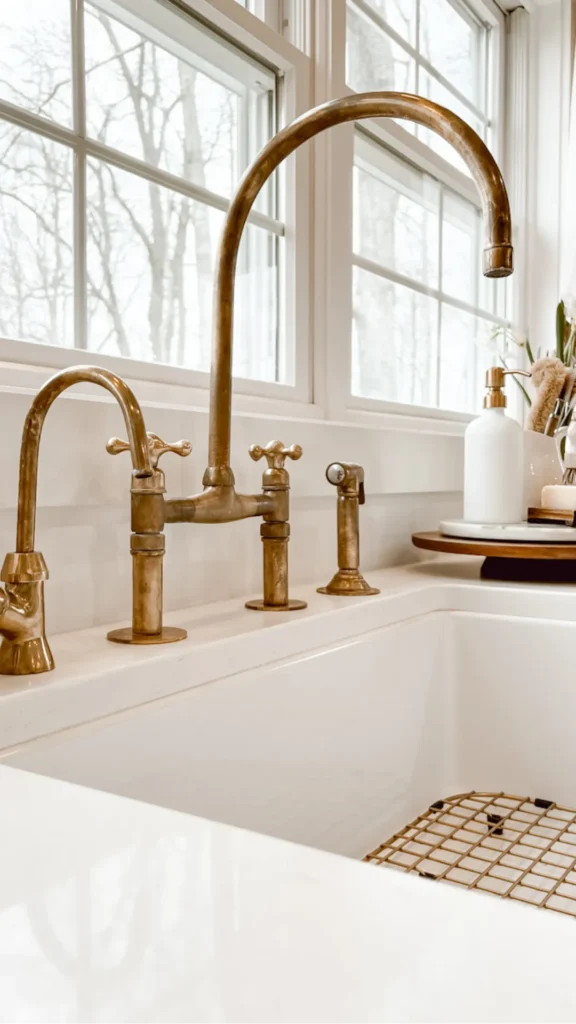
Unlacquered brass is the wabi-sabi object in fixture form. Unlike lacquered brass that maintains its manufactured brightness indefinitely, unlacquered brass gradually develops a natural patina over months and years of contact with air, moisture, and hands. It darkens unevenly, develops warm brown tones in recesses, and becomes more complex and more genuinely beautiful with each passing month.
The unlacquered brass lamp base, the uncoated brass key bowl, the bare brass door handle, all of these become more beautiful in the organic modern home through the same natural process that makes river stones smooth and wooden bowls warm with age.
Pinterest keywords: Wabi-Sabi Objects Organic Modern Home · Unlacquered Brass Patina · Aged Brass Home Decor 2026
8. A Hand-Formed Ceramic Tray with Uneven Edges
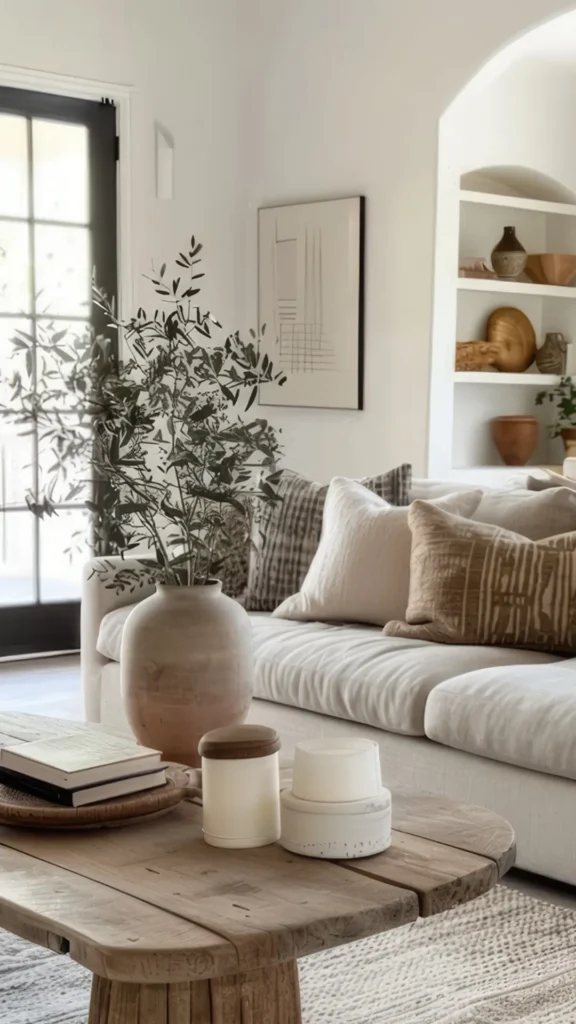
A hand-formed ceramic tray whose edges are visibly uneven, where one corner sits slightly higher than another and the surface shows the texture of the hands that shaped it, brings the most functional and most frequently handled wabi-sabi object into the organic modern home. It is used every day and seen from close range, which means its handmade character is experienced more intimately than almost any other decorative object.
On the coffee table, the console, or the bathroom vanity, a hand-formed ceramic tray communicates that the person who placed it there chose it for its genuine beauty rather than its manufactured perfection.
Pinterest keywords: Wabi-Sabi Objects Organic Modern Home · Hand-Formed Ceramic Tray Uneven Edges · Wabi-Sabi Tray Home 2026
9. A Single Imperfect Linen Cushion Cover with Visible Weave
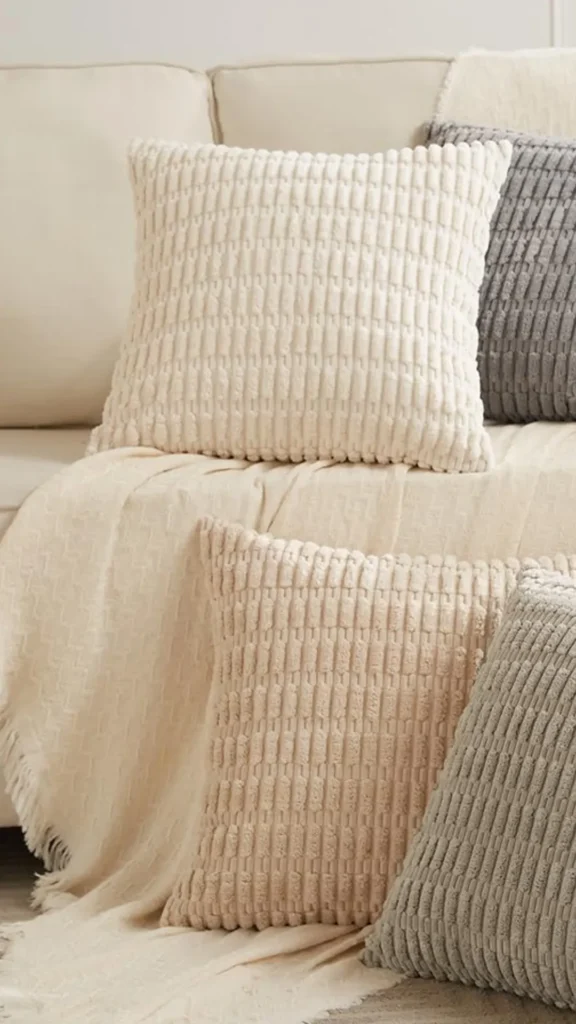
A linen cushion cover whose natural weave is clearly visible, whose slight irregularities in thread density create a subtly varied surface quality, and whose color carries the slight tonal variation of naturally dyed or undyed linen, is the wabi-sabi object that is touched and experienced most frequently of everything on this list.
The natural imperfection of genuine linen, which becomes more beautiful and more softly textured with every wash, is one of the most intimate daily wabi-sabi experiences available. Every time a hand rests on the linen cushion it encounters the natural irregularity of a genuinely handwoven textile.
Pinterest keywords: Wabi-Sabi Objects Organic Modern Home · Linen Cushion Visible Weave · Natural Linen Textile Wabi-Sabi 2026
10. A Small Vintage Object Carrying Genuine Age
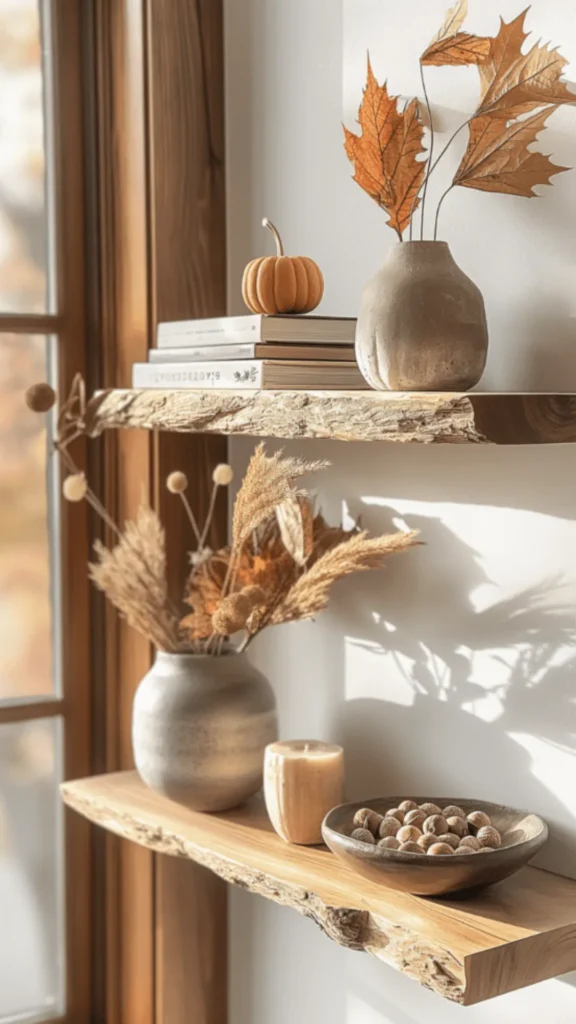
A single vintage object, a small ceramic with its glaze slightly crazed with age, a worn wooden measure, a simple antique vessel of unknown origin, placed in one considered position in the organic modern home brings the depth of genuine time to a room full of beautiful new things. The age visible in the object is not damage. It is the most genuine form of wabi-sabi beauty available, the accumulated evidence of a long life of existence and use.
One vintage object per room is sufficient. Its presence makes every new thing around it look more considered and more genuinely chosen by contrast.
Pinterest keywords: Wabi-Sabi Objects Organic Modern Home · Vintage Object Genuine Age · Antique Object Organic Modern 2026
11. A Handmade Ceramic Mug with a Thumb Impression in Its Base
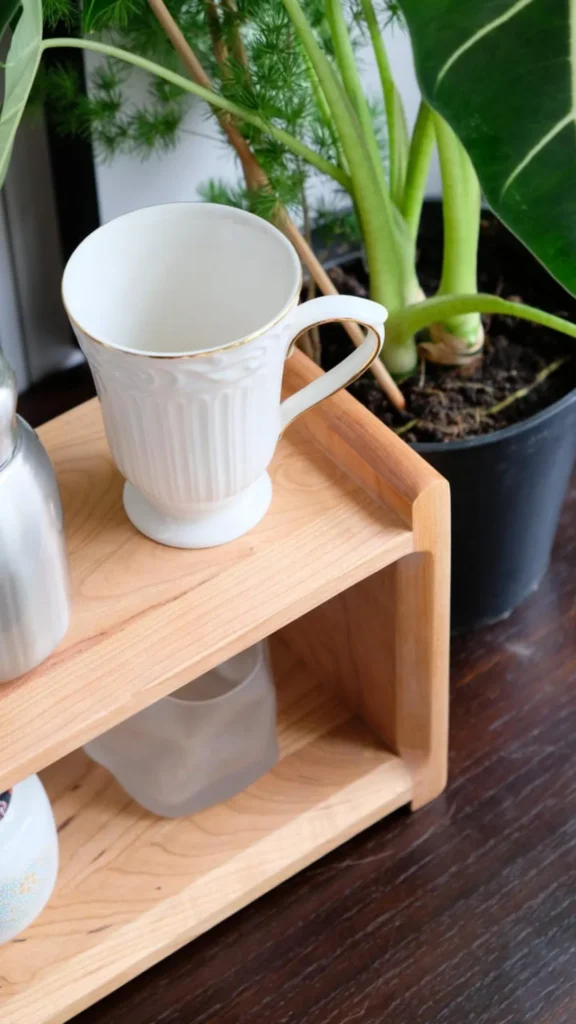
A handmade ceramic mug whose base carries the slight thumb impression left by the potter who pressed it flat before firing is the wabi-sabi object that is most used, most handled, and most intimately experienced in daily life. It is held in both hands every morning and every evening. The slight irregularity of its form, the thumb mark in its base, and the variation in its glaze are experienced at the closest possible range every time it is used.
This is wabi-sabi not as decoration but as daily ritual. The most genuinely wabi-sabi objects are always the ones used most often.
Pinterest keywords: Wabi-Sabi Objects Organic Modern Home · Handmade Ceramic Mug Thumb Impression · Wabi-Sabi Daily Object 2026
12. A Bundle of Dried Herbs Hung on a Warm Wood Hook
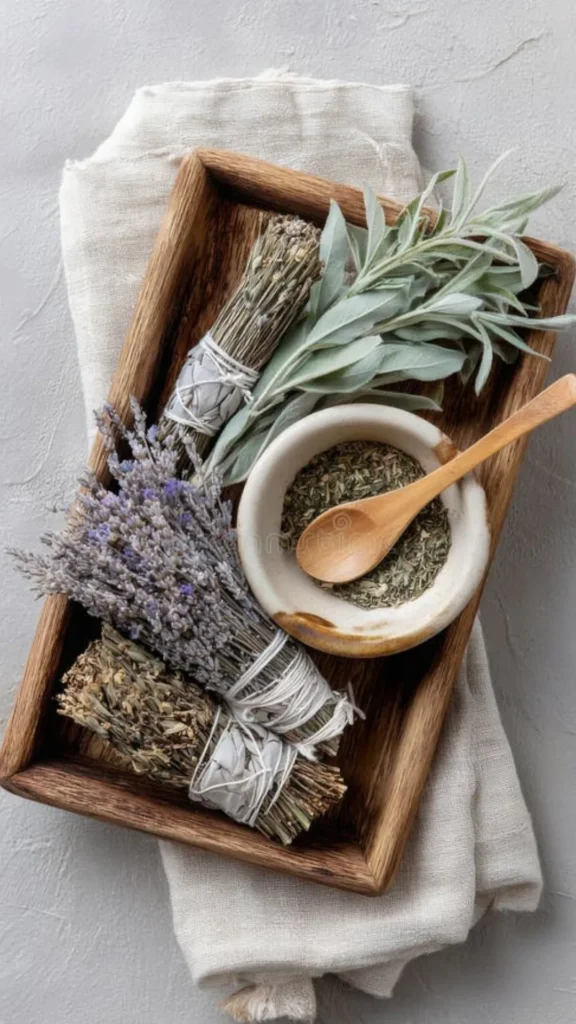
A small bundle of dried herbs, lavender, rosemary, or sage, tied with natural twine and hung on a warm wood hook in the kitchen or entryway, brings the most fragrant and most sensory wabi-sabi object into the organic modern home. The herbs dry gradually and change slightly in color and form as they do, the lavender deepening to a muted grey-purple, the rosemary holding its dark green with gradually silvering stems.
The fragrance they release when brushed against or when warm air moves through the kitchen is the most immediate and most involuntary wabi-sabi sensory experience available.
Pinterest keywords: Wabi-Sabi Objects Organic Modern Home · Dried Herbs Bundle Wood Hook · Kitchen Wabi-Sabi Decor 2026
13. A Natural Bark or Wood Slice Used as a Surface
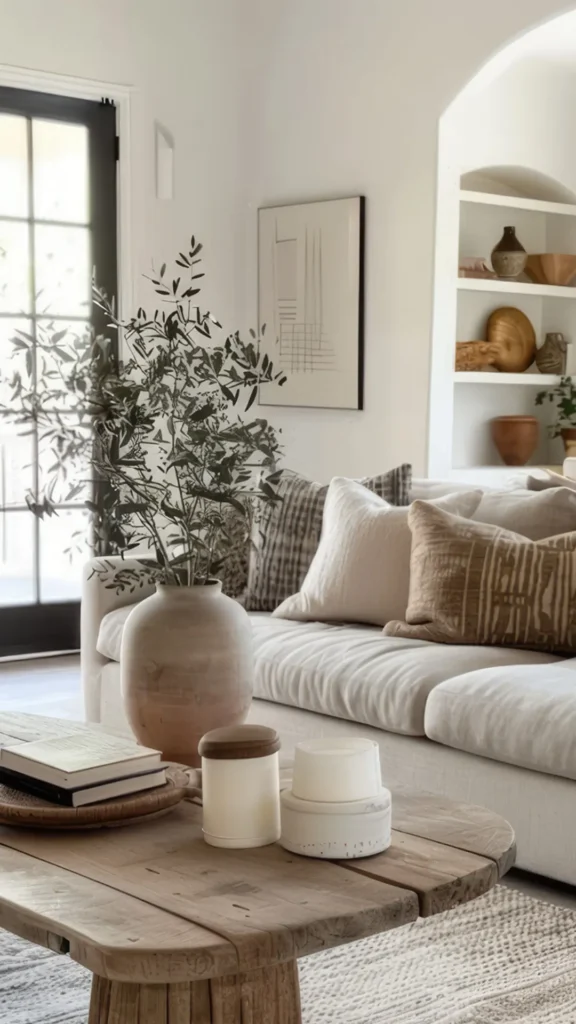
A natural wood slice, cut to show the growth rings and natural edge of the original tree, used as a small tray or surface on the coffee table, kitchen counter, or bathroom vanity, brings the most directly geological and most transparently natural wabi-sabi object into the home. The growth rings record decades of the tree’s life. The natural, unfinished edge shows exactly where the bark met the wood. Nothing has been added and nothing has been removed except the single cut that revealed this particular cross-section of natural time.
Pinterest keywords: Wabi-Sabi Objects Organic Modern Home · Wood Slice Natural Surface · Natural Wood Slice Decor 2026
14. A Hand-Coiled Clay Pot with Visible Fingermarks
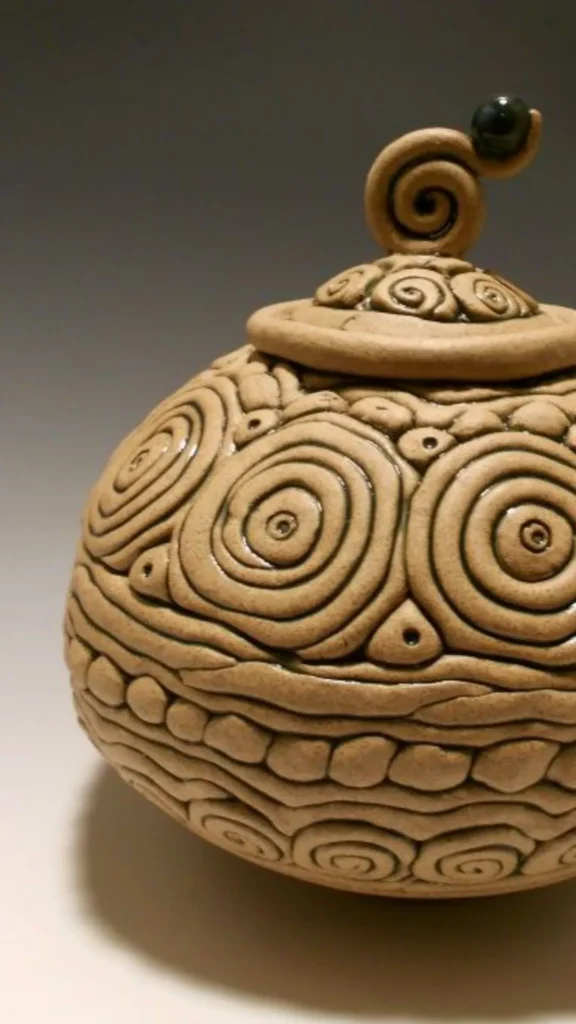
A hand-coiled clay pot, where the individual coils of clay are still faintly visible in the surface and the fingermarks of smoothing remain as subtle texture in the finished piece, is the wabi-sabi object that most directly and most physically connects the organic modern home to the process of human making. The fingermarks are the literal record of a specific person’s hands working with a specific piece of clay. That physical, irreplaceable connection is what gives the piece its genuine depth of character.
Pinterest keywords: Wabi-Sabi Objects Organic Modern Home · Hand-Coiled Clay Pot Fingermarks · Coiled Ceramic Wabi-Sabi 2026
15. The Practice of Not Replacing Beautiful Things When They Age
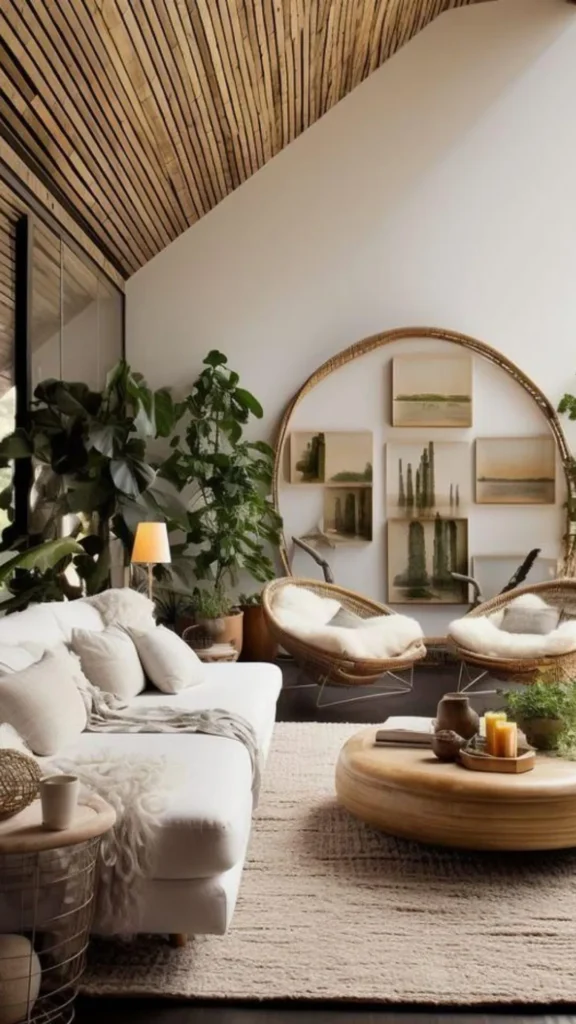
The most important wabi-sabi practice in any organic modern home is the simplest and the most counterintuitive. When a natural object ages and develops the patina of use, do not replace it. A wooden bowl that has darkened with use, a linen cushion that has softened with washing, a brass fixture that has developed its natural patina, a ceramic that shows the hairline of age in its glaze, all of these have become more beautiful through the process of aging rather than less.
The instinct to replace aging natural objects with fresh new ones is the exact opposite of the wabi-sabi philosophy. The object that has been used and has aged is always worth more, in the deepest sense, than the new one that replaced it.
For more on incorporating wabi-sabi principles throughout the complete Japandi and organic modern home, visit our Japandi Home Decor Ideas guide.
Final Thoughts
Wabi-sabi objects in an organic modern home are not a decorating choice in the conventional sense. They are a practice of attention, a commitment to noticing the beauty in natural imperfection rather than seeking the beauty in manufactured perfection. The irregular ceramic, the weathered stone, the used candle, the worn wood, none of these need to be purchased or designed. They need to be chosen and kept and valued. That choosing and keeping is itself the most genuinely wabi-sabi practice available. 🌿


