

The kitchen is the room where the Japandi philosophy faces its greatest practical challenge and delivers its most satisfying results. A space defined by function, by the requirements of cooking, storage, and daily practical use, the kitchen might seem like an unlikely candidate for the warmth, restraint, and deliberate beauty that Japandi design prioritizes above everything else. But a genuinely Japandi kitchen demonstrates exactly the opposite.
When the principles of Japandi design, warm natural materials, honest construction, considered restraint, and the wabi-sabi appreciation for the beauty of natural variation and handmade imperfection, are applied to the kitchen, the result is a room that feels as beautiful as a gallery and as genuinely functional as the best-designed workspace. It’s the room you want to cook in, to gather in, and to simply be in. Here are 10 ideas for creating one. 🌿
What a Japandi Kitchen Actually Feels Like
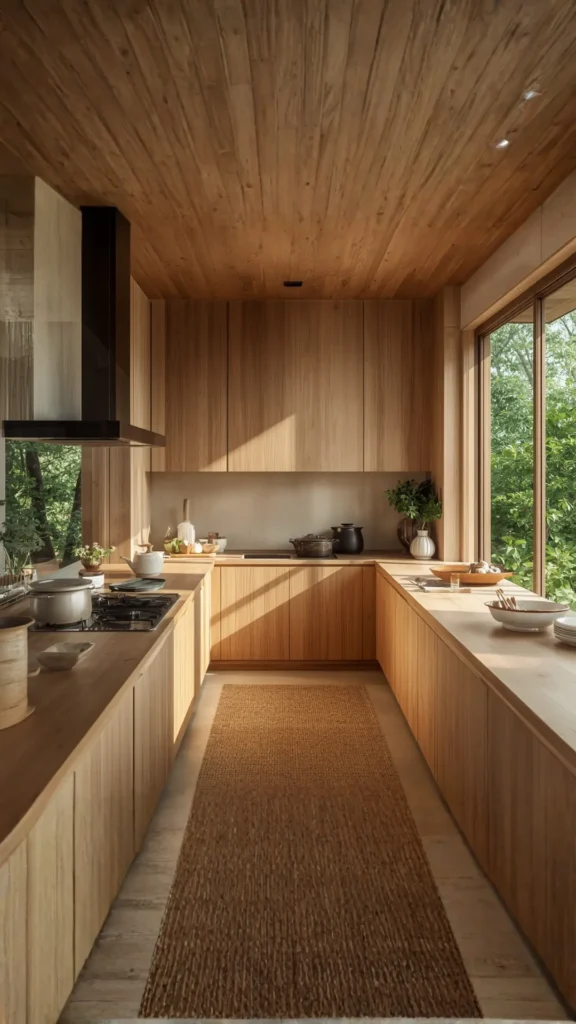
A Japandi kitchen doesn’t announce itself dramatically. It draws you in gradually. The warmth of the wood cabinetry catches the light from the window in a way that makes you notice it. The natural stone countertop feels satisfying under the hand in a way that manufactured alternatives don’t. The handmade ceramic bowl on the open shelf is slightly irregular in a way that makes it more beautiful than a perfect one.
According to Dezeen, the Japandi kitchen has become one of the most consistently searched and aspired-to kitchen typologies of 2026, driven by homeowners who want a kitchen that feels as considered and as warmly beautiful as any other room in their home.
1. Warm Wood Cabinetry, Handleless and Honest

Warm wood cabinetry is the single most defining element of any Japandi kitchen, the material that establishes the room’s warmth and its connection to the natural world before any other decision is made. Warm oak, walnut, or ash in natural, grain-visible finishes brings the Japanese appreciation for honest, natural materials and the Scandinavian commitment to warm, functional craftsmanship together in a single, foundational cabinetry choice.
The handleless detail is as important as the material. Cabinetry without visible hardware has a clean, architectural quality that allows the beauty of the wood grain itself to be the primary decorative element. Push-to-open mechanisms keep the surfaces completely uninterrupted, and the absence of hardware means nothing visually disconnects the warmth of the wood from the warmth of everything surrounding it.
How to style it: Choose one wood tone and apply it consistently across all cabinetry in the kitchen. The Japandi commitment to coherence and restraint extends to the material palette as much as to the decorative one. One warm wood tone, consistently applied, creates a kitchen that feels completely resolved and genuinely considered.
Pinterest keywords: Japandi Kitchen Ideas · Handleless Wood Kitchen · Japandi Kitchen 2026
2. Natural Stone Countertops in Warm Muted Tones
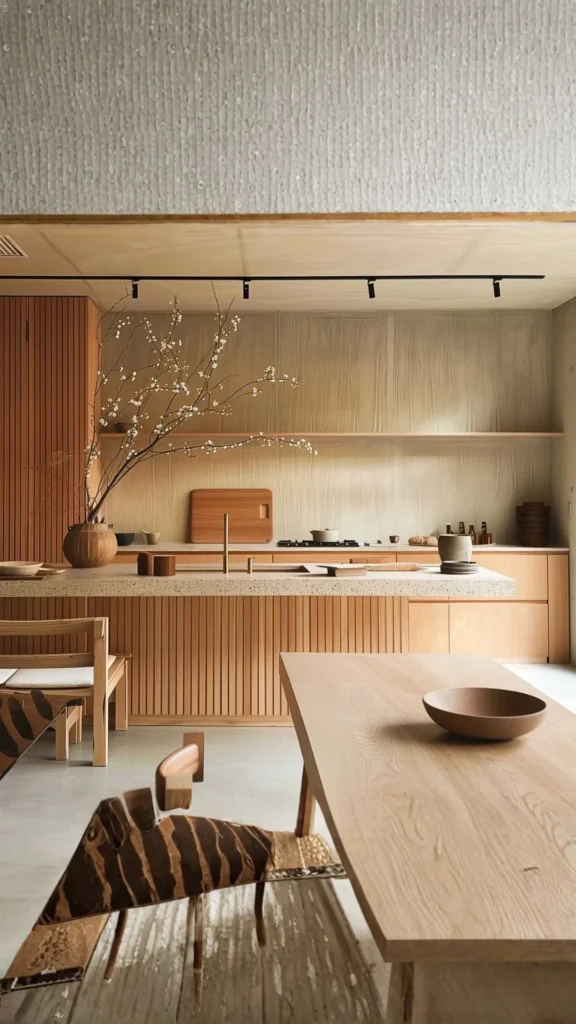
Natural stone countertops in a Japandi kitchen are chosen not for drama or visual impact but for the qualities of warmth, honest material character, and natural variation that align with the Japandi philosophy. Warm travertine with its characteristic porous surface, honed marble with honey-toned veining, or a sandy quartzite in muted warm grey all bring the earthy, nature-connected quality that makes a Japandi kitchen feel genuinely connected to the natural world.
The warmth of the stone is what matters most. Cool-veined white marble or high-gloss engineered stone, however technically impressive, sit outside the warm, muted material family that defines the Japandi kitchen. The stone in a Japandi space should feel like something drawn from the earth rather than manufactured to perfection.
How to style it: Keep the stone countertop surface almost completely clear. The beauty of the stone material is its own decoration. One handmade ceramic container, a wooden cutting board, and the tools actively in use are all the countertop needs to feel beautifully styled rather than cluttered.
Pinterest keywords: Japandi Kitchen Ideas · Stone Countertop Kitchen · Natural Stone Kitchen 2026
3. A Muted, Nature-Connected Color Palette

The color palette of a Japandi kitchen is built on the same principles as the Japandi palette everywhere else in the home, muted, warm, and connected to the natural world rather than saturated, bright, or visually stimulating. Warm sage green on the cabinetry, sandy neutral on the walls, natural warm wood on the open shelving, and warm stone on the countertop all belong to the same earthy, nature-connected family.
What makes the Japandi kitchen palette distinctive from a simply neutral kitchen is the warmth running through every element. Nothing in the room is cool or cold. The stone leans warm. The wood is honey and amber. The wall color is oat rather than grey. The ceramics are earthy clay rather than stark white. This consistent warmth is what creates the settled, genuinely calm quality that the Japandi kitchen aims for in every detail.
How to style it: Choose one considered earthy accent, a warm terracotta, a deep olive, a muted forest green, and apply it in two or three small places throughout the kitchen. The restraint of a single accent used consistently is more powerful than multiple competing color notes trying to add personality simultaneously.
Pinterest keywords: Japandi Kitchen Ideas · Japandi Kitchen Color · Warm Kitchen Palette 2026
4. Open Shelving Styled with Handmade Ceramics

Open shelving in a Japandi kitchen is the design element that most directly and most visibly expresses the wabi-sabi philosophy. A section of warm wood open shelving displaying hand-thrown bowls in warm earthy clay, a ceramic jug with a slightly irregular rim, a small ceramic vessel holding a dried botanical, and the occasional deliberate empty section creates a kitchen display that is simultaneously honest, functional, and genuinely beautiful.
The Japandi edit is essential here. Every item on the visible shelf should be genuinely beautiful and genuinely used. The discipline of this visible editing, removing everything that doesn’t meet both criteria, keeps the shelf from becoming storage overflow rather than a considered display, and is precisely the practice that makes a Japandi kitchen feel so different from a conventionally decorated one.
Pinterest keywords: Japandi Kitchen Ideas · Kitchen Open Shelving · Japandi Shelf Ceramics 2026
5. Warm Pendant Lights Above the Island or Peninsula

The pendant lights above the kitchen island or peninsula in a Japandi kitchen should be warm in material and warm in light quality, with no exceptions. Rattan, ceramic, or warm-toned natural fibre pendants in organic forms, hung at 70 to 80cm above the work surface, create an amber pool of light that makes the stone countertop, the warm wood cabinetry, and the handmade ceramics all glow in the most natural and most beautiful way available.
The Japanese principle of the most appropriate material for the most appropriate purpose guides the pendant choice as much as aesthetics. A pendant that belongs to the same warm, organic material family as the rest of the kitchen creates a room that reads as completely coherent. A pendant in cool brushed steel or industrial form creates a visual disconnection that undermines the consistency of the whole.
Pinterest keywords: Japandi Kitchen Ideas · Kitchen Pendant Light · Rattan Kitchen Pendant 2026
6. Integrated Appliances for a Seamless Surface
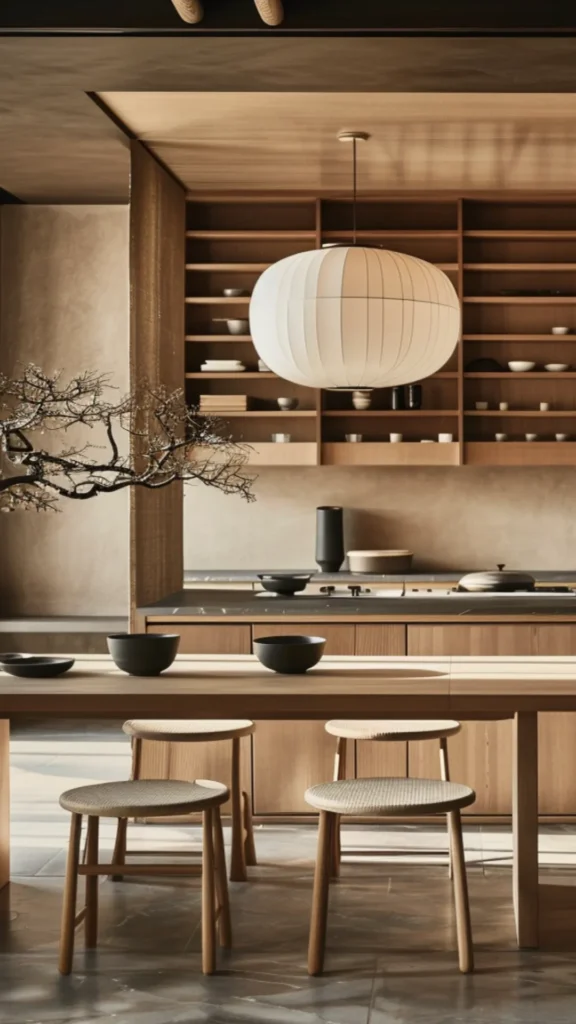
Integrated appliances in a Japandi kitchen express the principle of functional things being as beautiful as possible in their most practical form. When the refrigerator front matches the cabinetry, the dishwasher disappears into the base unit run, and the oven sits flush within a considered tower unit, the kitchen reads as a completely unified, architectural space rather than a collection of appliances arranged around cabinetry.
This seamlessness is central to the Japandi kitchen philosophy. The Japanese appreciation for spaces where nothing interrupts the calm of the visual field, and the Scandinavian commitment to functional objects being as beautiful as possible, both point toward integration as the most genuinely Japandi appliance solution available.
Pinterest keywords: Japandi Kitchen Ideas · Integrated Kitchen Appliances · Handleless Kitchen 2026
7. Wabi-Sabi Objects That Add Soul to the Kitchen

The kitchen, more than any other room in the home, is a space where everyday objects are used and replaced and accumulated without particular consideration for their beauty. The Japandi kitchen challenges this habit directly, treating even the most functional kitchen objects as choices that deserve the same intention and the same standard of natural, handmade quality as any decorative decision.
A hand-thrown ceramic bowl for fruit on the countertop instead of a mass-produced plastic one. A wooden cutting board in solid end-grain oak instead of a synthetic alternative. A small ceramic container for kitchen tools instead of a stainless steel utensil holder. Each of these small choices replaces a functional but anonymous object with a functional and genuinely beautiful one, and the cumulative effect of these choices throughout the kitchen is a space that feels genuinely inhabited by someone who cares about the quality of daily life.
Pinterest keywords: Japandi Kitchen Ideas · Wabi-Sabi Kitchen · Handmade Kitchen Objects 2026
8. One Beautiful Plant in a Warm Ceramic Pot

The plant philosophy in a Japandi kitchen follows the same principle as in every other Japandi space, one genuinely beautiful specimen in the right vessel, positioned where it receives the natural light it needs and where it can be seen and appreciated daily. A small olive tree in a warm terracotta pot on the kitchen windowsill, a trailing pothos from a high shelf above the cabinetry, or a cluster of fresh herbs in simple ceramic pots in the brightest spot of the kitchen, any of these introduces the living quality that the Japandi kitchen needs without the visual abundance of a more maximally biophilic approach.
The herbs deserve special mention. Growing fresh basil, rosemary, and thyme in simple ceramic pots on the kitchen windowsill serves both the practical function of having fresh herbs for cooking and the aesthetic function of introducing living, fragrant, organic presence to the most functional room in the house. It’s the most effortlessly and most genuinely Japandi approach to kitchen plants available.
Pinterest keywords: Japandi Kitchen Ideas · Kitchen Plant Ideas · Herbs Kitchen Window 2026
9. Warm Natural Flooring Throughout

The flooring in a Japandi kitchen follows the same natural material principle as every other surface in the room. Warm stone in large format, sandy limestone or warm travertine with minimal grout lines, or wide-plank warm oak flooring that continues from the kitchen into the adjacent dining or living areas, both options express the honest, natural, warm material values that the Japandi kitchen is built on.
The continuity of the floor material from the kitchen into the surrounding rooms is particularly important in open-plan homes. A consistent warm stone or wood floor that runs seamlessly through the kitchen and dining zones creates a material unity that makes the whole living space feel designed as a coherent whole rather than assembled from separate decisions.
Pinterest keywords: Japandi Kitchen Ideas · Natural Kitchen Floor · Stone Kitchen Flooring 2026
10. The Art of the Clear Kitchen Surface

The most powerful and most consistently underestimated Japandi kitchen principle is the clear surface. A kitchen countertop covered in appliances, containers, cutting boards, and the accumulated objects of daily cooking life creates a visual noise that undermines the calm the Japandi kitchen is designed to create. A kitchen where the countertops are kept almost completely clear between cooking sessions, where every item that doesn’t absolutely need to be permanently accessible is stored behind doors or in drawers, creates a kitchen of extraordinary calm and beauty.
The daily practice is simple. Everything that lives permanently on the countertop should be beautiful enough and functional enough to earn that position. A wooden chopping board that is genuinely beautiful and genuinely used. A ceramic bowl that is genuinely beautiful and holds genuinely needed fruit. Everything else belongs inside a cabinet.
For more on how Japandi principles create calm and beautiful spaces throughout every room, visit our Japandi Style Guide guide.
Final Thoughts
A Japandi kitchen is not a kitchen that has been carefully styled for photography. It’s a kitchen that has been carefully designed for daily life. The warmth of the wood, the honesty of the stone, the beauty of the handmade ceramics, and the discipline of the clear surface all combine to create a room that improves every meal cooked in it and every moment spent in it. 🌿


